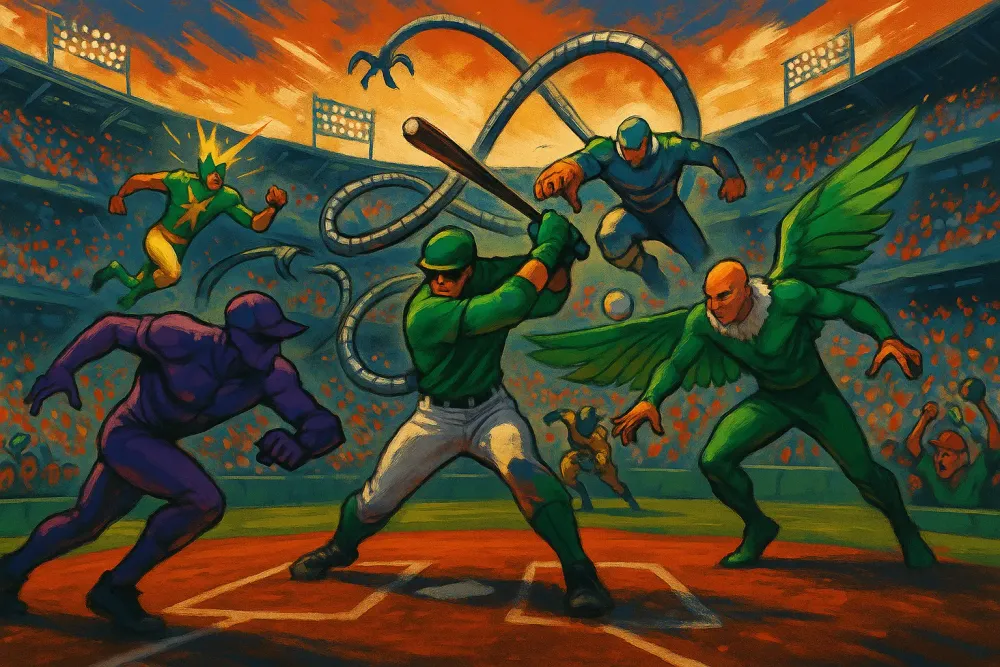
Major League Baseball (MLB) is enjoying a renaissance, marked by a surge in viewership and attendance, a phenomenon attributed to a golden age of superstars. These players are revered and respected, captivating audiences with their impressive performances on the field. However, as with any compelling narrative, heroes often have their share of villains. In the spirit of this comic-book-inspired rivalry, we present MLB’s Sinister Six—players who polarize fans and are loved for their capacity to annoy rivals and spectators alike.
Honorable Mentions
Before we dive into our Sinister Six, let’s take a moment to recognize some honorable mentions who have made their mark as lovable villains.
Jose Altuve, Houston Astros: Once embroiled in a sign-stealing scandal, Altuve now finds himself somewhat out of the spotlight. While views on him differ, many believe the outrage over his past actions has been exaggerated, and he deserves another chance.
Bryce Harper, Philadelphia Phillies: Originally criticized for his cocky persona as he entered the league, Harper has since quieted the naysayers with two MVP awards and is on track to be a Hall of Famer. His past reputation, however, continues to cling to him.
Jurickson Profar, Atlanta Braves: With multiple suspensions for performance-enhancing drugs under his belt, Profar embodies the term ‘clown stuff.’ Despite his past infractions, he’s currently off the radar, unable to cause much harm.
MLB's Sinister Six
Here’s our ranking of today’s most notorious players, based solely on their conduct on the field.
1. Fernando Tatis Jr., San Diego Padres
Tatis Jr. caught the baseball community's attention with his recklessness both on and off the field. His history of PED suspensions adds a layer of intrigue, positioning him firmly on the radar of fans who can’t ignore his immense talent.
2. Willson Contreras, St. Louis Cardinals
Contreras has established himself as one of the league’s more volatile players. Known for his fiery temperament, he often reacts dramatically when faced with adversity, oscillating his popularity between loved and hated.
3. Rafael Devers, San Francisco Giants
Devers’ move from the Boston Red Sox to the Giants has been fraught with drama, particularly regarding his reluctance to adapt when asked to shift positions. His unhappiness in the spotlight has drawn criticism and earned him a place among the vilified.
4. Manny Machado, San Diego Padres
Despite efforts to project maturity, Machado’s history of questionable behavior continues to overshadow his accomplishments. His impulsive actions, such as a recent incident of throwing a ball in anger, keep his reputation intact as a player who causes unease.
5. Framber Valdez, Houston Astros
Valdez has earned the dubious honor of being deemed a 'dirty player.' With several incidents of throwing at other players already this season, the potential for chaos with Valdez on the mound keeps fans and opponents alike on high alert.
6. Dalton Rushing, Los Angeles Dodgers
Even in the early stages of his career, Rushing has accumulated a reputation for confrontational behavior both verbally and physically. His aggressive style of play has led to calls for a cultural reset within his team as he raises tensions among both teammates and opponents.
The Impact of Villains in Baseball
The existence of these players serves as a double-edged sword for the league. While they attract criticism and foster animosity, they also provide entertainment and drama that keeps fans engaged. The narratives surrounding these figures enhance the viewing experience, often driving storylines that people discuss long after the games end.
As we delve deeper into the season, these players will surely continue to evoke strong feelings—both positive and negative. They contribute to the theater of baseball, acting in ways that ensure their moments on the diamond are memorable, often overshadowing even the most heroic feats by their fellow athletes.
The Bottom Line
As MLB flourishes during this exceptional period for the sport, it is clear that the modern era thrives on the complex mix of heroes and villains. The Sinister Six epitomize this duality, drawing attention, fostering rivalries, and ultimately enriching the overall narrative of baseball today. Their ongoing contributions—whether loved or hated—will surely resonate across stadiums, airwaves, and social media platforms, keeping fans invested in every game played.