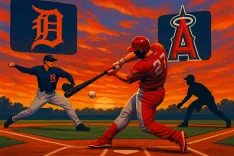
As June unfolds and warmer weather takes hold, fans of Major League Baseball (MLB) are left wondering when the hits will start to flow. This year, the league's batting average has plummeted to a staggering .240, the lowest it's seen since 1968. Shockingly, a dozen players who qualify for the batting title are batting under .200, including heavy hitters like Manny Machado, Corey Seager, and Cal Raleigh. While some may argue not to panic quite yet, the stark reality of fewer hits raises concerns about the overall enjoyment of the game.
Where Are the Hits?
Fewer hits equate to a less exciting product, a point not lost on avid baseball fans. While MLB has experienced a surge in popularity, boosted by generational talents like Aaron Judge and Shohei Ohtani and significant technological advancements including the Automated Ball-Strike (ABS) system, the low batting average might be a troubling sign. With runs per game hovering around 4.38—consistent with the previous seasons of 2024 and 2025—MLB appears stable in scoring, yet without exciting offense, the game loses its luster.
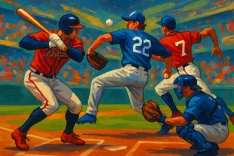
Fewer hits result in diminished excitement across the field. Reduced traffic on the bases leaves a vacuum of drama, changing the batter-pitcher confrontation from an adrenaline-fueled duel into a more one-sided affair resembling a rider versus bull scenario. This shift could impede the very essence of the game that fans adore.
Why Is It Happening?
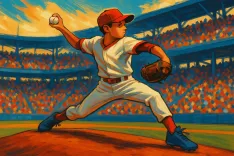
Two main reasons contribute to the current situation: the advancements in pitching and defensive prowess. While it’s well-documented that batting averages have been declining for years, striking out less frequently doesn’t mean hitting is becoming easier. Today’s pitchers are overpowering, with nearly 34% of fastballs clocking in over 95 mph. The approach many pitchers take has evolved; gladiatorial fastball pitches have given way to devastating breaking balls and off-speed pitches designed in the cutting-edge labs of analytics experts.
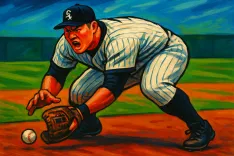
Meanwhile, defensive efficiency is also at an all-time high. With a current range of .702, errors are becoming increasingly rare, and more balls are turning into outs than ever before. The synergy of elite pitching and stellar defense poses serious challenges for hitters.
Compounding the issue is the adaptation of hitters themselves. In 2026, hitters are on pace for a staggering 38.9% fly ball rate. Unfortunately, the effectiveness of fly balls has dramatically decreased. In 2019, the batting average for fly balls stood at .308, while the current number barely exceeds .250. Such shifts highlight a potential misdating of hitting strategies; batters are striking out less yet are less productive overall.
Finding a Path Forward
Is there a solution on the horizon? Potentially, but changes will require a collective effort from both hitters and MLB itself. For hitters to regain effectiveness at the plate, a renewed focus on contact hitting over home runs could be a step in the right direction. Franchises such as the Milwaukee Brewers and the Tampa Bay Rays are leading the way in this respect, consistently scoring runs without relying heavily on the long ball. Their strategies emphasize contact and ground balls, proving that teams can thrive by stringing base hits together.
Additionally, MLB's leadership might consider introducing more rules aimed at rescuing batting averages before they fall too low. In recent years, the league has seen significant changes, including the implementation of the universal designated hitter, stricter time limits for pitchers, and increasing the size of bases to promote running. As such, asking, 'What’s next?' is entirely warranted.
Exploring New Avenues
Among potential alterations, moving the pitching mound back from its traditional distance could offer hitters more reaction time against the increasingly rapid-fire pitchers. Although past experiments in leagues like the Atlantic League have yielded mixed results, the logic behind this idea holds weight.
Another avenue could entail adjusting the dimensions or parameters of home plate to shrink the strike zone. By creating a less favorable environment for pitchers to unleash their most formidable breaking pitches, hitters may find it easier to generate runs. The goal would not only be to enhance the scoreboard but also reestablish the excitement that comes with high batting averages.
The Future of MLB
While no single change can singularly remedy the league’s offensive struggles, a multifaceted approach could help shift the tide. The historic average of .300 batting averages could be lost to time, and fans shouldn’t have to adjust their expectations to accommodate diminished performances. Innovation and strategy play essential roles; hopefully, league officials and teams will seize the opportunity to implement changes that bring back the thrill of a well-placed hit.
As MLB continues to navigate this challenging landscape, fans can only watch and hope that the right players and decision-makers come together to revive the league’s hitting and bring the excitement back to America's favorite pastime.