In the competitive realm of Major League Baseball (MLB), teams and fans often place immense hope on their top prospects—the coveted number one talent in each organization. But how often do these prospects transition successfully into impactful players at the major league level? A thorough examination of the last two decades reveals the fluctuating success rates of these young talents.
This article reviews the top prospect lists compiled by Baseball America from 2004 to 2023, analyzing how well these players have performed once they hit the big leagues. Each player has been sorted into three categories: 'Great', 'Good', and 'Not So Good', providing a clear overview of each MLB team's ability to develop talent.
Arizona Diamondbacks
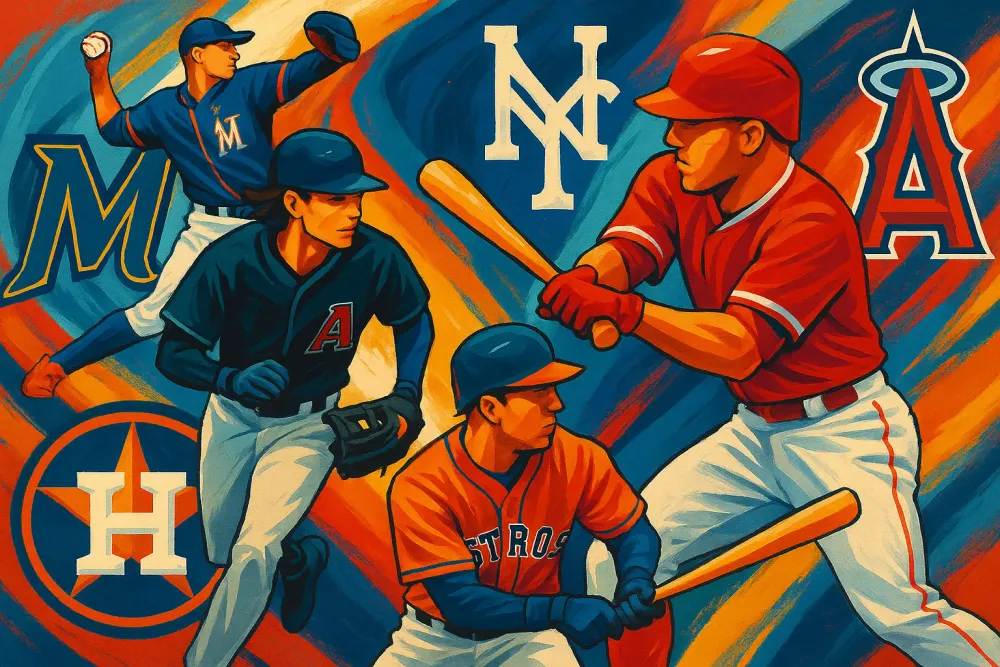
The Diamondbacks have been fortunate in finding a true franchise cornerstone in outfielder Corbin Carroll, who has emerged as a standout player in recent years. However, their history suggests a different narrative for pitching talent. While they have had success with top-tier outfield prospects, such as Carlos González and Justin Upton, their track record for developing elite pitching has left much to be desired. The last true homegrown ace, Brandon Webb, has not been matched by subsequent prospects.
Oakland Athletics
Turning to the Oakland Athletics, their ability to develop talent has been affected by trades involving top prospects. Notably, Tyler Soderstrom has become a foundational element of their lineup after inking an eight-year deal, proving that the A’s can cultivate talent—when they hold on to it. Their history includes notable players like Jarrod Parker and Nick Swisher, but it is coupled with a string of prospects that did not yield significant results.
Atlanta Braves
The Braves have developed a reputation for nurturing high-impact players. With a list that includes Ronald Acuña Jr. and Dansby Swanson, their success rate is impressive. Recent struggles with former prospects such as Cristian Pache highlight the challenges present, but overall, the Braves have successfully converted most of their top-ranked prospects into reliable major league players.
Baltimore Orioles
The Orioles have undergone a tale of two eras; the failures of heralded players like Dylan Bundy and Matt Wieters as they did not meet expectations, contrasted with the successes of Gunnar Henderson and Adley Rutschman, indicate they are trending positively. This suggests that while past drafts produced disappointments, recent selections are showing promise.
Boston Red Sox
For the Red Sox, the movement of players like Hanley Ramírez and Yoán Moncada before they bursts onto the MLB scene illustrates a forward-thinking strategy that generated value. By moving these players at the right time, they gained significant assets like Josh Beckett and Chris Sale. These trades, while initially disappointing, ultimately proved beneficial for the franchise.
Chicago Cubs
The Cubs experienced a transformation in their prospect program, translating potential into success with the likes of Kris Bryant and Javier Báez. Their ability to strike gold in drafts shifted in the 2010s, leading to a long-awaited World Series title in 2016. Pete Crow-Armstrong is now regarded as a promising addition, promoting confidence in the Cubs' ongoing developmental efforts.
Chicago White Sox
The White Sox have enjoyed seasons filled with promise, exemplified by their roster of recent first-round selections, such as Tim Anderson and Yoán Moncada. This core has reshaped their competitive landscape, though if they hope to keep pace, players like Colson Montgomery must quickly develop into impactful contributors.
Los Angeles Angels
Despite the strong performances from superstars like Mike Trout and Shohei Ohtani, the Angels have a mix of outcomes from their top prospects. The organization aims to build around current stars while fostering growth in younger players, such as Logan O'Hoppe and Reid Detmers to create a more sustainable competitive future.
Conclusion: Evaluating Success Rates
The success rates of No. 1 MLB prospects vary widely across teams over the last two decades. While some organizations, like the Braves and the Diamondbacks, have succeeded in developing impact players, others have faced struggles with their top picks. The potential for success exists, but teams must carefully evaluate their scouting, development, and retention strategies to convert prospects into major league success stories.