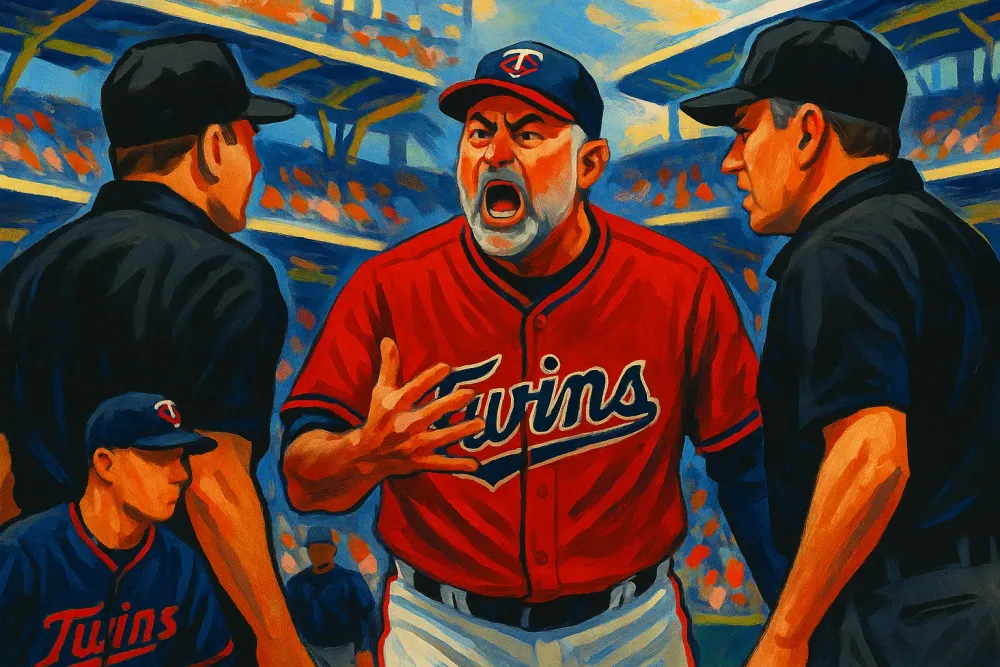
In a historic moment during Major League Baseball (MLB) action, Minnesota Twins manager Derek Shelton became the first manager to be ejected due to the Automated Ball-Strike Challenge System. This unprecedented development took place during the ninth inning of the Twins' 8-6 defeat against the Baltimore Orioles, marking a new chapter in the integration of technology within the sport.
A Deep Dive into the Incident
The incident began when Orioles closer Ryan Helsley successfully challenged a call that had significant implications for the game. Twins first baseman Josh Bell, who had initially drawn a walk, found himself in an unexpected situation when the pitch was deemed a strike instead, resulting in a critical strikeout.
After the call was overturned, Shelton's frustration boiled over. He contested the timing of Helsley’s challenge, asserting that the Orioles pitcher did not signal for the challenge quickly enough. Shelton expressed this sentiment during his post-game comments, indicating that he believed there is a specific window for such challenges to take place.
Rules of the Challenge System
The Automated Ball-Strike Challenge System is a recently implemented technology designed to enhance accuracy in officiating by allowing players to contest certain calls within a specific timeframe. According to the guidelines, a player must signal for a challenge shortly after a call is made; failure to do so can lead to disagreements over the validity of the challenge.
In this case, Shelton characterized the time frame as around three seconds, pondering whether Helsley met that standard before making his case. “I didn’t think Helsley tapped his hat quick enough,” he remarked. Despite Shelton's protestations, the umpire crew upheld the call, leading to Shelton's ejection.
Implications of Shelton’s Ejection
This scenario raises questions about the role of technology in the game and how it is being implemented. As technology advances, the rules governing its use must also evolve. Shelton's ejection signifies a potential shift in how managers might approach the challenge system in future games, as they consider both the mechanical and psychological aspects of officiating.
Moreover, the incident reflects the challenges teams now face in navigating the evolving landscape of baseball technology. The introduction of instant replay and automated systems is designed to minimize errors, but it also complicates the responsibilities and expectations of players, coaches, and umpires alike.
A Manager's Perspective
After the game, Shelton expressed his belief that the challenge system introduces uncertainty to what should be a straightforward process. “Maybe he did, maybe he didn’t,” he commented about Helsley’s timing, emphasizing the subjective nature of such challenges. This singular event embodies the broader tension between tradition and innovation within baseball.
Looking Ahead
The Twins are likely to reflect on this experience in the days following the game. As they prepare for their upcoming matches, the team's approach to utilizing the challenge system will undoubtedly be re-evaluated. Moreover, this incident serves as a reminder for managers league-wide about the nuances of the new technology and the importance of timing when it comes to challenges.
Conclusion
Derek Shelton's ejection following an Automated Ball-Strike Challenge System incident marks a unique moment in MLB history. As the league continues to blend technology with tradition, events like this will influence how managers and players approach the evolving game of baseball. It will be intriguing to see how this affects future challenges and the overall dynamics on the field.