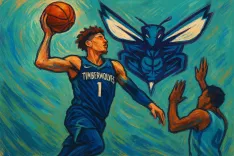
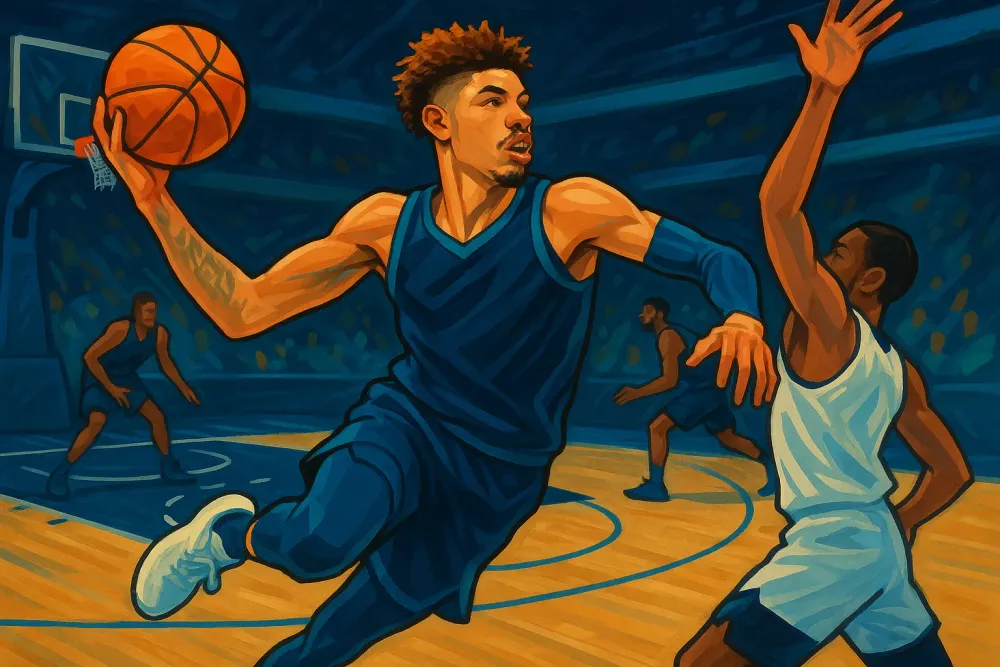
The Minnesota Timberwolves have shaken up their roster with a blockbuster trade, acquiring former All-Star guard LaMelo Ball along with Josh Green from the Charlotte Hornets in exchange for center Naz Reid. The deal, reported by ESPN’s Shams Charania, also involves a significant collection of draft picks, highlighting Minnesota's aggressive push to remain competitive in the NBA.
Details of the Trade
This trade marks a pivotal moment for the Timberwolves, who have committed to reshaping their lineup ahead of the 2026-27 season. In addition to Reid, Minnesota has sent a 2033 unprotected first-round pick, three first-round pick swaps, and three second-round picks to Charlotte. This influx of talent and draft capital illustrates a clear intention by the Timberwolves to elevate their playoff aspirations.
Current Roster Composition
As the Timberwolves complete their roster adjustments, the current lineup for the upcoming season will feature LaMelo Ball and Josh Green, alongside established stars like Anthony Edwards. The Timberwolves' roster looks increasingly formidable, although their salary cap situation presents challenges. Spotrac indicates that Minnesota is currently $93.951 million over the salary cap, sitting $16.862 million below the first apron and $29.862 million under the second apron, which affects their flexibility in the short-term.
The Charlotte Hornets' Perspective
Conversely, the Charlotte Hornets are now tasked with rebuilding after losing a standout player in Ball. They receive Naz Reid, who promises to bring depth to their frontcourt, along with a wealth of upcoming draft picks to help improve their long-term outlook. At present, the Hornets are $22.013 million over the cap, but are significantly below both the first and second aprons, allowing for some financial maneuverability.
LaMelo Ball's Impact
LaMelo Ball's move to Minnesota brings a mixed bag of promise and uncertainty. With career averages of 20.8 points, 7.3 assists, 5.7 rebounds, and solid three-point shooting at 3.2 makes per game, he has proven to be a dynamic playmaker. However, his playoff history leaves something to be desired—having never led the Hornets to the postseason. There are also concerns regarding his efficiency, as evidenced by his 41.8 shooting percentage from the floor over his career, along with an injury history that has seen him miss 30 or more games in four of his six seasons in the league.
Challenges and Opportunities for Edwards
For Anthony Edwards, the Timberwolves' promising star, the addition of Ball could alleviate some of the defensive pressure he faces. According to ESPN’s Brian Windhorst, Edwards has experienced frustration since the team traded Karl-Anthony Towns, leading to increased double-teams. With Ball on the roster, he could draw away defenders or, alternately, prime himself for one-on-one scoring opportunities if defenses choose to focus on Edwards.
Adapting to New Dynamics
The Timberwolves appear poised to adapt their style of play as they integrate LaMelo Ball into the mix. After reaching the Western Conference Finals in both 2024 and 2025, along with a deep playoff run last season, Minnesota's front office has clearly recognized the need for further enhancement of their offensive capabilities. The addition of Ball, who will potentially replace recent trade departure Julius Randle’s role, signals that Coach Chris Finch aims to diversify their offensive scheme to better suit a two-ball-handler model.
Looking Ahead: The Road to Success
In summary, the Timberwolves' acquisition of LaMelo Ball could be a game-changer as they strive for greater heights in the upcoming season. The need for a shift in pivotal plays and scoring balance has never been greater, and with emerging talents like Edwards and the addition of Ball, the Timberwolves are betting on a successful formula. Meanwhile, the Hornets position themselves with assets for a new chapter, likely putting their focus on draft strategy and youth development.
This trade can be seen as a decisive moment for both franchises, setting a path for growth and renewed ambitions in the years to come. Only time will tell if this gamble pays off for Minnesota, but the desire to contend is unmistakable.