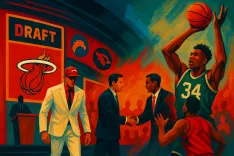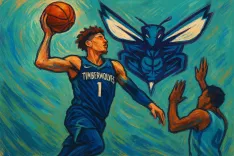
The LaMelo Ball saga with the Charlotte Hornets has officially come to a close as the franchise has traded the talented point guard to the Minnesota Timberwolves. This major transaction signals a new chapter for both Ball and the Timberwolves as they aim to elevate their postseason aspirations.
According to a report by ESPN's Shams Charania, the deal involves Ball and fellow guard Josh Green heading to Minnesota in exchange for Naz Reid, an unprotected first-round draft pick in 2033, three first-round pick swaps for 2028, 2029, and 2030, and three second-round picks in 2029, 2032, and 2033. This trade has been anticipated for some time, especially considering Ball's complex relationship with the Hornets over the last few seasons.
A Rollercoaster Ride with the Hornets
Since being drafted as a first-round pick, LaMelo Ball's journey in Charlotte has been tumultuous. In the 2021-22 season, he made his first All-Star appearance while leading the Hornets to a respectable 43-39 record. However, the team's performance declined alarmingly over the subsequent seasons, culminating in a dismal 19 wins in the 2024-25 season. During this period, Ball found himself at odds with the coaching staff, leading to instances where he was benched during critical moments in games.
One notable incident came during a 127-118 defeat to the Indiana Pacers where he scored 18 points but had a poor shooting night, making only 5 of his 21 attempts. Coupled with nine assists and six turnovers, this performance was emblematic of his inconsistent shooting efficiency, a concern that has plagued him throughout his career. Despite taking an average of 11.2 three-point attempts per game during the 2024-25 season—tying him with Stephen Curry in this figure—he only managed to hit 33.9 percent of those shots, leading to questions regarding his offensive impact.
Injury Troubles and Defensive Concerns
LaMelo's time with the Hornets was marred by injury issues, as he missed at least 21 games in four out of his first five seasons, totaling a staggering 141 games lost from 2022-25. His persistent ankle problems have been particularly troubling, with reports stating that he already faced time off this season due to an impingement in his right ankle. This aspect of his career raises significant concerns for the Timberwolves, weighing the high-reward aspect of his talent against the risks posed by his injury history.
Furthermore, defense has often been highlighted as a major area of weakness for Ball. Hornets head coach Charles Lee emphasized the need to challenge Ball defensively when he took over, but this has yet to substantially improve during his time in Charlotte.
A Fresh Start in Minnesota
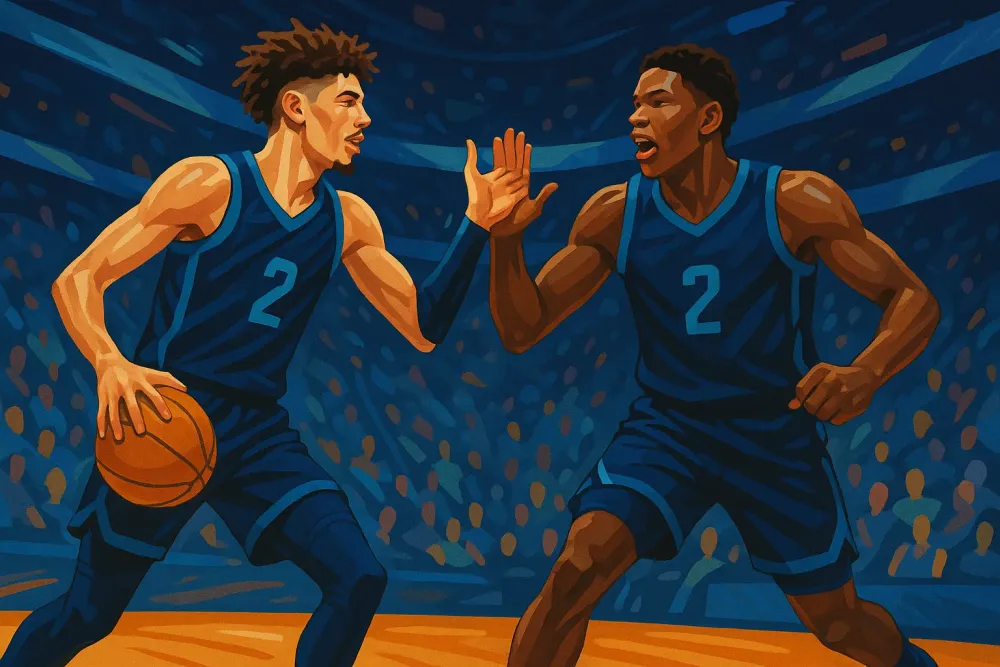
The Timberwolves view the acquisition of Ball as a transformative move for their roster. Teaming him up with rising star Anthony Edwards is seen as a strategic pairing, potentially creating one of the most explosive offensive duos in the league. Under the guidance of head coach Chris Finch, there is hope that Ball can refine his gameplay and shake off the bad habits he developed over the last few years.
Prior to the trade, Minnesota considered its recent performance stagnant despite premier talents like Edwards and veteran leadership from Mike Conley Jr. The franchise reached the Western Conference Finals in 2024 and 2025, but their limitations became evident after going 2-8 in those series and losing to the San Antonio Spurs in the following season's second round. To address this plateau, the Timberwolves have already started shaking up their roster by trading Julius Randle to the Brooklyn Nets as part of a three-team trade, demonstrating their intent to rejuvenate their squad.
Analyzing the Timberwolves' New Offensive Strategy
With LaMelo Ball now on their roster, the Timberwolves will have a dynamic playmaker who averaged 20.0 points, 7.4 assists, and 6.2 rebounds per game during his first four seasons. With his ability to shoot 37.4 percent from beyond the arc on 7.6 attempts, he fits well alongside Edwards and Ayo Dosunmu, who recently signed a five-year, $112 million deal. Together, this trio could reshape the Timberwolves’ offensive identity as they look to vie for position against other top-tier teams in the fiercely competitive Western Conference.
Notably, while Ball brings considerable offensive skills, the Timberwolves can rely on Rudy Gobert to maintain their defensive foundation. Still, the franchise recognizes that more adjustments may be needed to solidify their roster and improve margins as they confront teams like the Oklahoma City Thunder and the San Antonio Spurs.
In conclusion, the trade marks the end of an era for LaMelo Ball and the Hornets while offering a promising opportunity for the once-promising point guard in Minnesota. As both teams pursue new paths, fans will be eagerly watching to see how Ball adapts and what this means for the Timberwolves' ambitions moving forward.