Royals Move Outfield Fences Closer to Boost Offense in 2024
Kansas City Royals Adjust Fences to Enhance Power Hitting
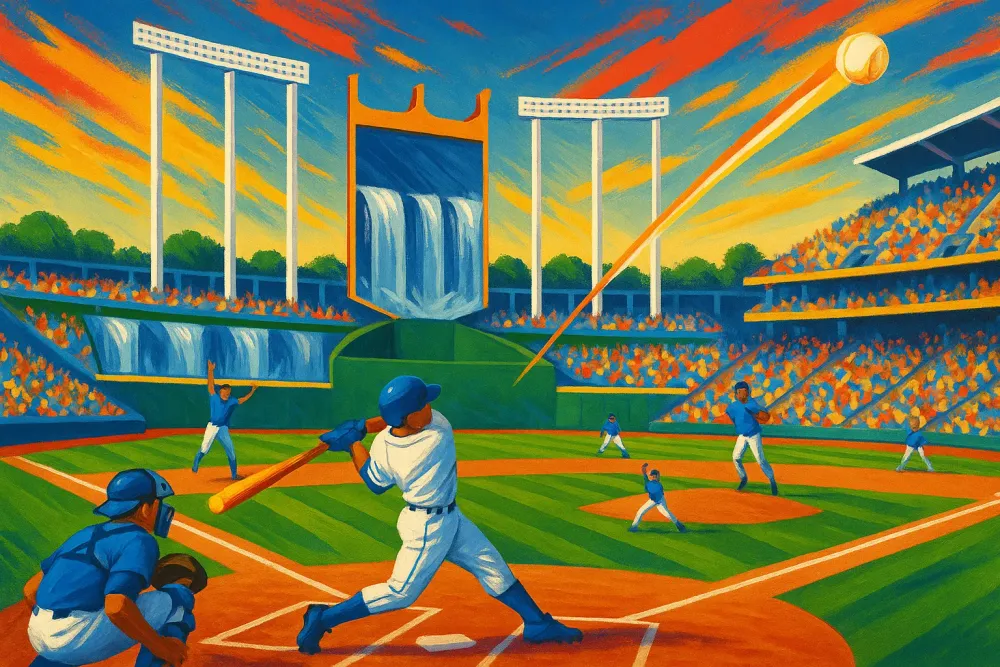
The Kansas City Royals are making significant changes to Kauffman Stadium in an effort to boost their offensive strength. According to a report from ESPN's Jeff Passan, the club plans to move the outfield fences in by 10 feet, with intentions to create a more neutral ballpark that rewards good hits with home runs. General manager J.J. Picollo shared insights regarding this strategic decision, stating, "We want a neutral ballpark where if you hit a ball well, it should be a home run."
Understanding the Rationale Behind the Change
Over the years, Picollo has observed the impact of Kauffman Stadium's dimensions on hitters. The GM noted that when players feel restricted in their ability to hit home runs, they often alter their swinging techniques, potentially leading to diminished performance. He expressed confidence in the Royals' decision to adjust the field dimensions, suggesting it’s time to evaluate the impact of years of data to see if their analytics and feelings about the park are accurate.
Details of the Dimensional Changes
While the distance to center field will remain unchanged at 410 feet, the power alleys are moving in from 389 feet to 379 feet. Overall, the fences will be adjusted to be nine to ten feet shorter approaching the corners, yet the 330-foot foul poles will stay intact. Additionally, the height of the fence will be reduced from 10 feet to eight-and-a-half feet. This decision signifies a concerted effort by the Royals to strike a balance between traditional ballpark dimensions and modern offensive needs.
The Impact of Kauffman Stadium's Factors on Performance
Last season, Kauffman Stadium posted a home run factor of 83 according to Baseball Savant, indicating that the ballpark is considerably harder for batsmen to hit home runs than most arenas, with 100 being the league average. This statistic places Kansas City in the 27th position among major league parks for home-run frequency. Picollo and the Royals front office have had internal discussions for several years about changing the field dimensions, emphasizing the need for an adjustment. With collaboration from the analytics department, they aimed to find a palatable middle ground between the park’s dead zone and other stadiums where home runs are more frequent.
The 2023 Season: A Year of Disappointment
The Royals’ struggles in 2023, where they ranked 26th in MLB and last in the American League with only 159 home runs, reinforce the necessity for this change. The team had a tough season, registering a disappointing 56-106 record. During that year, only four players hit 10 or more home runs, and a significant portion of their power output—85 of those homers—came from just three players: Vinnie Pasquantino, Salvador Perez, and Bobby Witt Jr.
Looking Forward: The Path to Recovery and Growth
Despite a regression in performance in 2024, with an ending record of 82-80, the Royals displayed glimpses of potential. Following their dismal 2023 season, Kansas City recovered to reach the playoffs in 2024 with an impressive 86-win Wild Card run, making it to the American League Division Series before succumbing to the formidable New York Yankees.
This change in fence dimensions is seen as an impactful move towards fostering offensive growth and competitiveness within the AL Central. As the Royals aim for another shot at the division title, moving the fences closer could provide the spark needed to rejuvenate their hitting lineup for the forthcoming season.
Conclusion: A Breath of Fresh Air for the Royals
The Kansas City Royals' decision to modify the outfield dimensions at Kauffman Stadium stems from a well-considered analysis focused on improving their offensive capabilities. By creating a more balanced playing field that rewards well-hit balls with home runs, the franchise hopes to not only enhance the performance of its hitters but also invigorate the enthusiasm of its fan base during the upcoming seasons. The adjustment of the fences symbolizes a calculated risk aimed at revitalizing the Royals’ place in the competitive landscape of Major League Baseball.