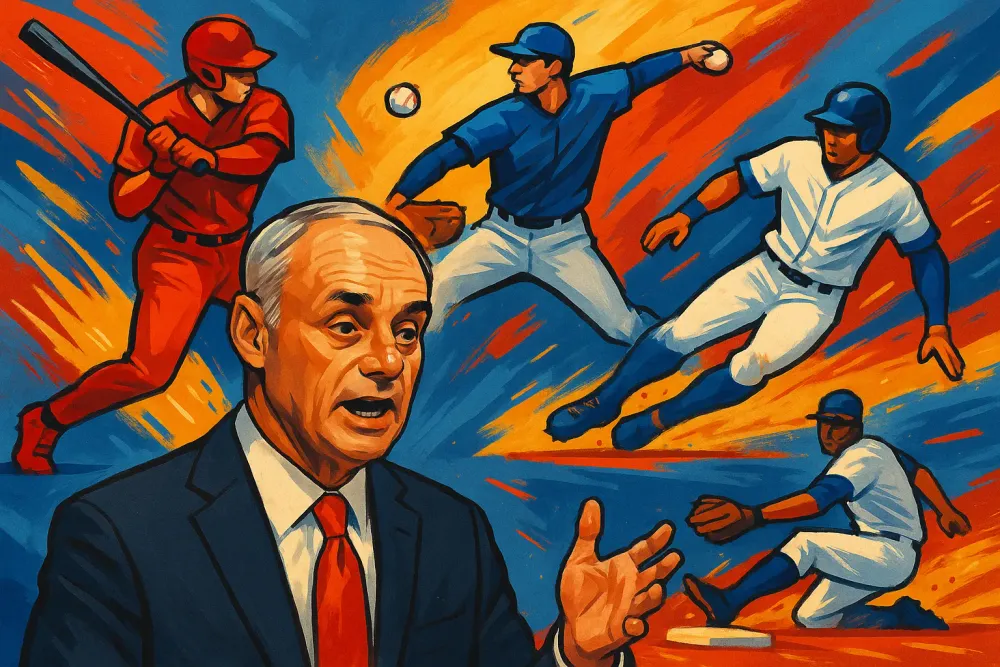
As Major League Baseball (MLB) Commissioner Rob Manfred gears up for his final years before retirement in January 2029, he has a vision for the future of MLB that could reshape the league as we know it. In a recent radio interview, Manfred discussed potential changes to the league’s structure, including the idea of an in-season tournament and the possibility of realigning divisions. With ambitious goals on the horizon, the future of baseball could see a major transformation in how the game is played and enjoyed by fans.
In-Season Tournament Concept
One of the standout proposals Manfred has mentioned is the introduction of an in-season tournament, similar to the format currently used in the NBA and many professional soccer leagues around the world. He stated during a discussion with WFAN's Chris Carton and Chris McMonigle that MLB has indeed explored the idea of “split seasons” that include such tournaments. “We understand that 162 games is a long pull,” Manfred remarked, acknowledging the challenge of keeping players engaged throughout the lengthy regular season.
The concept of an in-season tournament is aimed at refreshing interest during the extensive 162-game schedule. Manfred believes that this type of event would not only boost viewer engagement but also provide teams and players with additional incentives to perform well throughout the season, akin to the motivations seen in the NBA tournament format.
Challenges of Implementation
However, the legalization of an in-season tournament in MLB comes with its own set of complications. One notable difficulty is the potential reduction in regular-season games. “You almost inevitably start talking about fewer regular-season games,” said Manfred, highlighting that meddling with traditional games and fan-favorite season-long records could provoke backlash from devoted supporters.
The complexity of MLB’s existing schedule poses additional hurdles. The league's current structure requires considerable travel across North America, and maintaining player health and safety during this demanding schedule is crucial. With players expected to compete in 162 games over 186 days, minimizing travel burden through strategic scheduling becomes essential.
Realignment of Divisions
Another significant proposal from Manfred is the potential for realigning divisions within the league to ease travel demands on players. This plan includes the possibility of expanding the total number of teams from 30 to 32 by adding two expansion franchises. He envisions creating eight divisions, each consisting of four geographically aligned teams. This restructuring would strategically reduce the extensive travel required and can significantly aid player health and safety.
Importantly, this subdivision strategy would also preclude the possibility of having two teams from the same city in the same division. For example, the New York Mets and Yankees, Chicago Cubs and White Sox, and Los Angeles Dodgers and Angels would remain in separate divisions, further easing travel conflicts.
Steps Toward Change
While Manfred's proposals indicate significant change could be on the horizon, implementing these ideas will likely involve extensive negotiations with the Major League Baseball Players Association (MLBPA). Any alteration to the league's structure or the introduction of new franchises will require labor agreements that need to account for the implications of such changes on players' contracts and revenue sharing models.
Manfred’s focus in these last years of his tenure seems to indicate that he aims to leave a legacy that modernizes MLB, particularly while the league contemplates the financial viability and marketability of new franchises. Moreover, the in-season tournament model will need to be enticing enough — featuring high payouts and competitive intrigue — to ensure player and union approval.
The Implications of Change
Should all of Manfred's proposed changes come to fruition, the landscape of MLB could undergo a seismic shift. An in-season tournament that resonates with fans might provide fresh narratives throughout the season, while an amended division structure could help alleviate travel pressures on players, ultimately enhancing their performance and welfare.
Manfred’s transformation vision seeks to inject new life into a league that has faced scrutiny regarding its pace and engagement levels. Drawing parallels with successful models from the NBA and international soccer leagues, MLB has the chance to carve out an innovative approach to American baseball.
Conclusion
As Rob Manfred approaches the end of his tenure, his ambitious visions for MLB may be indicative of a changing era for America’s favorite pastime. With the potential introduction of in-season tournaments and a restructured divisional alignment, MLB could very well embrace a modernized approach that appeals to both players and fans alike. Nevertheless, the road to these changes is fraught with potential opposition and logistical challenges that will require careful navigation. Fans are left to wonder: will these ideas become reality before Manfred closes the door on his MLB career?