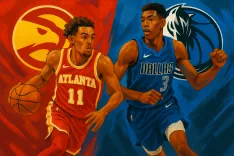
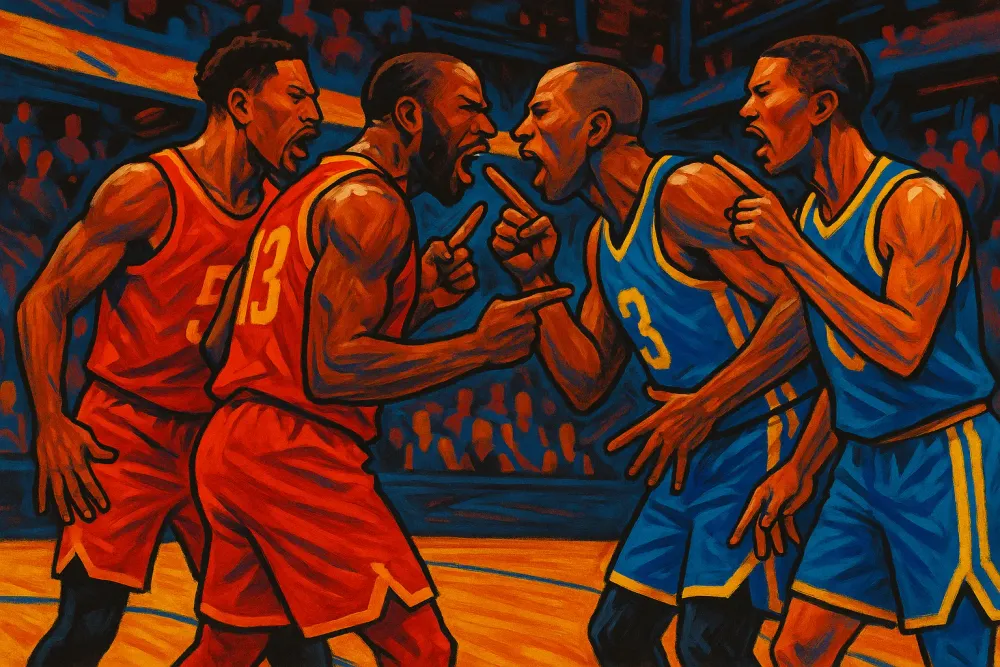
The NBA is not just about sheer talent, statistics, and championships; it's also about the personality that players bring to the hardwood. Among the most fascinating aspects of this culture is the art of trash-talking—a skill not quantified by any stats or numbers yet integral to the game itself. Trash-talk can create psychological advantages, disrupt opponents' concentration, and even become legendary in the history of the sport. This week, the Bleacher Report staff celebrated NBA GOAT Week by ranking the best dunkers, defenders, shooters, and now, the fifty best trash-talkers in league history.
The Nature of Trash-Talking
Trash-talking in the NBA is distinct and multifaceted, adding drama to the game. There’s a variety of styles: from clever wordplay to straightforward barbs, and for some, even an intimidating silence speaks volumes. While not every player is a talker, the most successful smack-talkers have one thing in common: they know how to get under their opponents' skin. According to Bleacher Report's criteria, each player is evaluated based on their on-court verbal and physical exchanges that disrupted their opponent's mental game. They are ranked based on a voting system by the B/R team.
Who Are the Greats?
It comes as no surprise that Michael Jordan, often hailed as the greatest player in NBA history, features prominently in the rankings. His trash-talking prowess is legendary; he could employ both pointed remarks and psychological tactics to put his opponents on edge. Jordan not only showcased his skills on the court but also made sure his words had an impact. The stories of his jabs linger, proving that his verbal assaults were just as deadly as his fierce competitiveness.
Notable Mentions
While some players, like LeBron James, have a more subdued approach to trash-talking—blurring the lines between subtle gestures and verbal taunts—others like Vernon Maxwell took it to another level. Maxwell, known for his worth on the court, also carved out a reputation as one of the great chatty players in history. Notably, he made waves on social media with taunts directed at the state of Utah, which only adds to his legacy.
Cedric Maxwell often came off with more bravado than many of his peers, famously quipping, “B---h ain’t scoring 40 on me.” This reflects the mixture of bravado and competitive spirit shared among great trash-talkers. You have Rick Mahorn, whose talk was more restrained yet just as effective, often relying on his on-court actions to intimidate opponents.
The Evolution of Smack Talk
Today's players are not just continuing the tradition set by their predecessors but are also adapting to modern methods of communication. Social media has opened up new avenues for players like Kevin Durant and Gilbert Arenas to unleash their verbal jabs outside the court. Durant’s tendency to engage in online rhetoric has become a hallmark of his career, while Arenas has established himself as a living legend with unmatched wit.
The Athletic Archetype
Beyond sheer talent and technical skill, the art of trash-talking emphasizes a player's mental game. As Damian Lillard has proven with both his clutch performances and insightful quips, being able to maintain composure and deliver a well-timed jab in vulnerable moments can lead to success and championships. It’s all about timing, context, and, of course, the ability to back it up with talent.
Meanwhile, current players like Dillon Brooks have embraced the villain role, challenging superstars and igniting rivalries, which in turn keeps the competitive spirit alive. For Brooks, trash-talking is less about cleverness and more about creating psychological warfare aimed at high-profile players who dare to cross him.
Cultural Implications
Trash-talking has a profound impact on the culture of basketball. It serves as a narrative tool at the intersection of entertainment and competition, providing fans with memorable moments that go beyond the game itself. Players like Joakim Noah—always quick to deliver verbal jabs—have taken this to heart, adding to the sport's allure. When Noah stated, “Cleveland isn’t cool,” it wasn’t just smack talk; it was a reflection of the rivalries that enliven the sport.
The Legacy of Trash-Talk
As the NBA continues to evolve, so does the phenomenon of trash-talking. New generations of players bring their unique flavor to the dialogue, reminiscent of past legends while differentiating themselves in style and technique. Ultimately, there’s a common thread – proving one’s dominance both through action and verbal dominance remains a critical aspect of basketball.
In this light, the trash-talking legacy will continue, enriching the culture and featuring prominently in the stories that define the league. Many fans eagerly await each new ranking of the best to do it, understanding that smack-talking is not just verbal sparring; it’s woven into the very fabric of the sport they love. As fans, we encourage the conversation—who do you believe deserves the spot among the trash-talking elite?