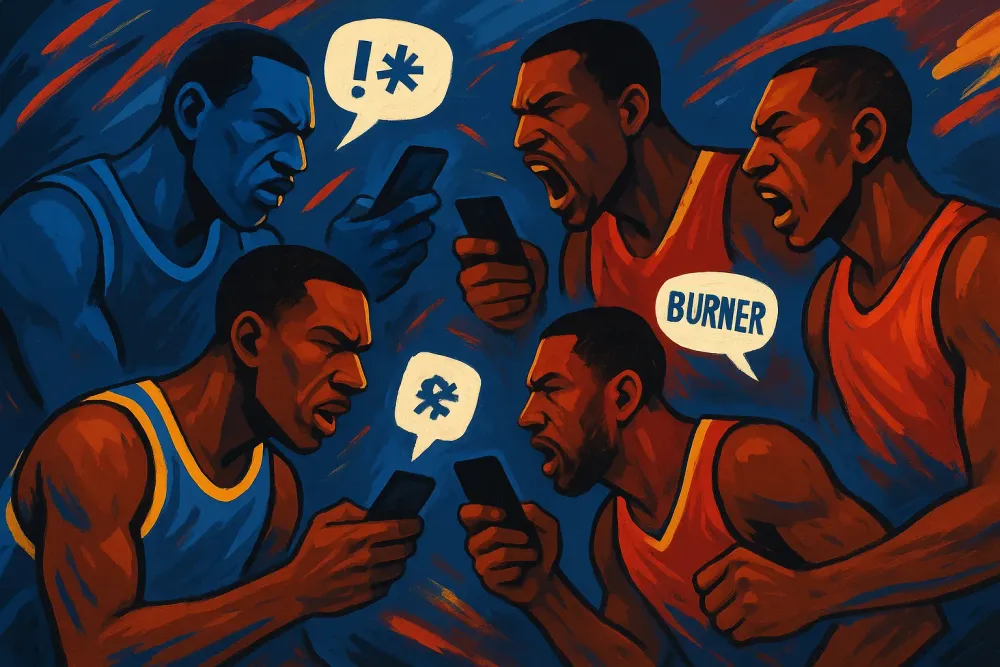
Are NBA fans tired of the usual debates over MVP and Rookie of the Year honors? Are they craving deeper conversations about the league, including the intriguing world of off-court drama? If so, they're in luck! Fans have voted on who they believe is the most likely player from each NBA team to operate a burner account to interact anonymously on social media, a trend that has become increasingly prevalent among athletes.
Understanding The Burner Account Phenomenon
Burner accounts, which allow players to express their views without the scrutiny that comes with their official profiles, have become a talking point among NBA circles. The voting results compiled via the Bleacher Report app reveal insights about both player personalities and the online narratives that shape fan interactions. With thousands of votes tallied, the idea isn't just about players engaging in online banter but rather a response to the level of online scrutiny they face.
Fan Favorites: The Top Suspects
The results from the poll provide a revealing look at which players fans think might have burner accounts. Starting with the Atlanta Hawks, guard C.J. McCollum has made headlines not only for his candid social media presence but also for his many appearances on studio shows. His willingness to engage publicly raises the question: why would he need a burner account? Sometimes, the itch to respond to critics cannot be scratched by an official persona.
Following McCollum, Boston Celtics star Jaylen Brown emerged as a prime suspect. Despite his impressive performance this season, discussions about his play, alongside media narratives labeling him as an MVP candidate, pave the way for possible anonymous responses, particularly in the face of critical analysis regarding his stats. The backlash he might face from fans could incentivize a persona behind the scenes.
For the Denver Nuggets, Bruce Brown has shown a stoic demeanor in games, yet his fiery personality could lead fans to believe he might choose to engage with critics online. Players like Michael Porter Jr. also join this conversation, where open personalities may desire outlets to counterbalance their public personas.
Controversy & Criticism: Fuel For Burners
Conversely, players known for their controversial pasts such as Dennis Schröder and D'Angelo Russell exemplify how past scrutiny can lead to burner accounts. Schröder's long-standing reputation for being in the thick of verbal altercations comes with a permanent spotlight on his Twitter behavior. Meanwhile, Russell's departure from the Dallas Mavericks and the fallout regarding his performances could easily prompt him to engage more fervently on social media.
But players aren't the only ones facing scrutiny. Front office executives like Artūras Karnišovas, recently released from his role with the Chicago Bulls, find themselves at the mercy of public opinion. His term was characterized by fan frustrations that could easily lead to an urge to counter the criticisms anonymously.
Bad moments and poor performances frequently invite derision online—the case for players like Tobias Harris, who, although less frequently at the forefront of drama, still finds his history worth investigating by the fan base.
Players With Split Personalities
Some players, like Joel Embiid, seem acutely aware of the ongoing discussions about their careers online. His public pursuit of MVP acknowledgment shows an understanding of the narratives being constructed around him. His humorous online engagements, coupled with his poignant self-awareness about injuries and public perception, showcase the potential of burner accounts as a tool for countering narratives.
Similarly, LeBron James's well-cultivated media image begs the question: how often does he consider engaging with critics directly? Notably, his history of utilizing burner accounts raises eyebrows, as fans voted on him for the feature, viewing him as a potential behind-the-scenes presence that would seek spirited debates without risking his crafted public persona.
Conclusion: Burners as Digital Shields
Ultimately, the existence of burner accounts amongst NBA players reflects a complex relationship with public discourse. Where fans can often dissect play, personalities, and performances, the option to respond without the high stakes attached to their official accounts may propose a necessary outlet for many athletes. As the game evolves both on the hardwood and online, understanding these dynamics provides a richer dialogue surrounding the league and its players.