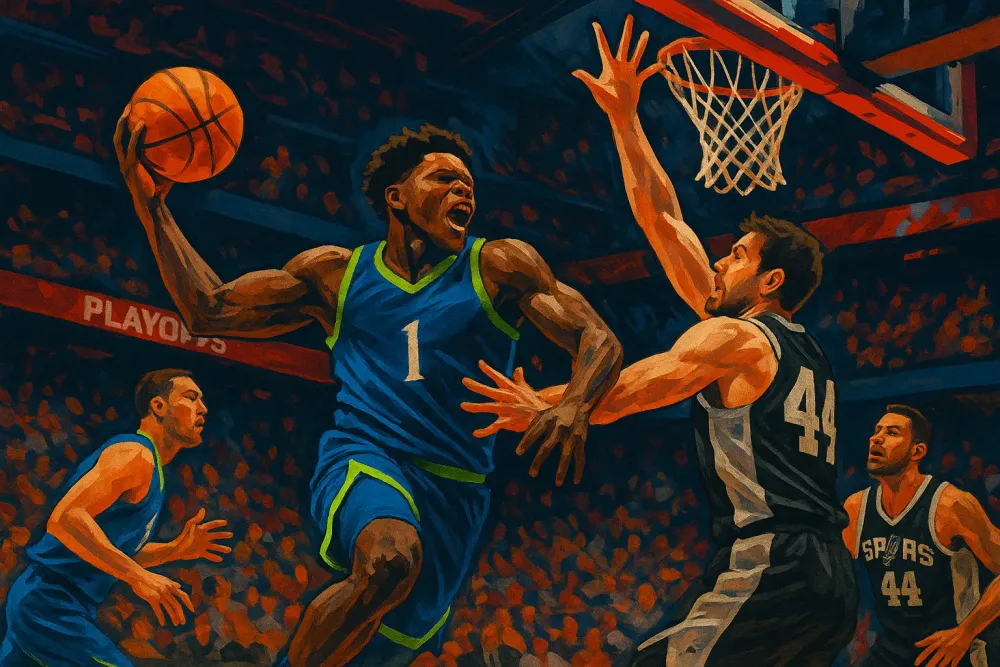
The Minnesota Timberwolves faced a disappointing end to their season after a staggering 139-109 defeat against the San Antonio Spurs in Game 6 of the second round of the playoffs. Star guard Anthony Edwards acknowledged the Spurs' dominance, stating, "the better team won." After the game, Edwards expressed respect for their opponents, crediting them for their performance throughout the series.
Edwards noted that the challenges faced during Friday night’s elimination had roots dating back to the regular season. "We had a hard time processing stuff, and going out there and doing it," he explained. This sentiment encapsulated the struggles the Timberwolves experienced as they attempted to perform at a high level but often found themselves unable to execute effectively.
Learning from the Past
When pressed about whether the Timberwolves should have begun addressing their consistency and execution issues earlier in the regular season, Edwards was candid. "Yeah, I think you're supposed to build championship habits, or playoff habits, in the regular season... No, we didn't build the habits during the regular season," he admitted. This reflects a broader trend that the Timberwolves organization has been trying to combat, as they have been eliminated in the playoffs three consecutive years, often in blowout fashion.
The Timberwolves initially started the series strong, pulling off a close victory by just two points in Game 1. However, the tides turned quickly as they dropped four of their next five games, allowing the Spurs to secure their spot in the Western Conference Finals against the defending champion Oklahoma City Thunder.
Coaching Reflections
Wolves head coach Chris Finch shared his perspective on the series finale, lamenting the large margin of defeat. "Certainly the margin of victories are a little tough to take," Finch remarked after the game. Despite the heavy losses, he acknowledged that the team fought hard but ultimately struggled to finish plays effectively on both ends of the floor. The coach felt the team "ran out of bullets" as the series progressed, highlighting the mounting pressure as the games went on.
This predicament was further exacerbated by the loss of key players. Minnesota's playoff journey was hindered after guard Donte DiVincenzo suffered a ruptured right Achilles tendon in Game 4 against the Denver Nuggets. Edwards emphasized DiVincenzo's importance, stating, "We just need everything to be clicking at the right time, that's the main thing. I think missing Donte is big for us." He noted that DiVincenzo’s ability to stretch the floor would have been invaluable, particularly in a series where defenses were keen on double-teaming. "A series like this, where they just double-team, I would love to have Donte in my slot, and just throwing it to him, and he'd shoot 20 threes," he said.
Performance Analysis
In the decisive Game 6, the Timberwolves struggled significantly with their shooting. The Spurs inflicted heavy damage with their offensive efficiency, converting 56% of their field goal attempts, while Minnesota lagged behind at just 38%. Edwards emerged as the top scorer for the Timberwolves, managing to put up 24 points, but the team failed to replicate his offensive success.
Defensively, while the Wolves managed to limit standout rookie Victor Wembanyama to 19 points, they could not contain Spurs' guard Stephon Castle, who had a standout performance with 32 points and 11 rebounds. Castle's dominance contributed to the Spurs' impressive team effort, sealing the fate of the Timberwolves.
Looking Ahead
As the Timberwolves reflect on their exit from this year's playoffs, the need for improvement will be paramount as they move toward next season. Building the discipline and “championship habits” that Edwards mentioned is crucial for the team's future success. Learning from the lessons of the past, including handling adversity and being consistent in execution, will be vital if they hope to advance further in the playoffs in the upcoming years.
The Timberwolves' journey will undoubtedly depend on not just the return of injured players like DiVincenzo but also on the development of their young core, including Edwards. The organization aims to establish itself as a legitimate contender in the Western Conference, but as Edwards poignantly noted, the groundwork must be laid during the regular season.
As the Timberwolves head into the offseason, they carry not just the sting of elimination but also a renewed understanding of what it takes to build a playoff-ready team.