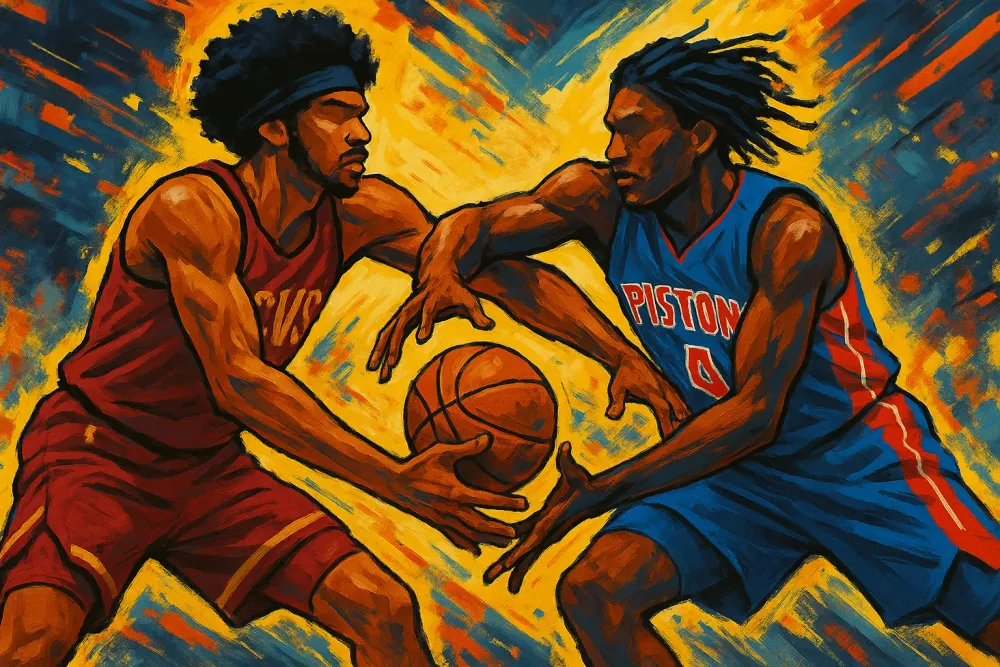
The Cleveland Cavaliers and Detroit Pistons faced off in a tense Game 5 during their second-round playoff series, culminating in a controversial moment that has captured the attention of fans and analysts alike. With the game on the line and the score tied at 103-103 at the end of regulation, a critical decision unfolded involving Cavaliers center Jarrett Allen and Pistons forward Ausar Thompson.
The NBA has weighed in on this pivotal moment, confirming that the officiating crew's decision to call no foul was indeed the right call. The league released its Last Two Minute Report for the game, explaining the circumstances surrounding the contact that has drawn scrutiny from Pistons head coach J.B. Bickerstaff and others.
No Foul Call Explained
The NBA's report clarified the sequence of events leading up to the no-call. It detailed that “Allen and Thompson legally step to the same spot while pursuing the loose ball.” The report further stated that both players lost their balance due to “marginal contact,” suggesting that the nature of the contact did not warrant a foul under the league's rules.
As the clock wound down in regulation, both players were eager to make a crucial play. They entered the fray for the loose ball with the hope of securing possession during a critical moment in the playoff match. The movement was described as legal, which has implications on how future fouls may be interpreted in similar scenarios.
Coach Bickerstaff's Discontent
Despite the ruling from the NBA, Bickerstaff expressed his profound displeasure with the lack of a foul call. Addressing the media after the game, he insisted, “He fouled Ausar. It's clear. He trips him when he's going for a loose ball. End of game situation. That's tough.” Bickerstaff’s comments underscore the emotional and competitive fervor that playoff basketball incites, especially in critical moments.
His statement reflects a sentiment shared by many players and coaches—namely, that end-of-game situations demand heightened scrutiny and judgment from officials. Such interactions can alter the momentum of a game, and the stakes are considerably increased when a playoff series is on the line.
The Aftermath of the Decision
Following the no-call and the eventual overtime play, Cleveland managed to outlast Detroit, securing a 117-113 victory and inching closer to advancing in the playoffs. The Cavaliers' victory in overtime demonstrated their resilience, but the controversial call remains a focal point for Pistons fans and critics of officiating.
The league’s confirmation of the no-foul has further fueled discussions about the consistency and clarity of officiating in critical game situations. Questions linger about how referees make decisions under intense pressure and the standards they apply when calling fouls in the final moments of tightly contested playoff games.
Implications for Future Playoff Games
This incident may spark discussions surrounding the need for reviews of critical end-of-game situations. With series victories hanging in the balance, the importance of getting calls right continues to be paramount. The NBA may need to consider technology or adjustments to officiating protocols to ensure that such pivotal plays are scrutinized and reviewed appropriately. The capacity to accurately assess marginal contact could instill greater confidence in fair play in high-stakes environments.
With both teams pushing hard for victory in this playoff matchup, it is clear that the narrative surrounding the officiating will continue to evolve. For fans and analysts, the aftermath of this game—the physicality, the strategies employed by coaches, and the dynamics between players—offers a rich landscape for discussion.
In ongoing playoff action, every call can sway the trajectory of a series. Constant analysis from fans and experts will likely spur continued conversation surrounding officiating, player conduct, and the importance of clarity when making decisions during the game.
The NBA continues to adapt and respond to fans' concerns regarding officiating, with this particular incident likely influencing how the league approaches tuning the rules and oversight of game-playing situations in the future.