
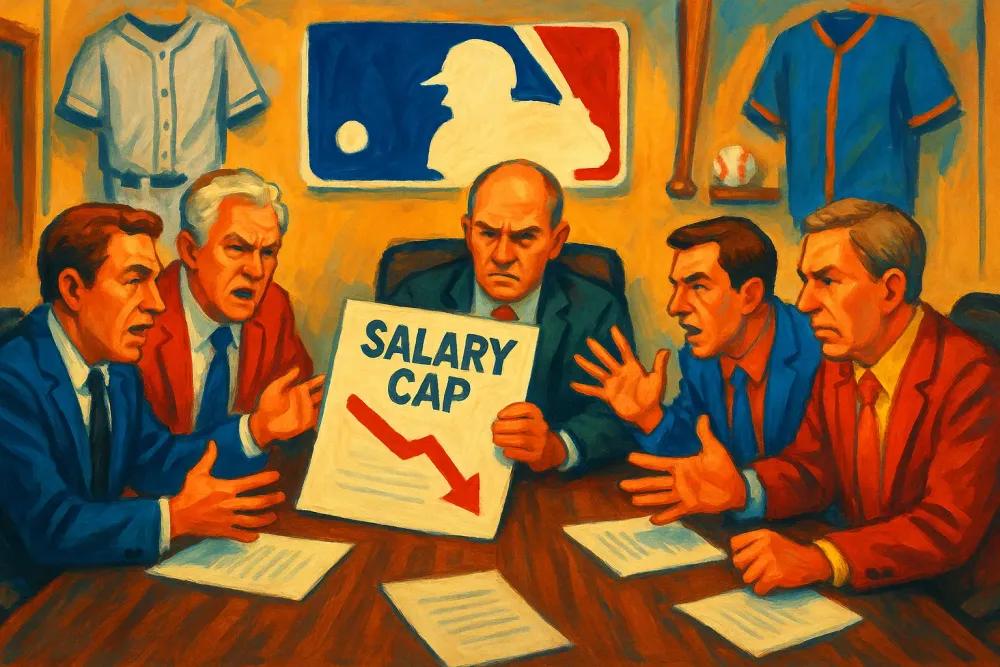
Major League Baseball (MLB) owners are reportedly preparing to push for the implementation of a salary cap as part of their next collective bargaining agreement (CBA). This significant move could reshape the financial landscape of the league and impact player salaries dramatically. According to the New York Post, the initial proposal hints at a salary cap floor set between $140 million and $160 million, with a ceiling in the region of $260 million to $280 million. The intention is to gradually introduce this cap, allowing for a transition period over the next few years.
The Proposed Salary Cap
As MLB owners consider restructuring the way player salaries are managed, the proposed salary cap reflects growing concerns over financial equity among teams. The reported cap floor suggests that every team would be expected to maintain a minimum payroll, ensuring that franchises cannot operate with excessively low spending. On the flip side, a ceiling on salaries could limit how much star players can earn, fundamentally altering the current dynamics of player contracts.
This initiative aims to create a more stable and balanced competitive environment, where mid and lower-tier teams have an opportunity to remain relevant and competitive. With rising revenues from media rights and merchandising, owners are envisioning a more regulated approach to team spending that could mitigate the widening gap between large market teams and their smaller counterparts.
Financial Preparations for Potential Work Stoppage
In addition to the push for a salary cap, MLB owners have reportedly established a “war chest” amounting to approximately $75 million per team, intended to provide financial security in the event of a work stoppage. This thorough preparation demonstrates the owners' awareness of potential challenges ahead, as negotiations with the MLB Players Association (MLBPA) are not only about salary structures but also player rights and benefits.
The overall ownership fund totals more than $2 billion, showcasing the monetary backing available should negotiations become contentious. The MLBPA is also preparing for a possible lockout, possessing a significant war chest of their own as part of the standard preparation process. This readiness speaks volumes about the importance of these negotiations and the potential for conflict between players and owners.
Historical Context
The demand for a salary cap is not entirely unprecedented in professional sports. In the last few decades, various leagues have successfully implemented salary cap systems to promote a more equitable playing field. While the rationale behind such systems varies, the ultimate goal remains consistent: to ensure that a few wealthy franchises do not monopolize the competition.
The introduction of a salary cap in MLB could mirror successful iterations seen in the National Football League (NFL) and National Basketball Association (NBA), where teams must work within defined financial constraints while strategizing to build a competitive roster. However, MLB's distinct history, economic structures, and individual player contracts present challenges that would need careful negotiation.
The Challenges Ahead
While the idea of a salary cap may find support among owners looking to boost competitive balance, it is likely to face significant pushback from players. Many star athletes cherish the freedom to negotiate high-value contracts without rigid constraints. The MLBPA has consistently prioritized players’ financial independence and will likely advocate fiercely against any limitations imposed by a salary cap.
Moreover, there is a long-standing culture within MLB that treats players as independent contractors, allowing for price variances based on talent, marketability, and performance. Negotiating a salary cap could disrupt this tradition, and players might resent any measures seen as restricting their earning potential.
Conclusion
The unfolding situation within MLB regarding a proposed salary cap signifies the complexities of labor relations in professional sports. As owners prepare to bolster their position in the negotiations with the MLB Players Association, the discussions surrounding financial security and equitable competition will take center stage. The stakes are high as both sides gear up for significant discussions that may define the future of baseball’s business model.
As this story develops and more information becomes available, fans and analysts alike will keep a close eye on the ongoing negotiations, evaluating the potential impacts on the game they love.
For the latest updates on this evolving story, keep following Bleacher Report across social media platforms and check our app for comprehensive coverage.