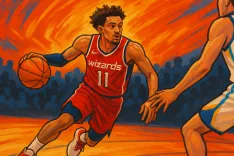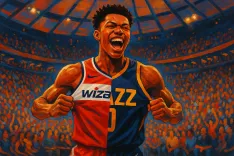

In a candid discussion on the House of Haymaker podcast, Dallas Mavericks minority owner Mark Cuban acknowledged a critical miscalculation regarding Jalen Brunson's potential prior to the 2022 free agency. Reflecting on the team's decisions, Cuban admitted, “It was really, really simple, right? We didn't see JB, as what he would become.” His comments come as Mavs fans grapple with the reality of Brunson's departure and the subsequent success he has achieved with the New York Knicks.
The situation has rekindled memories for Dallas supporters, particularly as they witness the Knicks' playoff run. It has also highlighted the complexities inherent in personnel decisions, where ownership, management, and players often have differing perceptions. In this instance, however, it seems there is a consensus on how the Mavericks handled Brunson's negotiations.
Brunson's Emergence as a Star
During the 2021-2022 season, Jalen Brunson began to shed his role as a complementary guard and emerged as a key player, particularly when Luka Dončić was sidelined due to injury. Cuban pointed out that Brunson’s performance during the playoff series against the Utah Jazz solidified his status as a legitimate star. “He worked his ass off. He showed that star potential when Luka got hurt and he won those games against Utah for us,” Cuban emphasized.
Before the start of the 2021-22 season, the Mavericks had the opportunity to secure Brunson with a four-year, $55.5 million extension. However, they opted against it, arguably failing to recognize the burgeoning talent and resilience Brunson was displaying. This decision came back to haunt them, as it became increasingly clear that the guard's value was rising significantly.
The Cost of Hesitation
Brunson’s performance in the playoffs was a turning point, a moment that propelled his value into nine-figure territory. By the time the Mavericks were prepared to discuss a new contract, the free-agent market had dramatically shifted in his favor. As the Mavericks pondered the dynamics of adding Brunson as a regular starter alongside Dončić, the potential complications became evident.
The concern stemmed from the identities of both guards; both were ball-dominant players. While Mavericks leadership may have envisioned a workable solution, real-life execution has shown that not all partnerships lead to championship success. The Mavs had to weigh their current roster against the growing needs of their offense, which ultimately resulted in their hesitancy to extend Brunson earlier.
Revisiting Decision-Making Processes
Fans and analysts alike have questioned whether the Mavericks truly miscalculated the situation or if they simply faced a conundrum that many teams encounter when evaluating talent. There is an unfortunate precedent of franchises investing heavily in players who later failed to deliver at the expected level. While questions around Brunson's ability to be a lead playmaker garnered skepticism, the Mavericks weren't the only ones in the league hesitant to endorse him with a massive contract.
Interestingly, this narrative invites a deeper reflection on franchise decision-making. Dallas's decision to pass on an early extension for Brunson wasn't unique, but they've now experienced the fallout of a player surpassing all previous expectations. This might have been a reasonable decision at the time, yet it sheds light on the unpredictability of player development and the fine line teams must navigate between investment and risk.
The Bigger Picture
Looking back, Cuban described the Mavericks' handling of Brunson as a blend of rational decision-making and unfortunate outcomes. Unlike other regrettable trades or acquisitions that often lead to re-evaluations within organizations, Brunson's exit carried an air of unanticipated consequence rather than a clear signal of impending failure.
This situation also speaks to the larger narrative of team-building in the NBA, where player development and star potential can often reshape the landscape of free agency. Missing out on Brunson not only altered the roster dynamics for the Mavericks but also allowed the Knicks to capitalize on an opportunity and transform their team into playoff contenders.
Lessons Learned Moving Forward
As the Mavericks move ahead, Cuban's reflections serve as an important reminder about the nuances of recognizing player potential and valuing contributions outside the traditional star archetype. Adjusting perceptions of players like Brunson can play a crucial role in the construction of a competitive roster.
Ultimately, while the circumstances around Brunson's departure were not entirely predictable, teams like the Mavericks must remain vigilant, observant, and adaptive in their evaluations to avoid similar heartbreaks in the future. As the NBA evolves, so too must the strategies and foresight of its franchises, ensuring that they not only focus on immediate needs but also invest wisely in the potential of their talent.