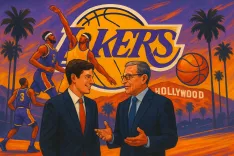

The landscape of NBA ownership is shifting once again as the legendary Los Angeles Lakers change hands. In a report from ESPN's Ramona Shelburne, it has been confirmed that a new ownership group led by Josh Kushner and Bob Iger is set to purchase the franchise at an astounding valuation of $12.5 billion. This shake-up comes less than a year after Mark Walter was appointed as the Lakers' majority stakeholder, making it a significant development in the world of sports economics.
Under the new ownership, Walter, who also owns the Los Angeles Dodgers, will maintain his stake in the Dodgers, reflecting his continued commitment to baseball while stepping aside from the Lakers for the moment. The Buss family, who have been synonymous with the Lakers since 1979, previously sold their controlling stake to Walter for a then-record $10 billion. This sale not only marked the end of an era but also set the stage for an unprecedented transformation within the franchise.
Historical Context of Lakers Ownership
The history of the Lakers is deeply intertwined with the Buss family, particularly the late Jerry Buss, who was instrumental in crafting the identity and success of the organization. Jerry Buss was synonymous with the franchise's golden years, transforming the Lakers into one of the most iconic sports teams globally. His influence on the team’s culture and legacy can still be felt today, even as the Lakers welcome a new chapter in ownership.
Following the record-breaking sale to Walter, Jeanie Buss, Jerry's daughter, retained significant control over the day-to-day operations of the team. According to Marc Stein, it's expected that Jeanie will continue in this role for the foreseeable future, even after the transition of ownership. However, the entrance of Kushner and Iger hints at potential changes ahead that could affect team dynamics both on and off the court.
The Valuation Surge
This latest ownership deal comes at a time when sports franchises are emerging as highly coveted assets. The Lakers’ valuation has surged by $2 billion in just a matter of months. Such rapid increases in value reflect the increasing revenue streams and profitability seen across major sports leagues, driven largely by lucrative broadcasting deals, merchandise sales, and an ever-expanding fanbase.
Comparatively, the Khosla family's earlier decision to buy the Seattle Seahawks for $9.6 billion illustrates the escalating worth of sports teams. This trend signals that franchises like the Lakers, particularly in the lucrative Los Angeles market, are viewed as solid long-term investments.
Kushner and Iger's Strategic Move
The acquisition by Josh Kushner and Bob Iger presents a fascinating strategic shift for both individuals. While there was an initial interest in acquiring a potential NBA expansion team in Las Vegas, the Lakers represent a more stable and established franchise. This decision underscores a crucial business insight: the opportunity to invest in a storied franchise like the Lakers is exceedingly rare and represents a valuable financial opportunity.
The implications of this change are manifold. For Kushner and Iger, it’s a chance to leverage their business acumen to enhance the legacy of the Lakers while also expanding their own influence within the league. Furthermore, their investment may lead to a stronger push for modernization and innovation in both revenue generation and fan engagement initiatives.
The Future of the Lakers
With the Lakers transitioning to new ownership while retaining key figures like Jeanie Buss in management, the stability of the franchise may be preserved. Importantly, the external environment of NBA ownership is already quite competitive. The Lakers, anchored by the presence of six-time All-Star Luka Dončić, represent a compelling project for the new owners, as the franchise has shown promising signs for both immediate and long-term success.
On-court reconfigurations are likely under the stewardship of Kushner and Iger. While no drastic changes are anticipated in the short term, any shifts in management style or strategic priority could profoundly impact the team's performance and approach to the upcoming seasons.
In a league where adaptability is crucial, the Lakers' new ownership group will need to balance respect for the team's storied past with a forward-thinking vision. With pressures from fans, media, and the current competitive landscape, how Kushner and Iger navigate this transition will be closely watched as they aim to uphold the Lakers' elite status.