
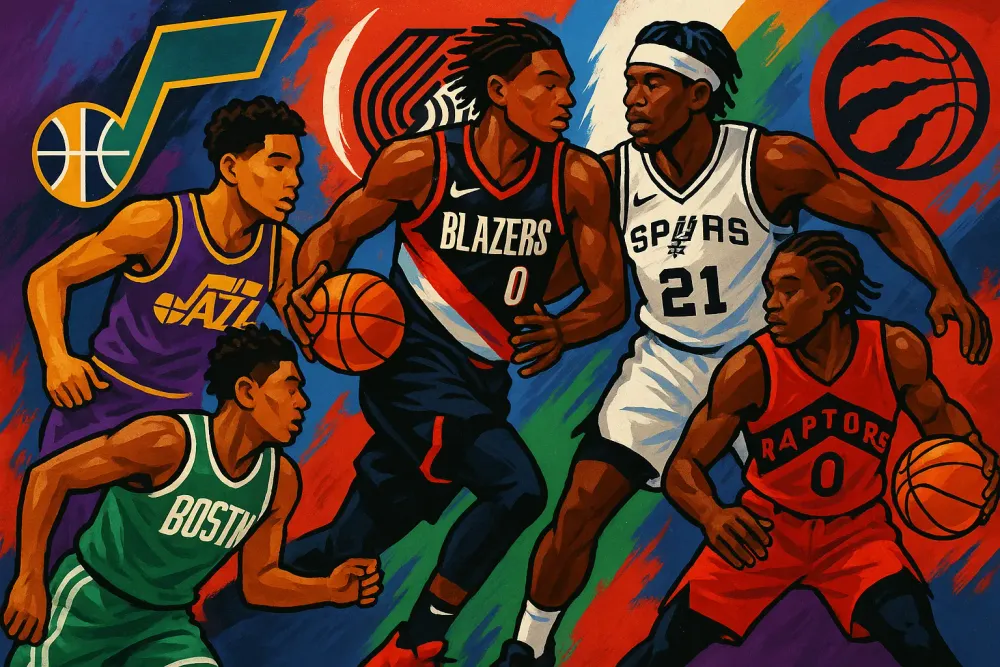
The NBA playoffs highlight the importance of strategic gameplay, especially when it comes to exploiting weaknesses in opponent lineups. Every team seeks to capitalize on any vulnerabilities, no matter how minor they may seem. As we embark on the next season, several teams have clear areas for improvement in their starting lineups. This article delves deep into the specific weaknesses of some NBA teams, revealing both established contenders and those that are looking to rebuild further.
Utah Jazz: A Shifting Landscape
For the Utah Jazz, fans can take solace in the fact that next year's lineup will likely look quite different from the last. The team’s prior starting unit featured players such as Keyonte George, Svi Mykhailiuk, Ace Bailey, Lauri Markkanen, and Jusuf Nurkić. Unfortunately, this crew struggled significantly, with a minus-10.0 point differential across their 16 starts. The lineup's glaring weaknesses, particularly the defensive frailties, were evident in their abysmal defensive rating of 120.6.
The good news is that change is on the horizon. With Walker Kessler, the anticipated defensive anchor, potentially stepping in for Nurkić—whose contract has expired—and the expected integration of last year’s deadline acquisition, Jaren Jackson Jr., it’s plausible that Utah's starting unit will gain much-needed defensive fortitude. With this new duo forming the backbone, it should greatly enhance the Jazz's overall performance. If they can maintain a solid health slate, fans could see a revitalized group next season.
Portland Trail Blazers: Searching for Stability
The Portland Trail Blazers started the season with a lineup that included Jrue Holiday, Shaedon Sharpe, Deni Avdija, Toumani Camara, and Donovan Clingan. However, this combination failed to yield the desired results, finishing with a modest minus-1.6 net rating across 330 possessions, second-worst among consistent starting groups. Moreover, when Sharpe went down due to injury, the subsequent lineup even regressed further to a minus-4.0.
In a bid to find a better mix, the Blazers should consider the potent combination that emerged with Scoot Henderson stepping into the fifth spot. This alternative lineup recorded a plus-12.4 net rating, evidencing a sharper offensive outing. To improve their offensive functionality, Portland needs a player capable of attacking the rim and maintaining scoring threats, which could alleviate the undue pressure on Avdija.
San Antonio Spurs: Embracing Future Potential
While the San Antonio Spurs showcased an impressive plus-18.5 net rating with their starting five of De'Aaron Fox, Stephon Castle, Devin Vassell, Julian Champagnie, and Victor Wembanyama, there’s room for innovation. The addition of Dylan Harper might be the winning ticket to transform this talented lineup into an even more formidable force.
Although they need no immediate overhaul, coaches should recognize the potential improvements Harper could bring while bolstering the team's defensive versatility and rebounding. The Spurs are in an enviable position with budding stars in the pipeline and a promising coaching strategy focused on player development. This growth should place them in a position to elevate their gameplay further.
Toronto Raptors: Tweaking for Success
The Toronto Raptors' current lineup, featuring Immanuel Quickley, RJ Barrett, Brandon Ingram, Scottie Barnes, and Jakob Poeltl, has shown effective chemistry over the regular season. They achieved a plus-2.4 rating, but recent playoff performances have brought into question if they could use some tweaks. An intriguing possibility is the consideration of Collin Murray-Boyles as a starting center instead of Poeltl, especially since the metrics indicate his time on the court often leads to improved team dynamics.
As the Raptors eye future success in the coming seasons, integrating Murray-Boyles' versatility could turn this into a rapidly evolving lineup able to pivot strategically during games. Moving forward, the optimum Raptors roster should prioritize a dynamic frontcourt that promotes both offensive and defensive strengths.
Boston Celtics: Seeking Offensive Cohesion
Lastly, the Boston Celtics are at a crossroads with their starting group, prominently featuring Payton Pritchard, Derrick White, Jaylen Brown, Sam Hauser, and Neemias Queta. Despite Brown and White's solid performances, the need for a more cohesive lineup persists. Notably, Queta has demonstrated promise; however, at times his shooting and offensive fluidity fall short, indicating that he might be more effective as a backup.
Bringing in a more skilled shooting center could create additional offensive space while maintaining a solid defensive core. Integrating Jayson Tatum back into the lineup will be crucial, but adjustments to the guard positions could vastly improve the Celtics' scoring capabilities. With careful deliberation, the Celtics can strategize for a robust showing next season, ultimately looking to reclaim their status as a premier contender in the NBA.
As we gear up towards the next season, teams must continuously adapt and refine their lineups. Whether through promising young talents or strategic changes to starting positions, the quest for championship glory necessitates constant vigilance and innovation from franchises around the league.