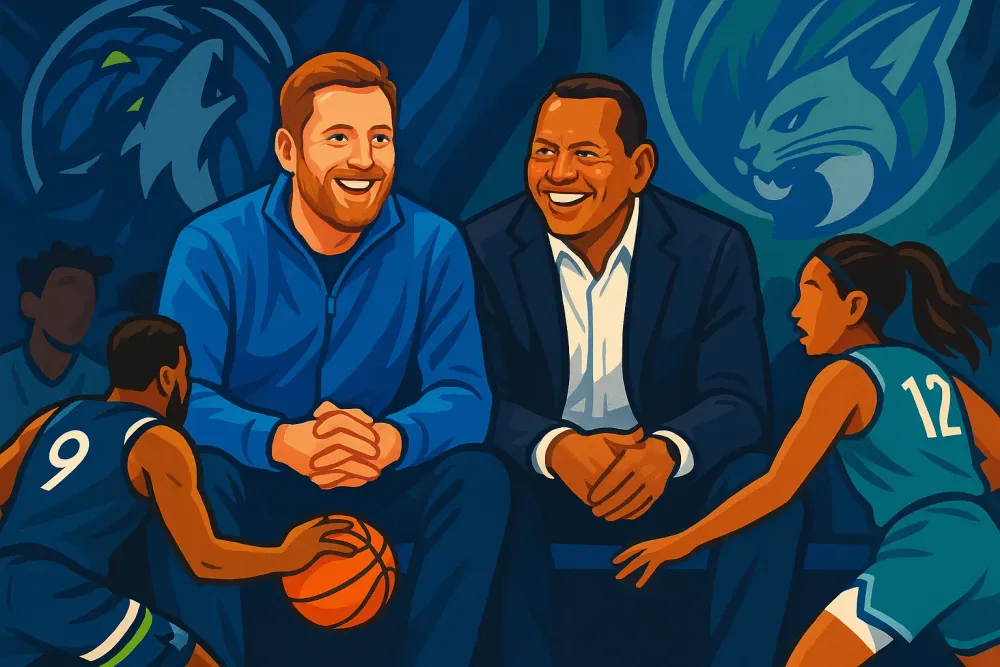
In a significant shift within the Minnesota Timberwolves organization, Marc Lore has sold most of his stake in the NBA franchise and its WNBA counterpart, the Minnesota Lynx. This pivotal change comes just two years after Lore took over as majority owner and governor of the teams. According to ESPN’s Shams Charania, Marc Stad will assume control after acquiring a majority of Lore's interest, which was valued at a staggering $4.5 billion.
MLB icon Alex Rodriguez, who was part of the original group that purchased the Timberwolves and Lynx alongside Lore, expressed his enthusiasm about increasing his investment in the team. “One of the great joys I've had in my career is spending the last few years helping build the Timberwolves and Lynx with my friend and partner Marc Lore,” Rodriguez stated. “I'm very excited to announce that this incredible journey reaches a new level today.” Rodriguez has plans to enhance his involvement, becoming Co-Chairman, Governor of the Lynx, and the alternate Governor of the Timberwolves, pending league approval.
Ownership Transition and Its Implications
As Lore steps away from his controlling role to focus on other business ventures, he will continue to be an investor and an influential part of the Timberwolves' leadership. Rodriguez’s remarks highlight the camaraderie and partnership that has existed between the two investors but also point to a notable evolution within the team’s management structure. Rodriguez's increased involvement indicates a commitment to growing the franchise amid a competitive NBA landscape.
This transition comes during a transformative period in the NBA, with the Timberwolves sale marking the ninth franchise sold since 2022. Interestingly, one of the most notable recent transactions included Mark Walter's agreement to sell the Los Angeles Lakers to Bob Iger and Joshua Kushner for a whopping $12.5 billion. Among other franchises switched hands in the past year or so are the Phoenix Suns, Dallas Mavericks, Charlotte Hornets, Boston Celtics, and Portland Trail Blazers. These sales depict a broader trend in the NBA market, reflecting the increasing financial stakes and the desire among investors to capture a piece of the league.
Background of the Timberwolves Purchase
The sale also serves as a reminder of the challenges faced by Lore and Rodriguez in their journey to secure majority ownership. The NBA board of governors officially approved their purchase of the Timberwolves in June 2025, following a protracted negotiation saga with the previous owner, Glen Taylor. Taylor had raised concerns about Lore and Rodriguez's long-term financial viability, particularly regarding some budget projections for the 2024-25 season, which suggested a considerable payroll reduction that raised eyebrows around the league.
Despite these challenges, Lore and Rodriguez managed to develop a competitive roster, guiding the Timberwolves to the playoffs for five consecutive seasons. Under their brief stewardship, the franchise enjoyed notable success, including an impressive run to the Western Conference Finals in 2024 and 2025. Last season, the team showcased its resilience and talent by finishing as the No. 6 seed in the West and pulling off an upset over the Denver Nuggets in the opening round before ultimately falling to the San Antonio Spurs in the conference semifinals.
The Future for the Timberwolves and Lynx
With Marc Stad at the helm, the Timberwolves and Lynx are poised to continue this trajectory of competitiveness and innovation. Stad's investment group boasts management of over $35 billion in capital, though his exact net worth remains unspecified. The fresh infusion of leadership may usher in new strategies and marketing initiatives that could bolster the franchises' presence both on and off the court. The team’s recent playoff performances suggest a hungry and dynamic roster that Stad will have the opportunity to further nurture and expand.
The start of this new chapter not only emphasizes the evolving dynamics within NBA ownership groups but also reflects the broader economic environment in professional sports—with franchises increasingly seen as valuable investments. Both teams have demonstrated potential on the court and now have the chance to capitalize on this momentum as they prepare for the upcoming seasons with fresh leadership.