Ten NBA Players Who Are Rapidly Losing Their Value in 2023-24
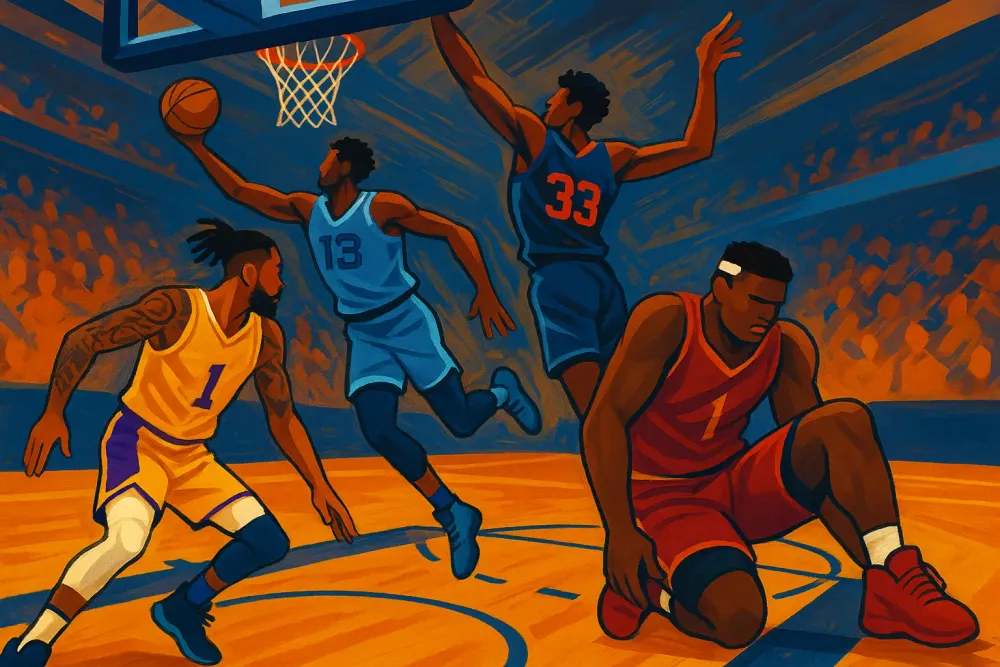
The Changing Landscape of Player Value in the NBA
As the NBA evolves, the value of its players is undergoing a significant transformation. Teams are becoming increasingly cautious with their spending, particularly in light of new apron restrictions and concerns surrounding player durability. The days of making overreaching contracts for guards, regardless of their performance, appear to be reaching a tipping point. This season, several players are finding their market value plummeting, often trading for far less than anticipated due to performance issues, injury histories, or outdated styles of play. Here, we explore ten players whose current game fails to align with their financial and reputational worth.
1. D'Angelo Russell: A Max Player No More
Once hailed as a potential superstar after being selected as the No. 2 overall pick by the Los Angeles Lakers in 2015, D'Angelo Russell has seen his star dim considerably. Currently averaging just 10.2 points and 4.0 assists on poor shooting efficiency, Russell’s time with the Dallas Mavericks and later the Washington Wizards speaks volumes about his stalling career. His on/off rating reflects a minus-4.0—positioning him firmly in the 31st percentile in the league. With a player option for the upcoming season, Russell is likely to stick around but not for the right reasons.
2. Kyle Kuzma: From Rising Star to Support Player
Kyle Kuzma began his NBA journey with immense promise, but inconsistency has plagued his career. While he averaged 17.1 points per game, his three-point percentage—hovering around just 33.4%—has limited his impact. Kuzma’s on/off rating of minus-4.6 suggests that he struggles to positively affect game outcomes, and despite a hefty $22.4 million salary, he's increasingly viewed as merely a role player rather than a crucial contributor to his team’s playoff ambitions.
3. Jaren Jackson Jr.: Talented but Overrated
Much is expected from Jaren Jackson Jr. following a massive contract extension and being traded for significant draft assets. Despite being labeled a two-time All-Star and winning the Defensive Player of the Year award, Jackson's on-court impact remains questionable, as demonstrated by his lackluster rebound numbers and persistent injury issues. His on/off rating of minus-3.6 suggests he's not making the expected contribution on the Memphis Grizzlies, raising doubts about his max contract valuation.
4. Tyler Herro: A Scoring Threat with Limitations
Tyler Herro has showcased scoring ability, averaging over 20 points per game for several seasons. However, concerns regarding his defensive abilities and injury history have led the Miami Heat to hesitate in extending him to a lucrative contract. Notably, the team's performance seemed to improve during the playoffs when he was sidelined. With potential trade rumors swirling around him, Herro's on/off rating of plus-6.9 shows that while he can score, he may not be the player Miami needs moving forward.
5. Deandre Ayton: Disappointing Consistency
Deandre Ayton’s journey as the No. 1 overall pick in the draft has been bumpy, with fans and analysts alike critical of his work ethic and motivation. While putting up decent scoring and rebounding numbers, Ayton's inability to protect the rim has diminished his value. His contract will expire soon, yet his inconsistencies and negative on/off rating indicate he might fade into obscurity if improvement isn't demonstrated.
6. Zion Williamson: The Injury-Prone Enigma
Every season, fans hope to see the best version of Zion Williamson, but far too often, he's dealing with injuries. With a low three-point shooting efficiency and lackluster rebounding, he’s not living up to his max contract. His recent performances display a modest decline in points and other essential stats. As teams evaluate Williamson's potential impact, his on/off rating of plus-0.1 suggests little change occurs during his time on the floor.
7. Kristaps Porziņģis: Injury-Ridden Expectations
Despite a high swing rating, Kristaps Porziņģis has struggled to stay on the court due to chronic injuries. His skill set remains appealing, yet his production is waning, having just played sporadically amidst nagging health issues. The Golden State Warriors’ recent trade for him may highlight their desire for immediate star power, but his lack of availability and diminishing returns signal a troubling future.
8. Zach LaVine: Empty Calories as a Scorer
After three playoff appearances in his career, LaVine has consistently struggled to create impactful performances when it matters most. Known for his scoring ability, he has yet to transfer that talent into tangible success for his team, with the Kings’ poor record mirroring his ability to contribute beyond highlights. With an on/off rating suggesting minimal impact, LaVine’s contract continues to represent a more significant burden than expected.
9. Anthony Davis: The Once-Great Center's Decline
Anthony Davis is pivoting into an uncharted stage in his career, characterized by injuries and diminished production. With ugly shooting percentages and a recent inability to stay healthy, his standing as one of the league's elite players is under scrutiny. With a looming contract worth massive dollars, the stakes couldn't be higher for Davis to regain his former glory, though the path back seems increasingly challenging.
10. Draymond Green: Legacy vs. Current Production
While Draymond Green's accolades tell a story of defensive ingenuity, his current performance has gradually declined. Now primarily a role player rather than a game-changer, his limited contributions and low on/off rating make it difficult to justify his substantial contract. With age starting to weigh heavily on his performance, the Warriors must reassess their reliance on him moving forward.
Conclusion: The Evolution of Player Evaluation in the NBA
As the NBA landscape significantly shifts, teams are redefining how they evaluate player value. High salaries tied to players no longer demonstrably capable of impacting games positively create substantial questions for franchises. Moving forward, organizations that can accurately gauge talent, durability, and contributions on the court will likely thrive in the ever-changing league.