Seven NFL Free Agency Cuts Teams Might Soon Regret
Introduction
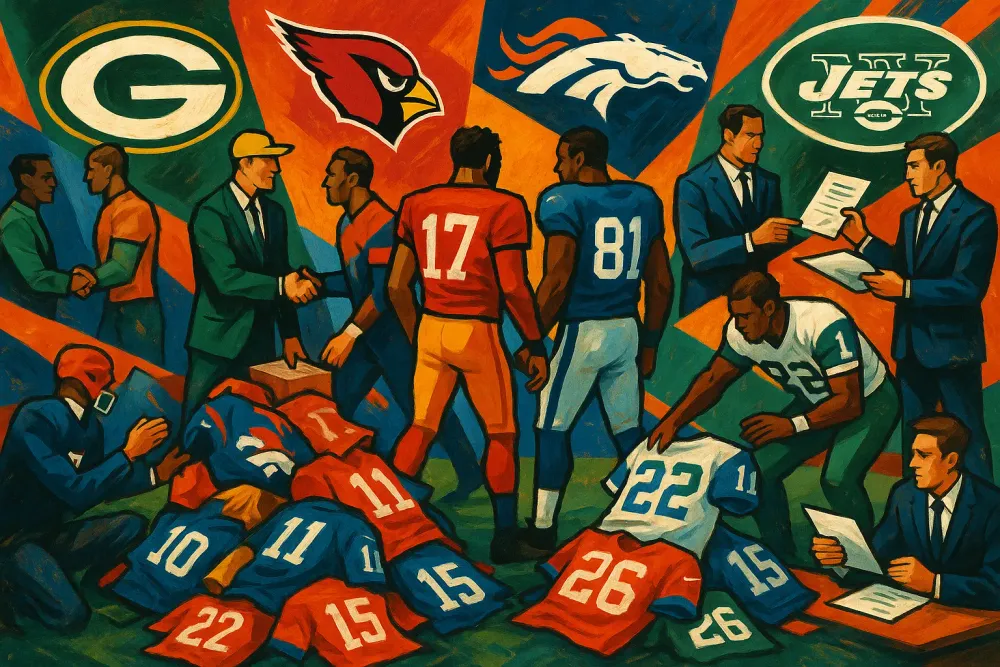
The initial day of NFL free agency has come to a close, leaving fans and analysts buzzing with excitement and speculation. Over the past few days, teams have made numerous signings and trades, some of which might turn out to be regrettable decisions in the long run. As we dive into the flurry of roster moves, we’ll examine seven players who were released for cap-saving reasons and discuss why their respective franchises might come to regret these decisions.
Understanding Cap Casualties
In the NFL, salary cap management is crucial for a team's success. Teams often find themselves making tough decisions, leading to what are known as cap casualties. While cutting players to save cap space can be a strategic move, it sometimes results in a loss that teams later regret. This year, several notable players have been released, sparking discussion over whether those choices were the right ones.
Tyler Biadasz: A Surprising Release
One of the most puzzling cuts was Tyler Biadasz of the Washington Commanders. After suffering a knee and ankle injury in 2025, Biadasz was surprisingly released, only to be snagged by the Los Angeles Chargers on a three-year, $30 million contract. The absence of a consistently solid center, especially after the Commanders struggled with quarterback Jayden Daniels’ injuries, raises questions about their offensive line strategy. Biadasz’s performance—ranking 11th among centers by Pro Football Focus in 2025—would have provided significant value to the Commanders.
The Miami Dolphins' Cap Conundrum
Meanwhile, the Miami Dolphins’ decision to shed salary by releasing quarterback Tua Tagovailoa came with its own set of complications. With an eye towards freeing up cap space, they also let go of pass-rusher Bradley Chubb despite his productive season. Chubb, who had 43 tackles and 8.5 sacks, now finds himself with the Buffalo Bills, leaving the Dolphins with a potentially weakened pass rush. New head coach Jeff Hafley’s first season may now be hindered by the challenges of replacing Chubb’s contributions.
Atlanta Falcons and the Kirk Cousins Dilemma
The Atlanta Falcons are taking a gamble by parting ways with veteran quarterback Kirk Cousins. Simply put, releasing a quarterback with a 5-3 record in 2025 and experience working with their new head coach Kevin Stefanski could come back to haunt them. While the team has brought in Tua Tagovailoa as a potential backup, his injury history alongside third-year QB Michael Penix Jr. raises significant concerns for a franchise aiming for NFC South supremacy.
Detroit Lions' Offensive Line Woes
After releasing Taylor Decker, the Detroit Lions found themselves at a crossroads. Decker’s request for release coupled with his overall performance had left the Lions’ offensive line in a precarious state. While they are moving to potentially position Penei Sewell at left tackle, the overall disruption in a critical area of the field may contribute to complications as the Lions aim for Super Bowl contention.
New England Patriots and the Loss of Stefon Diggs
For the New England Patriots, the decision to release wide receiver Stefon Diggs after a breakout year for quarterback Drake Maye could have far-reaching consequences. Despite some off-field issues, Diggs was a reliable target and led the NFL in Catch Score. As the Patriots signed former Packers receiver Romeo Doubs, the question remains: can they replace the production and chemistry that Diggs established with Maye?
Denver Broncos’ Risk with Dre Greenlaw
In Denver, the Broncos opted to part ways with linebacker Dre Greenlaw, despite him being a key player when healthy. Although the Broncos had the second-ranked defense last season, Greenlaw’s impact was valuable, and his departure could lead to challenges in maintaining that defensive prowess. The Broncos may end up regretting this decision if Greenlaw excels with a new team.
Carolina Panthers and A'Shawn Robinson's Departure
The Carolina Panthers’ recent cut of veteran defensive tackle A'Shawn Robinson is also under scrutiny. While financial logic was behind this move, Robinson's contributions in the previous season were significant, and the Panthers' defensive ambitions could suffer without him. Rival teams, including the Tampa Bay Buccaneers, now have the chance to utilize a player who helped the Panthers reach the playoffs.
Conclusion
As the roar of NFL free agency subsides, the aftermath reveals the implications of roster decisions made in haste. The teams that released these players—Biadasz, Chubb, Cousins, Decker, Diggs, Greenlaw, and Robinson—may soon find themselves regretting their choices as the season progresses. The crucial balance of cap management and on-field talent is a dance that requires careful choreography, as franchises strive for success while also making tough calls that could have long-lasting effects.