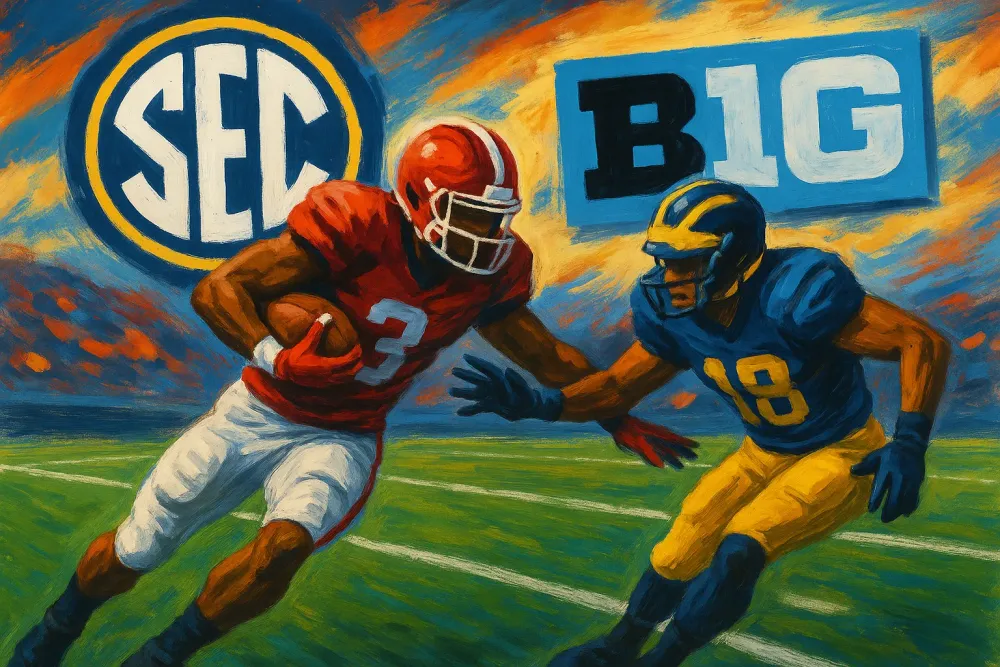
The Southeastern Conference (SEC) made a significant announcement on Tuesday, declaring new regulations that will impact how teams manage their rosters moving forward. Under the new rules, SEC teams are prohibited from including players who have declared for the NFL, NBA, or WNBA drafts but did not withdraw within the designated timeframe. Additionally, players who have signed contracts with professional teams or were ever on a roster for any of those leagues are also barred from maintaining eligibility.
This ruling comes in the wake of a controversial situation involving tight end Dae'Quan Wright, who had reached an agreement to play for LSU after having signed contracts with both the Philadelphia Eagles and Cleveland Browns earlier this offseason. The chaos surrounding these contracts raised questions about eligibility and oversight within college athletics, prompting the SEC to take definitive action.
Big Ten Takes Similar Steps
On the same day, the Big Ten Conference also adopted a fundamentally similar rule. Their statement underscored a unanimous decision to prevent football players from retaining eligibility if they have signed a professional contract, were on a professional roster, or declared for the NFL Draft as underclassmen without proper withdrawal.
The consensus among both conferences illustrates a growing concern regarding player eligibility and roster integrity within college sports. Moreover, the Big Ten mentioned it would actively pursue additional restrictions regarding professional athletes competing in other sports as well.
Other Conferences Considering Similar Regulations
Notre Dame, while not affiliated with a specific conference, has reportedly adopted a similar stance in its athletic policies. Meanwhile, the Big 12 is allegedly in the process of drafting its own regulations addressing these issues. The Atlantic Coast Conference (ACC) is also scheduled to discuss the topic later this week, suggesting a broader trend across collegiate athletics to tighten eligibility rules.
Implications for Athletes Seeking Extended Eligibility
This announcement follows a pivotal offseason where both Dae'Quan Wright and New Orleans Saints defensive tackle Zxavian Harris sought to secure their eligibility for a fifth year. Their agreements with LSU came after a Louisiana judge granted a temporary restraining order, allowing them to pursue extended eligibility despite previously signing contracts.
The NCAA had earlier ruled to allow athletes five years of eligibility within a span of five consecutive seasons. However, this rule did not extend to athletes who played for the first time in the 2022-23 academic year, creating a loophole that led numerous athletes to seek legal recourse to secure their fifth year of eligibility.
Historical Context: Player Agreements and Transfers
Wright and Harris are notable players with previous connections to college coach Lane Kiffin while at Ole Miss. Their recruitment by LSU highlights the complexities surrounding player agreements and the dynamics of collegiate sports, where commitments can drastically change within short periods due to professional engagements.
Such developments emphasize the evolving landscape of college athletics, particularly as players navigate their transitions from amateur to professional ranks. The SEC's and Big Ten's decisions reflect a cautionary approach aimed at preserving the integrity of their programs while ensuring fair competition.
The Road Ahead
As conferences continue to evaluate their eligibility requirements, it remains to be seen how these regulations will affect college recruitment strategies, player decisions, and the overall landscape of college sports. With the ACC and potentially the Big 12 set to follow suit, we may observe a significant shift in how college teams approach their rosters and engagements with players seeking to transition to the professional level.
For athletes hoping to maintain their collegiate eligibility while pursuing opportunities in professional leagues, it will be crucial to stay informed about these shifting regulations and how they might impact their careers. The continued legal battles surrounding eligibility, particularly for those affected by the NCAA's recent rulings, will undoubtedly shape the dialogue in college sports moving forward.