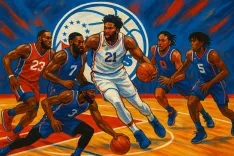

In a recent episode of the Game Over podcast hosted by Max Kellerman, Rich Paul, the renowned agent of NBA superstar LeBron James, defended his client against accusations of 'ring chasing.' As the discussion centered on LeBron's recent decision to sign a minimum contract with the Philadelphia 76ers, Paul emphasized that James’s motivation is not simply to collect championships but to be in a position to win. Paul stated, "He accepted a minimum contract because he wants to win," which underscores a new phase in LeBron's illustrious career.
The term 'ring chaser' has followed James since his infamous Decision in 2010, when he opted to join Dwyane Wade and Chris Bosh with the Miami Heat. Critics often argue that players who change teams in pursuit of titles are somehow devaluing their achievements. However, Paul’s remarks shine a spotlight on the complexity of modern NBA dynamics.
The Legacy of Ring Chasing
The concept of ring chasing often ignites passionate debate among basketball fans and analysts alike. Critics of James often juxtapose him with legendary players like Michael Jordan and Kobe Bryant, who are held in high esteem for their loyalty to a single franchise. Jordan spent most of his career with the Chicago Bulls, where he secured six championships. Even when Jordan finished his career with the Washington Wizards, his legacy is predominantly tied to Chicago, making it easier for fans to idolize him.
Similarly, Kobe Bryant spent his entire 20-year career with the Los Angeles Lakers, leading them to five titles. Comparatively, while LeBron James has achieved significant success—winning four championships with three franchises—he is often scrutinized for the number of teams he has played for in pursuit of success. This scrutiny is compounded by the fact that he has reached the NBA Finals ten times, a remarkable accomplishment that should be celebrated instead of criticized.
James's Pursuit of Excellence
Rich Paul argues that the narrative surrounding James being a 'ring chaser' is fundamentally flawed. During the podcast, he articulated that every athlete's prime objective is to win—not just for personal accolades, but as a fundamental goal of sports participation. This holds true particularly for James, who has faced relentless criticism about his Finals record of 4-6. Instead of being acknowledged as one of the top four players in history to reach the Finals at least ten times, these critics focus on the negative aspects of his record.
When considering the various options available to him, it’s easy to see why James finds the 76ers an appealing choice. Alongside a talented roster that includes stars like Jaylen Brown, Tyrese Maxey, Joel Embiid, and VJ Edgecombe, the opportunity for success becomes clearer. This team presents a unique chance for James to pursue another title while contributing his vast experience and talent.
The Road Ahead for the 76ers
While the roster may appear formidable on paper, Paul is correct to point out that talent alone does not ensure success. The team must still perform well throughout the regular season, secure a playoff spot, and navigate the challenging paths that accompany a championship run. The road to the NBA title is fraught with challenges, often likened to a gauntlet, and even the most skilled teams must remain on guard against formidable opponents.
Moreover, the diversity in James's career achievements—winning titles with distinct teams—reflects his adaptability and prowess. The stigma of 'chasing rings' becomes less relevant when viewed through the lens of a player striving for greatness. By adjusting to varying team dynamics, he has shown that successful careers can be built in collaboration with different franchises.
Final Thoughts
In the current landscape of professional basketball, where player movement is more frequent than ever, the way fans digest the idea of loyalty and success is evolving. James's ongoing pursuit of championships highlights the fact that elite players often have to take risks to remain competitive. Rich Paul’s defense of LeBron serves not only to protect his client’s legacy but also to challenge longstanding assumptions about what it means to win in the NBA.
As LeBron embraces this new chapter with the Philadelphia 76ers, fans and analysts alike should view this decision not through the narrow lens of ring chasing but rather as part of a broader strategy focused on winning and personal growth. Ultimately, the legacy of LeBron James will be determined not just by the championships he collects, but by the impact he continues to have on the sport of basketball itself.