Redefining the Hall of Fame: A New Era for Baseball Legends
The Changing Landscape of Baseball Evaluations
Just a few decades ago, the notion that a pitcher with only 200 wins or a hitter with just 1,500 hits could find themselves enshrined in the Baseball Hall of Fame would have seemed utterly absurd. Historically, significant milestones such as 300 wins for pitchers or 3,000 hits for hitters served as the definitive benchmarks for Hall of Fame induction. The rare player who circumvented these stats was truly exceptional.
However, as the game has progressed, so too has the perception of greatness within it. With the advent of modern bullpen strategies, it's likely we've witnessed the last of the 300-game winners. The benchmarks of 3,000 hits and 500 home runs, while still prestigious, have turned nebulous; currently, there exists no active player poised to reach either of these monumental figures.
2026 Hall of Fame Ballot: A Tone Shift
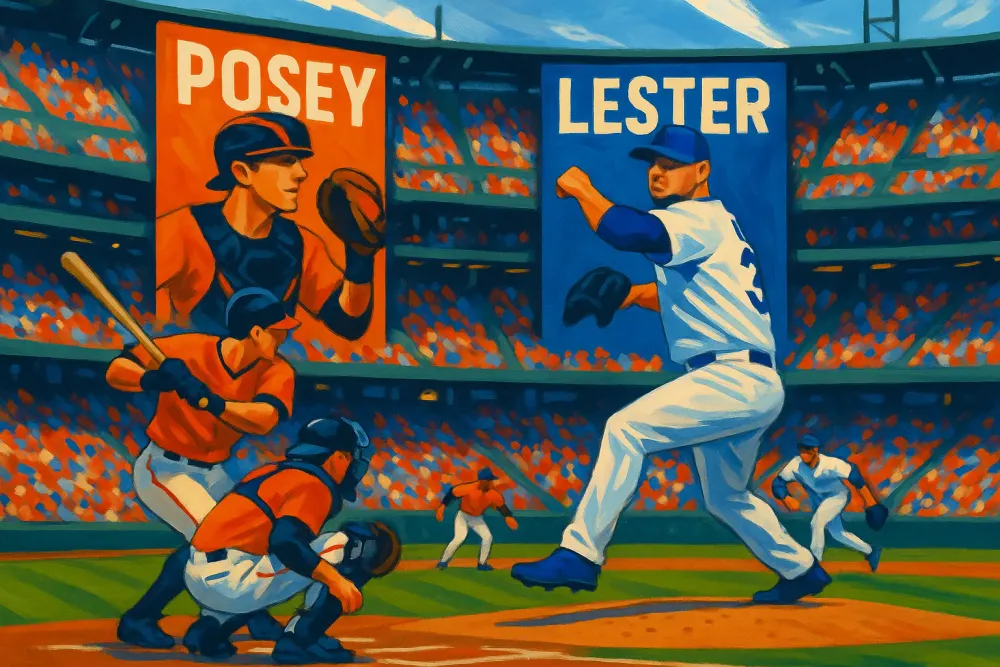
The 2026 Hall of Fame ballot is shaping up to be one of the thinnest in recent memory, prominently featuring names like Cole Hamels and Ryan Braun. This situation may catalyze a significant revaluation of what it means to qualify for the Hall of Fame. As we look ahead to next year's ballot, two players stand out as perfect test cases for this modern reevaluation: Buster Posey and Jon Lester.
Analyzing Buster Posey's Credentials
When we examine the statistics of Buster Posey, who will be eligible for the Hall of Fame ballot for the first time in 2027, we see a player whose numbers contrast with the inflated expectations historically attached to Hall of Fame hitters. Among the 165 hitters already inducted, the average is 2,404 career hits. If we filter this down to the last 50 years, Hall of Fame hitters boast an even higher average of 2,673 hits per player, with none falling below 2,000 hits.
In Posey's case, his statistics read as follows: 2,000 career hits, 158 home runs, and a WAR of 45.0. These numbers place him in the lower tiers among Hall of Famers—ranking 126th in hits and 134th in WAR. On the surface, nothing here jumps out to indicate a guaranteed first-ballot selection.
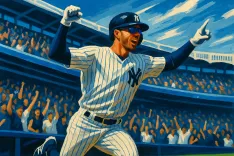
Yet, Posey’s legacy transcends mere statistics. He played an instrumental role in guiding the San Francisco Giants to three World Series titles in five years. His accolades, including the 2010 NL Rookie of the Year, the 2012 NL MVP, and seven All-Star selections, collectively bolster his Hall of Fame case.
Intriguingly, one must compare Posey to contemporaries like Thurman Munson. Munson, who passed away tragically at a young age, played just 11 seasons. His career statistics include a meager 1,558 hits and 113 home runs, but his impact as a leader and player in the clutch resonates profoundly within baseball history. Munson’s Hall of Fame candidacy suffered from a lack of sufficient voting support despite many parallels to Posey.
Reassessing the Modern Hall of Fame Pitcher
When we shift our focus to pitchers, the landscape has changed drastically too. Historical milestones are being reconsidered amidst a backdrop where pitchers are no longer expected to throw complete games consistently. The complete game totals have plunged with the evolution of strategic pitching changes:
- 1975: 1,052 complete games (27.2% of games)
- 1985: 627 complete games (14.9% of games)
- 1995: 275 complete games (6.8% of games)
- 2005: 189 complete games (3.9% of games)
- 2015: 104 complete games (2.1% of games)
- 2025: 29 complete games (0.6% of games)
Within the last 50 years, only nine starting pitchers have been inducted into the Hall of Fame. This includes notable names like Greg Maddux, Randy Johnson, and Pedro Martínez, emphasizing a significant shift in how pitchers are evaluated. As we look toward the candidacy of Jon Lester, who will also appear on the 2027 ballot, we find similar statistics—200 wins, a respectable ERA+, and an impressive postseason resume that may shift the narrative around his Hall of Fame worthiness.
The Future of Baseball’s Hall of Fame
The changing nature of how players are assessed—both hitters and pitchers—hints at a significant transition on the horizon for the Hall of Fame. As baseball continues to evolve, the established measures of greatness need reevaluation.
Next year’s ballot promises to challenge the perceptions regarding player qualifications. How the Baseball Writers' Association of America (BBWAA) votes will play an instrumental role in reshaping how players from a new era are viewed, determining the Hall of Fame's direction for years to come. It is vital that the standards adapt to reflect the modern game's dynamics, moving away from rigid historical benchmarks to a more nuanced appreciation of player contributions—both in statistics and crucial team successes.
Conclusion
The pathway to Cooperstown is undergoing a transformation, and it is imperative that Hall of Fame voters embrace this evolution. The time has come for a broader interpretation of greatness that considers both statistics and significant contextual achievements. Future ballots could pave the way for a more inclusive and nuanced Hall of Fame, a fitting tribute to baseball's ever-changing narrative.