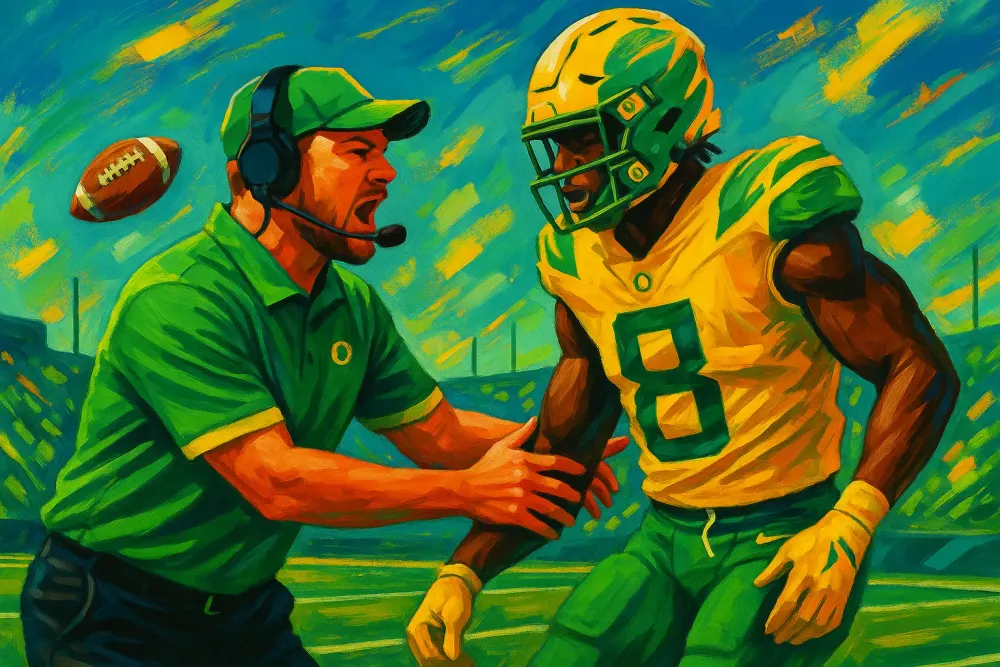
Oregon head coach Dan Lanning has made his stance clear regarding the potential influx of players transferring back to college football following stints in the NFL. This follows the report by ESPN’s Adam Schefter that tight end Dae'Quan Wright could join LSU from the transfer portal, conditional on waivers after being waived by the Cleveland Browns.
Lanning voiced his thoughts during a press briefing, emphasizing the negatives of allowing players to return to college football after experiencing the professional level. He stated, "I think there are a lot of negatives that are involved around this. One, once you go to the NFL, to me, you're in the NFL. You don't get the opportunity to come back."
The Transfer Portal Dilemma
In recent years, the transfer portal has transformed the landscape of college football, granting athletes more freedom to switch institutions without the burden of sitting out for a season, a rule previously enforced. However, Lanning cautioned against the implications of players hopping back and forth between college and the NFL, particularly as rosters tighten and depth becomes an increasing concern for teams.
He highlighted, “Most of us have built our rosters. You have a limited roster now. So if you’ve invited somebody back to your team, that means you’re kicking somebody else off your team to match your roster limits. I don't think that's fair to players who worked all summer, all spring, and put themselves in position to be ready to work for a team.”
Dae'Quan Wright: A Unique Case
In the case of Dae'Quan Wright, the tight end who went undrafted and signed with the Philadelphia Eagles before being waived by the Browns, his situation is unprecedented. Believed to be the first player who could potentially jump from an NFL team back to the college gridiron, Wright's future is uncertain. He has yet to see any action in preseason games with Cleveland, leading many to speculate about his upcoming move.
Wright’s transition is made more complicated considering he was one of the athletes who filed a lawsuit seeking eligibility amid changes to NCAA rules regarding extended eligibility for Division I athletes. While a federal judge initially ruled in favor of those petitioning for a fifth year, that decision was complicated when the NCAA won a stay from the Tenth Circuit Court that reversed the earlier ruling. Nonetheless, Wright received a temporary restraining order in Louisiana, allowing him to maintain his eligibility to return to college.
Expectations for Wright at LSU
If Wright ends up with LSU, the move would reunite him with head coach Lane Kiffin, under whom he thrived at Ole Miss, playing a notable role in propelling the Rebels to the College Football Playoff last year. His familiarity with Kiffin's system could facilitate a quicker adjustment, making this transfer one worth watching.
Nevertheless, this transfer possibility is not without its implications, as it raises questions about the NCAA’s authority and the stability of college rosters as NCAA players navigate their careers. Transfers have become increasingly common, but Lanning’s concerns highlight the potential for destabilization within programs.
Oregon Ducks' Strong Position
For Lanning and the Oregon Ducks, they appear poised for a strong season, entering the year ranked No. 2 in the Associated Press Top 25. As they prepare to kick off the 2023 season against Boise State on September 5, Lanning’s focus remains squarely on his current roster rather than looking at NFL cast-offs.
As the Ducks prepare for their season opener, Lanning's comments about roster management underscore a broader philosophy that values the commitment of athletes who have dedicated themselves fully to their program. Instead of seeking out NFL-caliber talent trying to return to college, Lanning is looking within his team to cultivate a winning culture.
While the notion of NFL players jumping back into college football presents an intriguing narrative, Lanning’s robust approach to roster integrity and team-building may set a precedent in how college football programs handle the evolving landscape of player transfers and eligibility rules.