
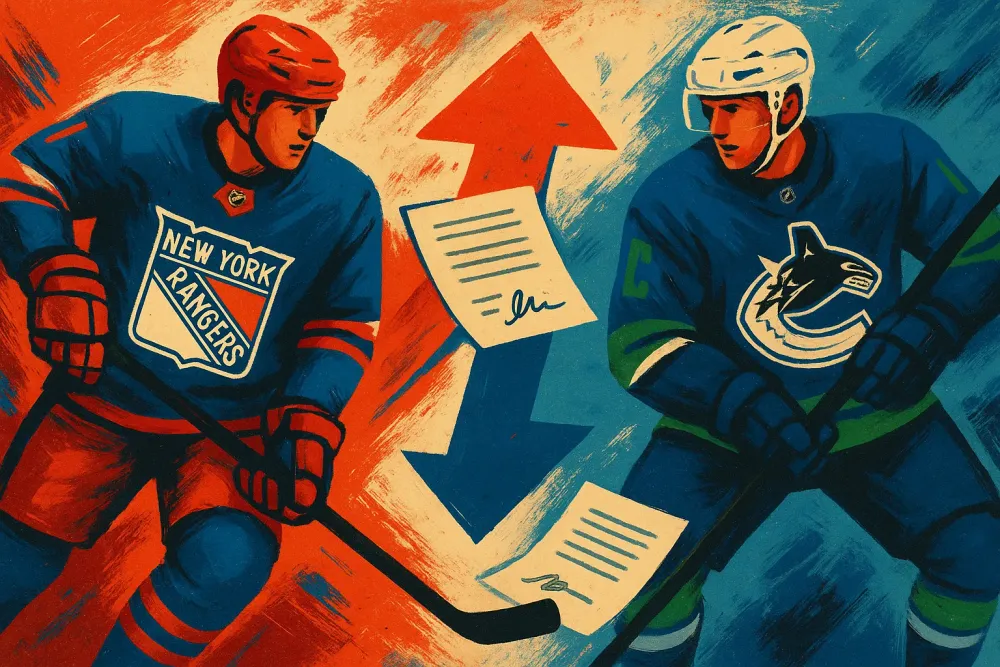
Trade Market Action on July 1
On July 1, the NHL trade market displayed a flurry of activity, despite the free-agency class being relatively quiet. The New York Rangers and Vancouver Canucks were among the key players making significant moves, reshaping their rosters as they gear up for the approaching season. Let’s take a closer look at the standout trades.
Rangers Acquire Pettersson: Filling a Critical Need
One of the most intriguing trades involved the Rangers acquiring defenseman Marcus Pettersson from the Vancouver Canucks. This acquisition might have come out of left field, but it makes perfect sense for the Rangers. Over the past seasons, the New York franchise struggled with needing a reliable second-pairing left-handed defenseman capable of moving the puck effectively. Pettersson, despite not boasting flashy scoring numbers, excels as one of the NHL's better defensemen in retrieving pucks in the defensive zone. He directly addresses one of the team's most significant issues, providing both puck movement and a strong defensive presence.
At 30 years old, Pettersson’s contract carries a $5.5 million cap hit for the next four seasons, a financial commitment that should serve the Rangers well if they continue to improve. This trade also reflects a strategic move; while parting with a future first-round pick (potentially for 2030 or 2031) is always a risk, it shows the Rangers are committed to building a competitive roster capable of contending in the near future. This is particularly important as they look for a top center to bolster their team even more.
Canucks Embrace a Rebuild
For Vancouver, this trade signals a clear commitment to a rebuilding phase. The decision to trade a future first-round pick, especially so far down the line, is unusual and reflects a long-term strategy for the franchise. The Canucks’ focus now pivots towards developing young talent, especially with the 2027 Draft promising a strong class of prospective franchise players.
Pettersson’s transition away from Vancouver also highlights how management likely recognized his desire to leave the rebuilding scenario, which works in favor of both parties. As the Canucks shed experienced players to invest in their future, they remain mindful of the prospects that could shape their team in the coming years.
Nurse Joins Sharks: Questionable Long-Term Planning
In another significant move, Darnell Nurse finally left Edmonton to join the San Jose Sharks, a change that many had anticipated. The Sharks have struggled defensively in recent seasons, and Nurse's arrival adds an upgrade to their roster. However, questions arise about the Sharks' long-term strategy, as they absorb Nurse's $9.25 million cap hit over the next four years.
While Nurse may bring skills such as strong skating and the ability to drive offensive plays, his role in Edmonton often saw him miscast as a shutdown defender. The Sharks must ensure they utilize him in a manner that maximizes his strengths while addressing their defensive challenges. The addition of Nurse signals intent but raises concerns about whether he can anchor a blue line that has faced criticism in recent seasons.
Edmonton Reaps the Rewards
For the Edmonton Oilers, trading away Nurse frees up crucial cap space, allowing the team to explore other avenues to bolster their lineup. The Oilers aim to utilize this newfound flexibility strategically to address several needs that have lingered in recent seasons.
Rangers Make a Calculated Risk with Korpisalo
The Rangers surprised many with another move, acquiring goaltender Joonas Korpisalo from the Boston Bruins. Though the Rangers already have promising goalie Dylan Garand, they sought a veteran presence to compete for the backup position. However, the $3 million cap hit for Korpisalo's contract, which extends through 2028, raises eyebrows about the rationale behind the trade.
This move could leave New York in a precarious position, especially if Garand’s development stalls due to the influence of a more expensive, yet inconsistent, backup. The Bruins, on the other hand, celebrated shedding Korpisalo’s contract while securing a mid-round pick, benefiting from their clarity of focus.
Trading Trocheck: A Shift for the Rangers
The Rangers also parted ways with center Vincent Trocheck, which raises mixed responses. While Trocheck’s departure may lessen their center depth, it presents an opportunity for fresh faces to step up in the lineup. In exchange, New York secured Sean Durzi, an offensive-minded defenseman who can effectively contribute alongside established players like Adam Fox. Durzi’s abilities paired with those of younger players suggest a bright future ahead.
Maple Leafs and Lightning: Bottom-Six Overhaul
The Toronto Maple Leafs recognized a pivotal area for improvement, focusing on reshaping their bottom-six lineup. The acquisition of Nick Paul, a versatile player skilled at both center and wing, is a step towards addressing depth concerns. His experience and robust gameplay will foster a more dynamic forecheck, potentially invigorating Toronto's offensive prospects.
Meanwhile, the Tampa Bay Lightning also adjusted their roster, acquiring young goaltender Dennis Hildeby while addressing their shallow prospect pool. Although these moves appear beneficial, the overall performance and cohesion of both teams remain paramount as they navigate the upcoming season.
Conclusion: A New Era of Trades
The recent trades in the NHL signify a transformative period as teams assess their needs and evaluate their long-term strategies. With franchises like the Rangers and Canucks charting different paths, the trade market's dynamics will surely evolve leading into the upcoming season. How well these teams capitalize on their decisions remains to be seen, but the realm of professional hockey is undoubtedly heading into an exciting chapter.