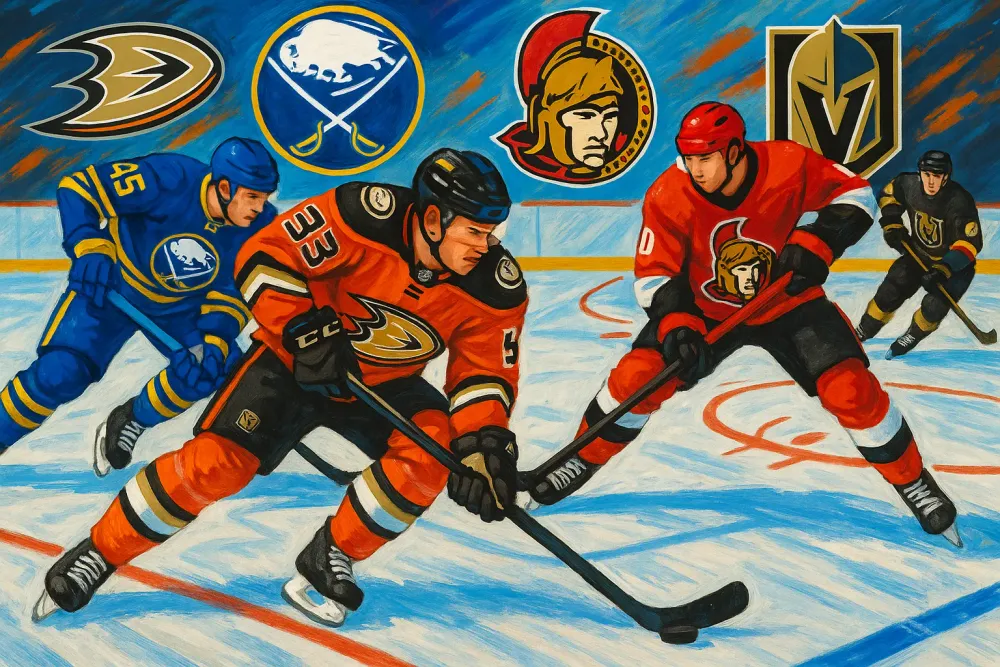
The NHL offseason is in full swing, with teams scrambling to make the necessary adjustments as they prepare for the 2026-27 season. While playoff success can’t be earned during the summer, the right—or wrong—decisions made now can significantly impact a franchise's trajectory. As we move through July, several teams appear to be taking steps backward compared to their previous year’s performance. This isn’t a definitive list of the worst teams, but rather those facing potential pitfalls as they look to improve.
Challenges for the Anaheim Ducks
The Anaheim Ducks entered the previous season with optimism, buoyed by the emergence of young star forwards. However, the current offseason has plunged them into uncertainty. The pivotal factor could be how they handle Leo Carlsson, their No. 1 center and a crucial element of their young core. Carlsson was awarded a five-year, $90 million offer sheet by the Philadelphia Flyers. Should the Ducks choose not to match this offer, they risk losing one of their key assets, which could be a devastating blow to their progress.
Even if the Ducks manage to retain Carlsson, they find themselves in a precarious salary cap situation. His contract, with an average annual value (AAV) of $18 million, plus Pavel Mintyukov’s new deal exceeding $7 million, tightens their financial flexibility significantly. Additionally, the impending contract demands of restricted free agent Cutter Gauthier could further complicate their cap space this season and beyond.
The Ducks’ defensive unit also remains a concern, as it ranked among the weaker playoff teams in the last season and has seen further attrition during free agency. To remain competitive, the Ducks must not only keep Carlsson but also consider bringing in additional defensive talent. Acquiring a key player may require trading away one of their forwards, such as Troy Terry, which could further alter the team's dynamic.
Buffalo Sabres' Offseason Moves
The Buffalo Sabres have made several strategic moves that could serve them well in the long term, but concerns about their immediate future linger. Their recent trades have, on paper, bolstered their assets but also resulted in significant talent leaving the organization. A notable trade saw them parting with defenseman Bowen Byram, landing the fourth and forty-fifth picks in the 2026 NHL Draft. This trade was indicative of their strong asset management strategy, and it may have secured them a future star in defenseman Daxon Rudolph.
However, the departure of experienced players has left gaps that the team has yet to fill adequately. The Sabres refrained from overcommitting to veteran Alex Tuch, now becoming pivotal in their efforts to build a strong and sustainable roster. While their young core displays promise, it raises questions about whether they can replicate last season’s success, which included a playoff push that had long-frustrated fans believing again.
To stave off a downward trend, the Sabres will need to capitalize on their remaining $8 million in salary-cap space. A move for goaltender Connor Hellebuyck remains on the table and could be crucial for solidifying their chances of maintaining their contender status.
Ottawa Senators' Changes Ahead
The Ottawa Senators endured a challenging offseason highlighted by the departure of Brady Tkachuk. His trade was inevitable, but they managed to maximize their return with three first-round picks and the acquisition of William Eklund. Nonetheless, while the long-term view of these trades appears adequately planned, the short-term impact of losing Tkachuk is undeniable.
The Senators’ need to build around Eklund is critical. They need their new acquisition to evolve from a dependable young player into a top-line asset. Simultaneously, they must optimize their salary cap situation, which has faced strain, particularly after spending $5.5 million of their available cap space on Andre Burakovsky.
For the Senators to avoid a decline this season, substantial improvement is necessitated from within. Improved goaltending could alleviate much of the team's struggles from 2025-26. Marking a potential shift, if goaltender Ullmark can return to form, it might shore up many areas of vulnerability and keep the Senators competitive.
Las Vegas Golden Knights' Outlook
Following a season riddled with inconsistencies, the Vegas Golden Knights reached the Stanley Cup Final only to fall short against the Carolina Hurricanes. The upcoming season could see the team either exceed or fall short of their previous performance, especially as they face questions about their aging roster filled with veterans who may become increasingly prone to injuries.
The trade of Pavel Dorofeyev signals a loss of youthful talent, highlighting the ongoing concerns surrounding their goaltending situation. For the Golden Knights to avoid regression, they may need to look into potential blockbuster trades, especially with possible targets like Connor Hellebuyck or Dylan Larkin moving forward.
A Pivotal Summer
As the NHL offseason gradually progresses, franchises confront the reality that making the right choices now can impact their playoff aspirations. For the Ducks, Sabres, Senators, and Golden Knights, there’s a delicate balance of retaining talent while planning for future success. Teams must capitalize on their opportunities and strategize effectively for the challenges that lay ahead. The 2026-27 season may hinge on these critical summer decisions, and the clock is ticking.