
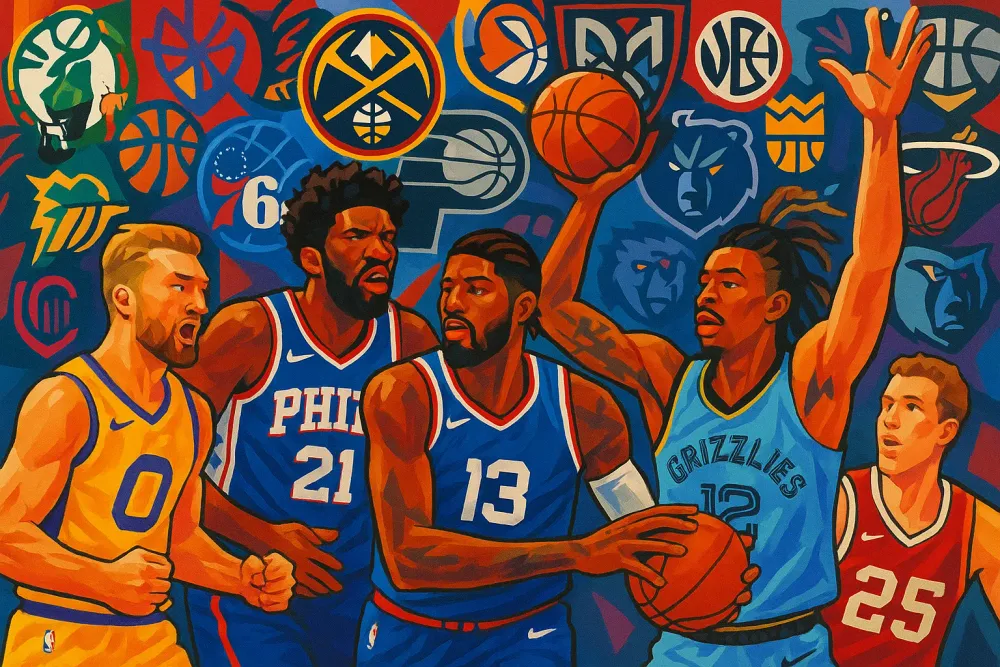
The landscape of the NBA is ever-evolving, and with the rise of prudent financial management and the advent of the "apron era," teams are increasingly cautious in their spending. Players with hefty contracts are finding it more challenging to change teams, especially those contracts deemed "underwater." As the trade deadline looms, it’s crucial to spotlight some of the big names burdened with the most challenging contracts—players that would require substantial bait to entice another team to take them on.
Understanding Underwater Contracts
In the current climate, it's becoming increasingly difficult to find deals that come without strings attached. For many teams, the question often arises: "What else will you give me to take him off your hands?" When discussing these unfavorable contracts, we’re not just talking about money; we’re addressing players who carry medical baggage, performance concerns, and the complicating factor of several years remaining on their deals. While some franchises can absorb these financial loads, others will be weighing the potential return on investment—especially when weighing draft picks or young players as sweeteners in trades.
Domantas Sabonis: An Offensive Conundrum
Starting our list, we have Domantas Sabonis, whose contract remains a significant challenge for the Sacramento Kings. With two years left on a $94 million deal, Sabonis is undoubtedly an impressive rebounder, having led the league in rebounds per game for three consecutive years. However, his limitations as a defender. lack of floor spacing, and need for a high-usage role present considerable drawbacks.
While his stats boast averages of 16.1 points, 10.7 rebounds, and 4.9 assists, these figures must be assessed against his high price tag. Sabonis's inability to impact the game defensively makes his contract less tenable. Teams that consider acquiring him must be ready to offer considerable draft compensation to offset these significant liabilities on their roster.
Joel Embiid: The Injury-Prone MVP
Next on the list is Joel Embiid, whose remaining contract of $188.3 million over three years raises eyebrows. At first glance, his past MVP status and impressive on-court production—averaging 26.9 points and 7.7 rebounds—make him an attractive player. However, his injury history complicates matters significantly. Having missed extensive stretches of games throughout his career, acquiring Embiid would tie up valuable resources for a player whose productivity is contingent on availability.
Another critical aspect is the fact that he tends to underperform on a per-game basis considering his supermax contract. As he heads into his age-32 season, the inherent risk of declining health only adds to the discussions about his tradeability. Teams must heavily weigh the gamble associated with securing Embiid's services versus the inherent risk of injuries limiting his output.
Paul George: Aging Without Availability
Paul George enters this discussion with two years remaining on a $110.7 million deal. Despite being a strong off-ball player and an experienced contributor, he's only played 78 games over the first two seasons of his contract. For a franchise counting on his skills to compete at a high level, his injury history poses significant concerns.
At this stage in his career, committing max money to a player who averages a modest 16.7 points per game as a role player may not be a viable strategy for any team. Unless he can regain his health and elevate his game, any team interested in George will likely require additional incentives to take on his contract.
Ja Morant: The Young Disappointment
Relatively younger at 26, Ja Morant still finds himself on this list, partly due to the perceptions surrounding his contract of $87.1 million over two years. After facing suspensions and struggling with consistency on the court, teams may be hesitant to take a chance on Morant. His athleticism once defined him as a rising star; however, his recent struggles, including performance dips and injuries, have raised concerns about his future.
While he's lower on this list in terms of average annual value compared to others, the scrutiny—coupled with a tumultuous relationship with the Memphis Grizzlies—has stalled any potential trade move. Morant's potential riskiness could undermine the beliefs teams invest heavily in a reclamation project.
Jakob Poeltl: The Uncertain Center
Rounding out the players on this list is Jakob Poeltl, who has four years remaining on a somewhat manageable $103.6 million deal. However, ongoing injury issues have limited his effectiveness and availability, which complicates his value. Teams may find it challenging to justify full starting minutes with Poeltl when results improved in his absence. Such uncertainty further muddles perspectives surrounding his trade value.
For the Toronto Raptors, retaining Poeltl as a centerpiece might not pay off in the long term, especially with younger, more versatile players emerging in the league. Although it’s less severe than others on this list, it’s still a salary that will require careful consideration before pulling the trigger on a trade deal.
Final Thoughts
The NBA's trade market is undoubtedly transforming. The challenges presented by these high-priced, difficult-to-move players underscore the need for franchises to rethink their strategies moving forward. As teams weigh the potential rewards against prohibitive contracts, their ability to successfully navigate this challenging landscape will likely define their future competitiveness.
Examining such contracts will remain critical not just for the teams currently holding them but also for the rest of the league as the financial dynamics continue to shift. It’s an inconvenient reality for players looking for new homes, and in the end, only time will tell how teams adapt to mitigate or maximize these contracts effectively.