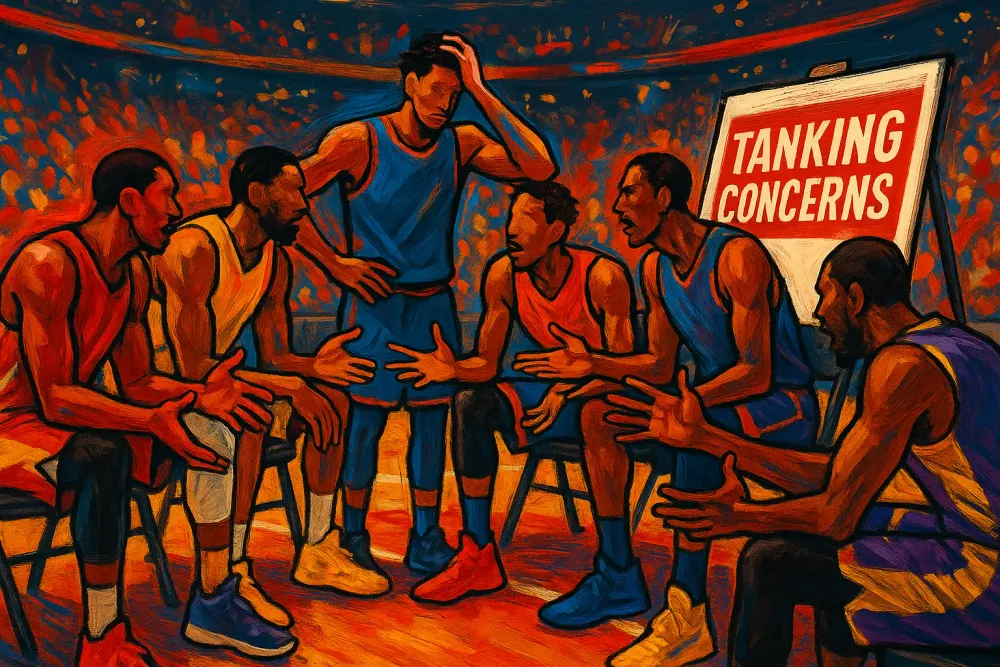
The topic of tanking in the NBA is sparking intense debate within the league, as players express growing concern over its impact on competitive integrity. A recent anonymous survey conducted by The Athletic revealed that a significant majority of players—71.7 percent of 159 respondents—view tanking as a pressing issue facing professional basketball.
The survey results indicate varied perspectives on the severity of tanking. While a notable 43.4 percent categorize it as a 'little problem', another 28.3 percent assert that it represents a 'big problem' for the league. This division of opinion underscores the need for a comprehensive discussion about how tanking affects not only individual teams but also the league as a whole.
Voices Against Tanking
One player vocalized their disdain for tanking, stating, "It is very terrible. I've seen some things where people say it's … a tournament for teams that are in last place." This sentiment resonates with many players who feel that tanking undermines the competitive spirit of the game. Another player added, “Teams shouldn’t be rewarded for losing,” emphasizing the belief that poor performance should not yield benefits in the form of top draft picks.
Conversely, there are those who see a silver lining in tanking. One anonymous player noted, “It’s cool if [other teams] tank because [they're] just giving us free games right now.” This perspective suggests that while tanking may compromise the excitement of individual matchups, it can also create unique opportunities for players on non-tanking teams to shine during what might otherwise be routine games.
Proposed Reforms to Combat Tanking
The NBA is aware of these growing concerns and is actively exploring reforms aimed at curbing the prevalence of tanking. On April 28, ESPN's Shams Charania reported an anti-tanking reform proposal featuring a '3-2-1' lottery system. Under this proposal, the lottery would expand to include 16 teams, and the odds would be flattened. Specifically, the bottom three teams would receive fewer lottery balls, reducing their likelihood of securing the coveted No. 1 overall pick.
This initiative would also impose restrictions preventing teams from acquiring the No. 1 pick in consecutive years, as well as limiting consecutive top-five picks to no more than two out of three years. Additionally, teams would be barred from issuing pick protections from slots 12 to 15, which could impact draft strategies for a number of franchises.
Alternative Proposals on the Table
Continuing the dialogue around reform, The Athletic's Sam Amick disclosed another proposal that had previously gained traction. Dubbed the 'leader in the clubhouse' at one point, this plan would expand the lottery eligibility to 18 teams. Under this revised framework, the bottom ten teams would each have an equal eight percent chance of securing the No. 1 draft pick, while the next eight teams would split the remaining 20 percent chance.
Commissioner Adam Silver has indicated that finalizing the details of these lottery reforms will be prioritized ahead of the 2027 NBA Draft, signaling the league's commitment to addressing the issue of tanking in a meaningful way.
The Impact of a Loser Mentality
The need for reform is further underscored by recent season statistics. The NBA saw a historic number of teams underperform, with a record eight teams losing at least 56 games, and ten teams recording a minimum of 50 losses. Collectively, these ten teams accounted for an astonishing 540 total losses, averaging out to 54.0 losses per team. In stark contrast, the remaining 20 teams collectively recorded only 650 losses, averaging 32.5 losses each.
This disparity raises questions about the competitive landscape of the NBA and the consequences that arise from a system that may incentivize losing. The perception that some teams are intentionally sacrificing success for better draft prospects casts a shadow over the league's integrity and could alienate fans who seek competitive balance and thrilling gameplay.
The Road Ahead
As discussions regarding these reforms continue, the response from players and fans will certainly influence the final decisions. The league must find the right balance in ensuring that teams are incentivized to win while also maintaining excitement and intrigue within the competitive hierarchy.
Ultimately, the NBA's actions over the coming years will be crucial in determining whether they can effectively address the issue of tanking. Will they succeed in creating a landscape where competitive integrity thrives, or will tanking continue to shape the future of basketball?