Michael Jordan Dismisses GOAT Debate: 'It's an Empty Comparison'
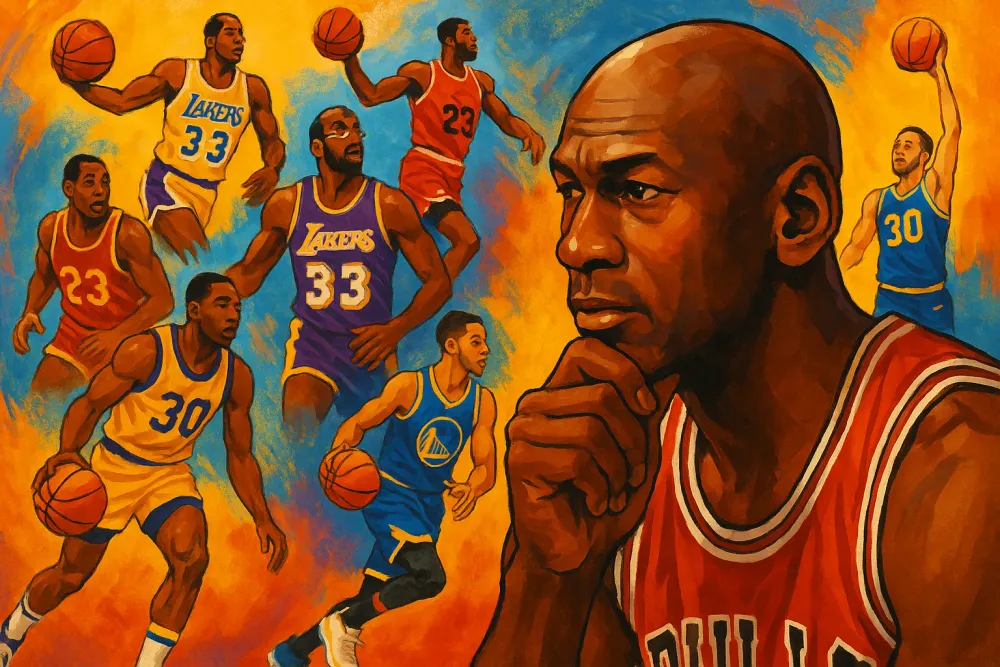
The GOAT Debate Among NBA Fans
The ongoing debate about who deserves the title of the greatest player of all time (GOAT) in NBA history continues to spark passionate discussions among fans and analysts alike. While figures like Michael Jordan, LeBron James, and Kobe Bryant frequently dominate these conversations, Jordan himself has taken a step back from the argument, emphasizing the complexities and inadequacies of such comparisons.
Michael Jordan's Perspective
In a recent interview with NBC's Mike Tirico during the segment 'MJ: Insights to Excellence,' Michael Jordan expressed his indifference towards the GOAT label. "The whole GOAT term is never gonna be something that I ever will get high or low about," Jordan stated. He elaborated on his stance by acknowledging the historical significance of players like Oscar Robertson and Jerry West, expressing a desire to have competed against them. "I would’ve loved to, absolutely loved to, just the competitor that I am," he remarked, highlighting the respect he holds for those who influenced the game.
The Impact of Historical Context
Jordan's argument extends to the notion that each generation of players contributes uniquely to the game. He emphasized that we should appreciate the evolution of basketball, mentioning names like Kobe Bryant and LeBron James as successors who have taken the game to new heights. He stated, "We paved the road to the Kobes and LeBrons... don't use that against the player that actually taught you the game." This perspective promotes a sense of continuity and respect across generations rather than pitting players against each other.
The Problems with GOAT Comparisons
One of the critical points Jordan raises is the subjective nature of GOAT discussions, which often focus on metrics such as championships or statistical achievements while neglecting the broader context of a player's era. As he pointed out, "It is an empty comparison. You will absolutely never find the true answer to that question. It's just going to keep [going in circles]." Such debates frequently overlook entire generations of athletes, particularly those who played well before modern fans were alive to witness their greatness.
Recognizing the Legacy of Earlier Generations
Jordan also expressed concern about how contemporary discussions can marginalize the contributions of legends like Kareem Abdul-Jabbar, Wilt Chamberlain, and Bill Russell. With 11 championships, Russell remains a formidable figure in basketball history, yet Jordan noted the tendency to push players like him "in a corner and say, 'We aren't going to think about you. We forgot about you.'" He argued for a more inclusive dialogue that honors the impact of all generations.
The Evolving Nature of the Game
Today’s players benefit from advancements in technology, analytics, and fitness that were not available in previous eras. Jordan acknowledged that while current players have more resources, we can only speculate about how legends like Chamberlain or Magic Johnson would have fared in modern basketball. The evolution of the game means that every era is distinct and must be evaluated on its own terms.
A Fun but Fruitless Debate
Ultimately, Jordan sees the GOAT debate as an engaging topic to discuss among friends rather than a definitive determination of greatness. The nuance and complexity inherent in evaluating players across different eras complicate any attempt to crown one individual as the ultimate champion. "We will never know," he said, encapsulating the essence of this ongoing and often futile discussion.
Conclusion
Michael Jordan's insights into the GOAT debate remind us that while discussions about greatness are fun and can enhance our appreciation of the sport, they can also lead to misconceptions and discord among fans. His call to honor past players and acknowledge their contributions serves not only to enrich our understanding of basketball history but also to foster respect among the stars of today and tomorrow. As the game continues to evolve, perhaps the focus should shift from comparisons to celebrating the unique legacies each player brings to the court.