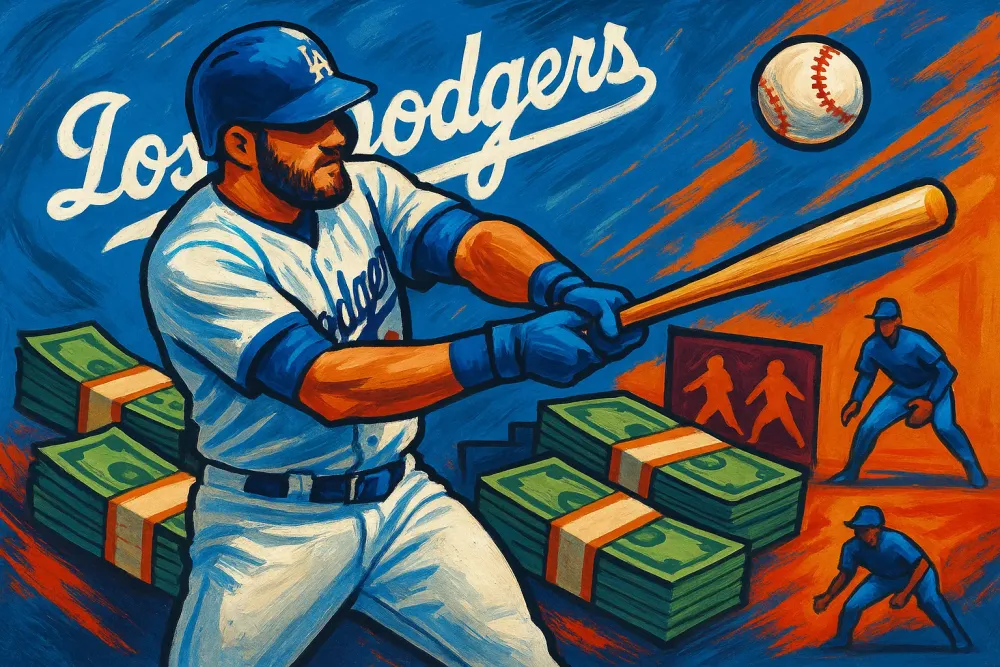
Los Angeles Dodgers infielder Max Muncy recently shared his thoughts on the team’s hefty spending and its implications for Major League Baseball (MLB). With the Dodgers reportedly boasting a $386 million payroll for the 2026 season, some have raised concerns about a potential work stoppage related to the team's financial practices. Muncy’s remarks, made on the Foul Territory podcast, suggest that the discussions around spending and salary caps are complex and not solely dependent on the actions of his team.
Dodgers' Spending Habits
Over the past several seasons, the Dodgers have established themselves as dominant players in free agency, consistently adding high-profile talent to their roster. This trend continued with the recent acquisition of outfielder Kyle Tucker on a significant four-year, $240 million contract. Muncy’s perspective on this spending highlights the team's strategic approach to player salaries while navigating the financial landscape of the league.
According to reports, the Dodgers have accrued over $1 billion in deferred money on their payroll related to contracts for just eight players, covering the years from 2028 to 2046. This practice of deferring money allows the organization to manage its budget more effectively in the short term while also making large expenditures on star players.
Concerns Over Work Stoppage
On the Foul Territory podcast, host A.J. Pierzynski humorously suggested that the Dodgers’ spending could spark a work stoppage, a notion Muncy downplayed. “The work stoppage thing—that was gonna happen, and we don't know if it's gonna happen,” he explained. Muncy emphasized that the situation surrounding potential work stoppages in MLB is multi-faceted and not merely a reaction to the Dodgers' payroll decisions.
Muncy further noted, “If that happens, it was always gonna happen, and it’s not gonna only happen just because of us. That’s a totally different issue that I don't really want to fully get into at this moment.” His comments indicate a desire to redirect focus onto the team's performance rather than engaging in contentious discussions about labor negotiations and the financial issues facing MLB.
The Reactions from Other Owners
The Dodgers' spending spree has reportedly caused unrest among other MLB team owners, some of whom feel that the team's financial approach is unsustainable and could threaten the integrity of the league. Reports suggest that several owners are “raging” after the Tucker deal and are pushing for the implementation of a salary cap to level the playing field across the league. A source familiar with the discussions stated, “These guys are going to go for a cap no matter what it takes.”
This growing discontent among owners is significant because it reflects deeper concerns regarding competitive balance and financial equity within MLB. While a salary cap could theoretically create a more equitable environment, it raises complex questions about player salaries and agent negotiations.
Implications Ahead of CBA Expiry
The current collective bargaining agreement (CBA) between MLB and the MLB Players Association (MLBPA) is set to expire on December 1. This timeline looms large for the league as both sides prepare for potentially contentious negotiations that could reshape the business landscape of baseball moving forward. Muncy’s comments hint at an awareness of these impending discussions, suggesting that the players will need to navigate the intricate balance between their interests and the financial realities faced by teams.
Conclusion
As the Dodgers continue to navigate their financial strategy, the implications of their spending will likely reverberate throughout MLB. Max Muncy’s candid remarks provide a glimpse into the mindset of players who are aware of the broader issues at play while focusing on their performance. With significant contracts being handed out and the threat of potential work stoppages looming, both players and owners are bracing for a pivotal chapter in the evolution of baseball. As the expiration of the CBA approaches, all eyes will be on how negotiations unfold and the lasting impact they might have on the game.