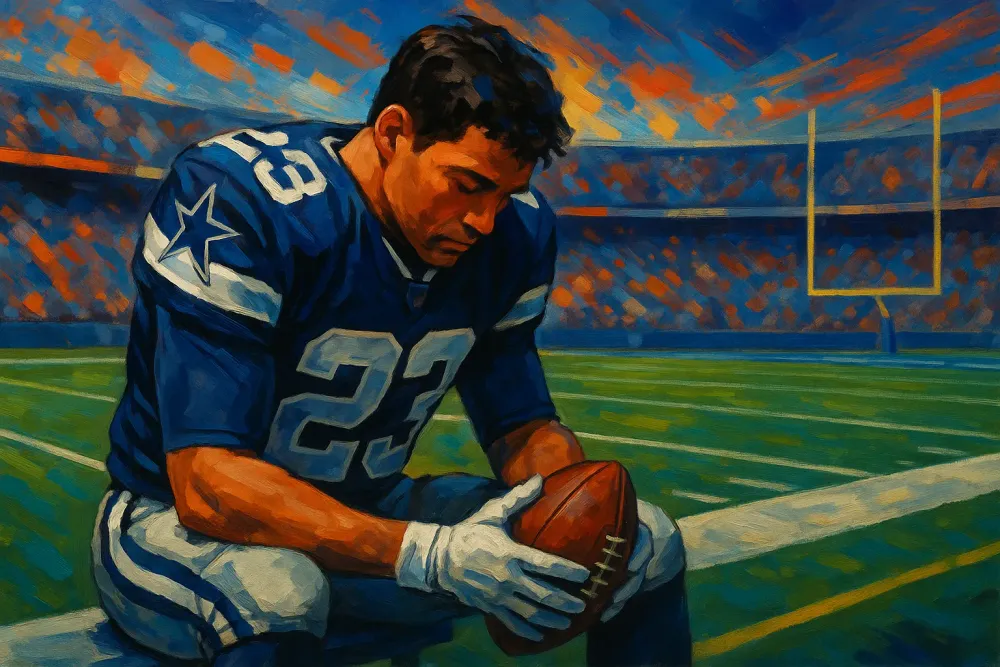
The tragic death of former Dallas Cowboys defensive end Marshawn Kneeland at just 24 years old has brought significant attention to the ongoing issue of chronic traumatic encephalopathy (CTE) in athletes. On Tuesday, Kneeland's family announced through the Concussion & CTE Foundation that researchers at the Boston University CTE Center had diagnosed him with stage 1 CTE after conducting a postmortem analysis of his brain. This diagnosis sheds light on the potential struggles faced by athletes in high-contact sports, raising important questions about safety protocols and athlete health.
Kneeland's untimely death by suicide in November 2025 has left his family, friends, and the sports community grappling with grief. According to Dr. Ann McKee, the director of the Boston University CTE Center, finding CTE in the brain of Kneeland was not unexpected given the research findings that show nearly half of athletes studied who passed away before the age of 30 were diagnosed with the disease. "Unfortunately, I was not surprised to find CTE in the brain of Mr. Kneeland," Dr. McKee stated. "Thanks to the generosity of our brain donor families, we now better understand the earliest stages of CTE, and it is bringing us closer than ever to diagnosing it during life. My team and I are fully dedicated to finding effective treatments and a cure for CTE."
Kneeland's NFL Journey
Marshawn Kneeland was selected by the Dallas Cowboys in the second round of the 2024 NFL Draft after a standout five-year collegiate career at Western Michigan. Throughout his two seasons in the NFL, Kneeland made 18 combined appearances, accumulating 26 total tackles, a fumble recovery, and a pass deflection. During his time on the field, he exhibited potential as a defensive player, contributing to his team during a crucial period in their games.
The Reality of CTE in Athletes
The diagnosis of CTE in Kneeland serves as a stark reminder of the dangers associated with high-contact sports, even with advanced concussion protocols and enhanced helmet technology. Dr. Chris Nowinski, the CEO of the Concussion and CTE Foundation, emphasized the continued risk that present-day athletes face despite improvements in safety measures. "Mr. Kneeland played in the modern era of concussion protocols and better helmets, and yet he still developed CTE," he remarked. "We have no reason to believe the current generation is at a lower risk of CTE than previous generations. Concussion protocols do not prevent CTE, because CTE is caused by repeated head impacts, not just concussions."
Calls for Change
In light of these findings, there is a growing call for the implementation of more comprehensive CTE prevention protocols. If the sports community hopes to mitigate the risks associated with CTE, it must be proactive in reducing the number and strength of head impacts experienced by players at every level of the game. Nowinski's advocacy for aggressive measures to enhance safety underscores the urgent need for reform. The ongoing research into CTE has not only highlighted the disease’s prevalence but the significant implications it has for players’ mental health and overall well-being.
Family's Response and Advocacy for Awareness
In the wake of the diagnosis, Kneeland’s family released a joint statement with his girlfriend, Catalina Mancera, expressing their heartache while emphasizing the importance of raising awareness about the challenges athletes face. "While this diagnosis does not change the tragedy of his passing, it provides important context about some of the struggles he may have been facing. We share this information to help people understand what NFL and other high-contact sport athletes might be struggling with," they stated.
The family is currently prioritizing their privacy as they continue to honor the memory of Kneeland, stating, "We continue to remember Marshawn with compassion for the person he was, rather than defining him by the final moments of his life. One Love." This poignant message illustrates not only their pain but their commitment to promoting understanding and compassion surrounding mental health struggles in sports.
Implications for Future Generations
The diagnosis of CTE in younger former athletes like Kneeland serves as a clarion call for the NFL and other relevant organizations to re-evaluate their current practices and establish better safeguards for player safety. With ongoing research and advocacy, there is hope for substantial improvements in monitoring and protecting athletes from the long-term effects of head injuries.
The memory of Marshawn Kneeland will not only remind the NFL community of the talent he brought to the field but serves also as a catalyst for discussions and initiatives centered around the welfare of athletes. CTE, once a whisper in the community, is now a grave concern that cannot remain ignored if future generations of sports players are to be protected from its devastating effects.