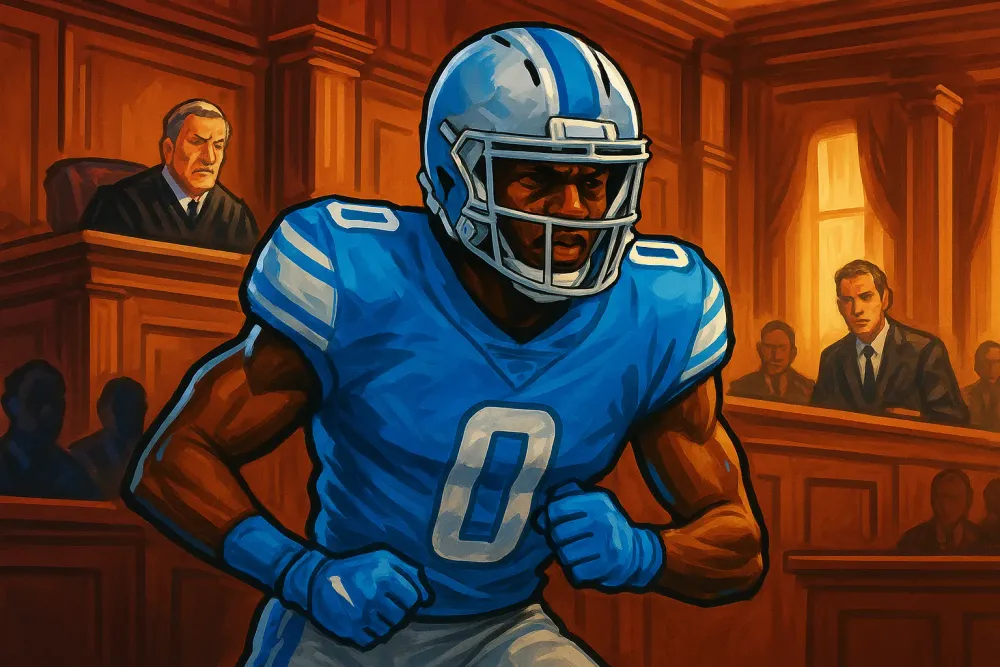
The landscape of the NFL was shaken on Monday as the Detroit Lions decided to release cornerback Terrion Arnold, just days following his arrest on serious allegations. These allegations revolve around Arnold being the alleged orchestrator of a violent abduction and beating involving three men, stemming from claims that they stole luxury goods and cash valued at $100,000 from him. The announcement came via the team's social media platform, X, and caught many fans and analysts by surprise.
Arnold, a young and promising player drafted in the first round of the 2024 NFL Draft after an impressive stint at the University of Alabama, had two years remaining on his four-year rookie contract worth an estimated $14.3 million. His release marks a significant turn of events not only for Arnold's budding career but also for the Lions, who are now facing the challenge of navigating the implications of his arrest.
The Arrest and Immediate Aftermath
Arnold's legal troubles began to escalate when a Florida judge set his bail at $1 million during a court hearing. Prosecutors are pursuing eight felony charges against him, which include serious allegations related to robbery and conspiracy. The incidents reportedly unfolded in February when three victims, one of whom worked for Arnold, were allegedly held at gunpoint and assaulted in a Tampa apartment.
The details emerging from court proceedings highlight a chaotic scenario where investigators allege Arnold's associates executed the crimes while he was absent. Nevertheless, prosecutors assert that Arnold played a critical role by allegedly instructing his associates to confront those he suspected of stealing from him.
Legal Proceedings and Defense Arguments
In a striking turn of events during the bond hearing, Chief Circuit Court Judge Christopher Sabella expressed doubts about the strength of the case against Arnold. Although the charges are serious, each capable of carrying a life sentence, the judge noted that prosecutors do not yet have a solid case. Arnold has been ordered to remain at his Tallahassee home, except for playing or training activities with the Lions, and must surrender his passport.
Arnold’s attorney, Harvey Steinberg, was vocal in court, asserting that the evidence presented does not clearly demonstrate Arnold's knowledge or control over his associates' actions. This defensive stance highlights a fundamental aspect of Arnold's case, specifically the distinction between intention and outcome.
Victims and Collaborators
The three men allegedly victimized in this incident were reported to have been beaten and robbed during a violent encounter. According to prosecutors, the robbery occurred shortly after Arnold's luxury items, including Rolex watches and Louis Vuitton bags, were reported stolen from his Airbnb rental. Interestingly, while Arnold is at the center of this turbulent situation, it appears that the crimes were executed by six of his alleged associates.
Moreover, two female co-defendants involved in this case have already pleaded guilty and are cooperating with the authorities, which adds complexity to Arnold's legal situation. Their testimonies are said to connect Arnold, despite his physical absence during the alleged events, to the orchestrated violence that transpired.
Team and Management Response
As the Lions navigate the implications of Arnold’s release and ongoing legal issues, Denise White, the CEO of EAG Sports Management—Arnold's representation—also weighed in on the situation. Prior to Arnold's release announcement, White suggested that the judge’s ruling indicated a lack of evidence linking Arnold to direct involvement in criminal activities. This defense could be critical as the case evolves.
The Lions’ decision to release Arnold suggests that they are taking a cautious approach in managing their roster amid serious off-field concerns. With the NFL's reputation closely tied to player conduct, the team may be motivated to distance themselves from the uncertainties surrounding Arnold’s legal proceedings.
What This Means Going Forward
As the situation develops, it remains to be seen how this will impact both Arnold’s career and the Detroit Lions. The potential of felony charges and the ongoing legal process may create lasting ramifications for the young cornerback, whose future in professional football hangs in the balance. For the Lions, the immediate focus will shift towards securing their defensive lineup and addressing any potential fallout from this incident.
This case sheds light on the complexities athletes face, especially when personal issues intertwine with professional responsibilities. The repercussions of this situation serve as a stark reminder of the need for accountability and the importance of athletes addressing conflicts in a manner that does not jeopardize their careers.