Joe Flacco Voices Concerns Over NFL's 18-Game Schedule Proposal
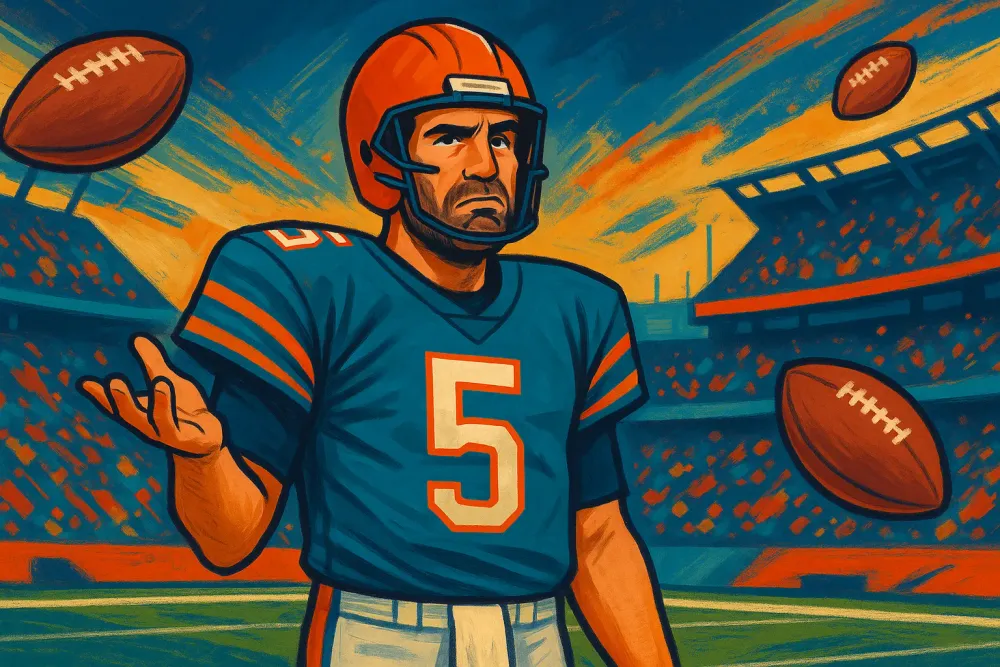
Joe Flacco, the veteran quarterback with a sharp eye for the evolving landscape of the NFL, recently shared his skepticism regarding the league's ambition to expand the regular-season schedule to an 18-game format. In an interview with Baker Machado from Front Office Sports, Flacco candidly expressed his thoughts on these developments while recognizing the underlying financial motives that might push this proposal forward.
Growing Skepticism Among Players
Flacco's remarks echo a growing concern among active players regarding the implications of an expanded schedule. "What happens when we go to 18? Are they going to want 20? Are they going to want 22?" Flacco pondered, referencing the NFL's historical precedent of a shorter schedule, which included just 14 games before he was born. He emphasized the importance of drawing a line somewhere, stating that the league's relentless pursuit of more games “has to stop” at some point.
The Financial Incentives at Play
While voicing skepticism, Flacco admitted that the allure of increased revenue might compel players to acquiesce to an 18-game schedule. He acknowledged, "If we're asked to play 18 games, I think you're not going to see much difference, and it looks like we're probably eventually going to play 18 games, and we'll just have to do it, and it is what it is." This sentiment highlights a stark reality: as the revenue grows and the salary cap increases, many players might find the financial incentives too strong to resist.
Impact on Quality of Play
One of Flacco's most critical observations centered on the potential degradation of play quality during the postseason. He reminisced fondly about the traditional 16-game format, citing it as a well-balanced formula that fostered high levels of competition, including a challenging playoff system. He voiced concerns that stretching the regular season to 18 games could leave teams worn down and less competitive by the time the playoffs rolled around. "What could happen is the playoffs start to suffer. Teams are so beat up by that point in the year that they're not at their best, so instead of getting top-level football, you're getting a couple teams going against each other at 75 percent,” Flacco warned.
Injuries and Their Consequences
The discussion on an extended schedule also touches upon the pressing issue of player injuries, a topic that has garnered attention across all professional sports, including basketball. Flacco's insights parallel a broader trend observed in recent years, where the wear-and-tear of a demanding season has led to significant injuries for star players during the postseason. Flacco pointed to notable names such as Bo Nix, George Kittle, and Nico Collins, who faced the consequences of injuries that impacted their postseason performance.
David White, the interim executive director of the NFL Players Association (NFLPA), further elaborated on the union's stance regarding the potential 18-game regular season, asserting that there is “no appetite” for such an expansion among players. White cautioned that increased injury risk could profoundly impact players' future earnings, emphasizing the short average career span in the league. "Those injuries, they cost players pay. They can shorten careers. They can diminish lifetime earnings. And when your average career is already three to four years, that becomes something that is existential,” he noted.
The League's Position
With the issue of an 18-game schedule becoming a focal point of discussion, NFL Commissioner Roger Goodell stated that it is “not a given” that the season will be expanded. However, sentiments among some influential team owners, including Robert Kraft and Jerry Jones, indicate a desire for the schedule to be increased. This dichotomy between league leadership and player sentiments presents a challenging scenario as both sides grapple with the implications of such a significant change.
The NFL's current 17-game schedule, instituted in 2021, marked the first alteration to the regular-season format since 1978, when the league transitioned to a 16-game schedule. While the future remains uncertain, it is clear that any potential expansion to 18 games would not only reshape the landscape of the league but also provoke critical discussions on player safety, revenue balance, and the very essence of the game itself.