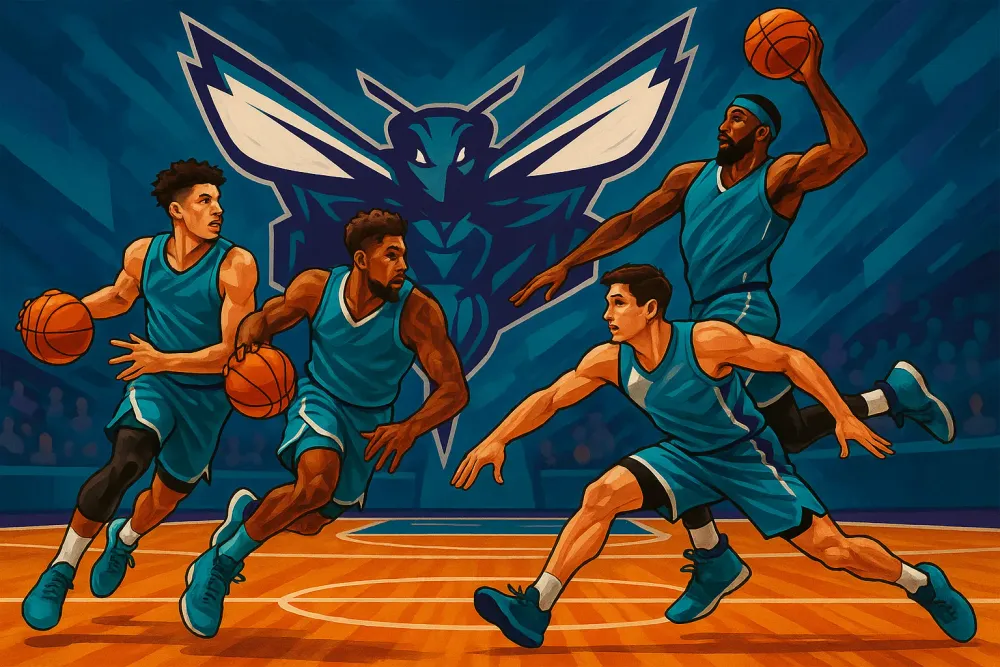
The Charlotte Hornets have officially entered a phase of significant restructuring, even after achieving their best record in a decade. In a surprising turn of events, the team announced a trade deal involving key players Miles Bridges and LaMelo Ball, shifting their focus towards building for the future.
Major Trades Signal a Shift in Strategy
On Sunday, ESPN's Shams Charania reported that the Hornets are trading Miles Bridges, along with a 2029 first-round pick and a 2027 second-rounder, to the Phoenix Suns. In exchange, Charlotte receives Grayson Allen, Royce O'Neale, and a 2033 first-round pick. This trade comes just days after the franchise cornerstone LaMelo Ball was sent to the Minnesota Timberwolves in a deal that included Naz Reid and additional draft capital.
These bold moves reflect a significant shift in the team's strategy, moving away from merely vying for a playoff spot towards a more patient, long-term approach. General Manager Jeff Peterson is reshaping the roster while accumulating a treasure trove of draft picks—an advantage that could define the team's future.
New Directions and Building Blocks
The decision to part ways with franchise icons like Ball and Bridges has left many around the league speculating about the Hornets’ intentions. Especially after finishing just one win shy of the playoffs, some could argue that building on the current roster was a logical course of action. However, Peterson appears to see a different vision.
Instead of patching together a playoff-caliber team composed of stars, the Hornets are prioritizing development and sustainability. Charlotte is now looking toward 23-year-old Brandon Miller and 20-year-old Kon Knueppel as the foundational elements of their reboot. These young talents are expected to grow and improve together, potentially peaking around the 2026-27 season.
Veterans Providing Stability
While the Hornets are ushering in a new era, it’s noteworthy that the team isn't pulling the emergency brake on their competitive aspirations entirely. With veterans like Naz Reid, Royce O'Neale, Grayson Allen, and Coby White now in the fold, there remains a measure of experience that could stabilize the roster during this transitional phase.
Reid, who has shown flashes of potential, along with O'Neale and Allen, contributes to a supporting cast that could keep the Hornets relevant in the shorter term. Peterson's management approach indicates a strategy that combines youth development with enough veteran influence to ensure that the team stays competitive enough to avoid the very bottom of the Eastern Conference.
Strategic Implications for the Draft Lottery
The Hornets' front office seems to be incorporating the new draft lottery reforms into their strategy. By navigating the fine line of remaining competitive without committing to a full-blown tank, they position themselves for the best possible lottery odds for future picks. The goal is to avoid being in the lower echelon of teams while also cultivating a young core that can mature in a supportive environment.
This middle-of-the-pack position may allow the Hornets to secure additional drafts without fully sacrificing their present competitiveness. Peterson's moves suggest that the team is not only planning for the immediate future but setting up sustainable success over the long term.
Looking Forward
While many fans may feel apprehensive about the departures of high-profile players like Ball and Bridges, the long-term plan may yield greater rewards. The Hornets are reorienting their franchise identity, focusing on building a core around promising young talent while utilizing strategic trades to maximize draft capital.
This reset, while difficult for die-hard fans in the short term, could bear fruit in creating a team capable of contention in the years to come. As Charlotte settles into this new phase, all eyes will be on how well the young duo of Miller and Knueppel adapts alongside their new veteran teammates in the upcoming season.