Evaluating MLB's Offseason Moves: Top Talent Ranked by Teams
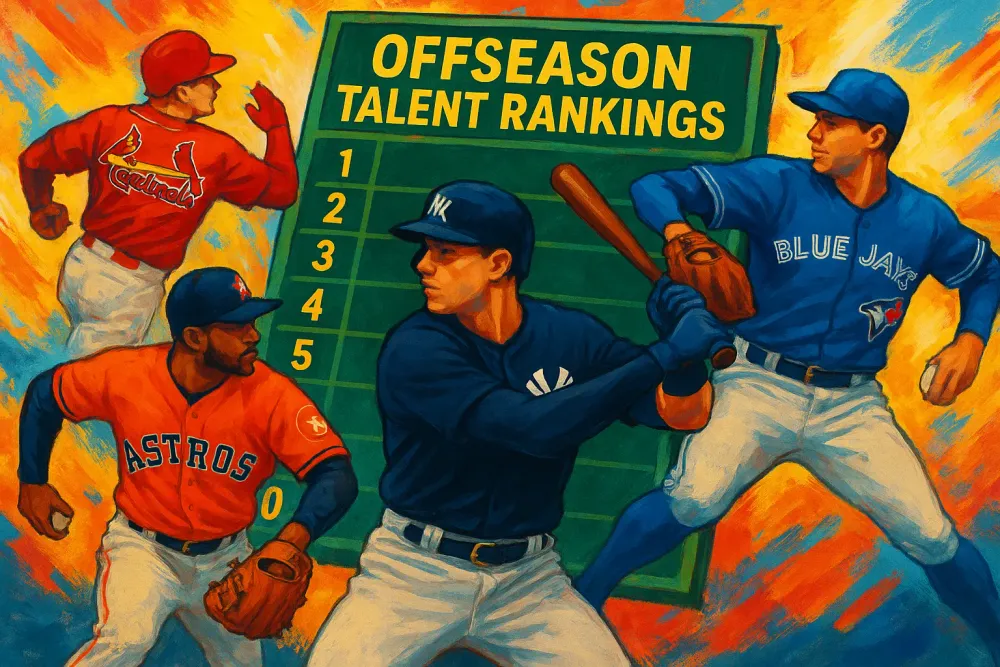
Assessing the MLB Offseason: Talent Rankings
The MLB offseason has been a whirlwind of trades, signings, and overall roster adjustments as teams prepare for the fast-approaching spring training. As the dust settles, it’s time to evaluate how well each club has bolstered its roster. By utilizing a systematic point-ranking method based on talent acquisition, we can determine which teams have emerged stronger this winter.
Scoring System Explained
The scoring methodology used for this evaluation considers a combination of each team's addition of talent measured in Wins Above Replacement (WAR), alongside future prospect valuations. The scoring system is as follows:
1. The total WAR of offseason additions is multiplied by five (where 1.0 WAR = 5 points).
2. Bonus points are assigned for players projected for varying WAR levels: +1 point for 1.0-1.9 WAR, +2 points for 2.0-2.9 WAR, and +5 points for players projected at 3.0 WAR or higher.
3. Players slated for the Opening Day roster but not projected for a positive WAR receive 0.5 points.
4. Prospects are graded on a 20-80 scale with points assigned as follows: 45 FV (+1 point), 50 FV (+2 points), and 55 FV (+3 points).
Teams at the Bottom: Lack of Impact and Talent
Taking the bottom spots in the rankings is a mix of teams that failed to make significant moves, exemplified by the Cleveland Guardians with a total talent score of 6.5, relying mainly on in-house players after minor acquisitions like catcher Austin Hedges. Following close are the teams with scores in the teens, such as the Oakland Athletics and Miami Marlins, who, despite adding a few complementary pieces, still have pragmatic roster concerns.
Mid-Tier Teams: Calculated Moves with Mixed Results
As we climb up the rankings, teams like the Kansas City Royals (17.5) and Colorado Rockies (22.5) find themselves in the mix, re-shaping their rosters through calculated trades and signings. The Royals acquired proven contributors like Isaac Collins while aiming to fill positional gaps. Additionally, the Rockies diversified their roster by bringing in veteran arms and potential impact players.
Teams on the Rise: Significant Talent Additions
Several clubs have made significant strides through strategic offseason signings and trades, with scores in the mid-30s to 50s. The San Francisco Giants made headlines with the signing of outfielder Harrison Bader, while teams such as the Texas Rangers acquired frontline starters and high-profile talents. The New York Yankees’ acquisition of Ryan Weathers signals victory in addressing pitching staff depth.
Top Contenders: Strategic Moves to Compete
In the upper echelon of the rankings, teams like the Baltimore Orioles (100.5) and the New York Mets (100.5) made bold moves to reinforce their prospects and roster depth. The Mets have particularly astounded observers with their accumulation of talent, highlighted by Bo Bichette and Marcus Semien, while also considering position changes to maximize roster potential.
Conclusion: Looking Ahead to Spring Training
The 2026 MLB season is primed for exciting developments, with each team looking to leverage their offseason strategies effectively. Teams at the top of the rankings have positioned themselves to contend, while others must navigate challenges with roster depth and talent development. As spring training approaches, the focus will shift to how these talents gel on the field and the impact they can have this upcoming season.