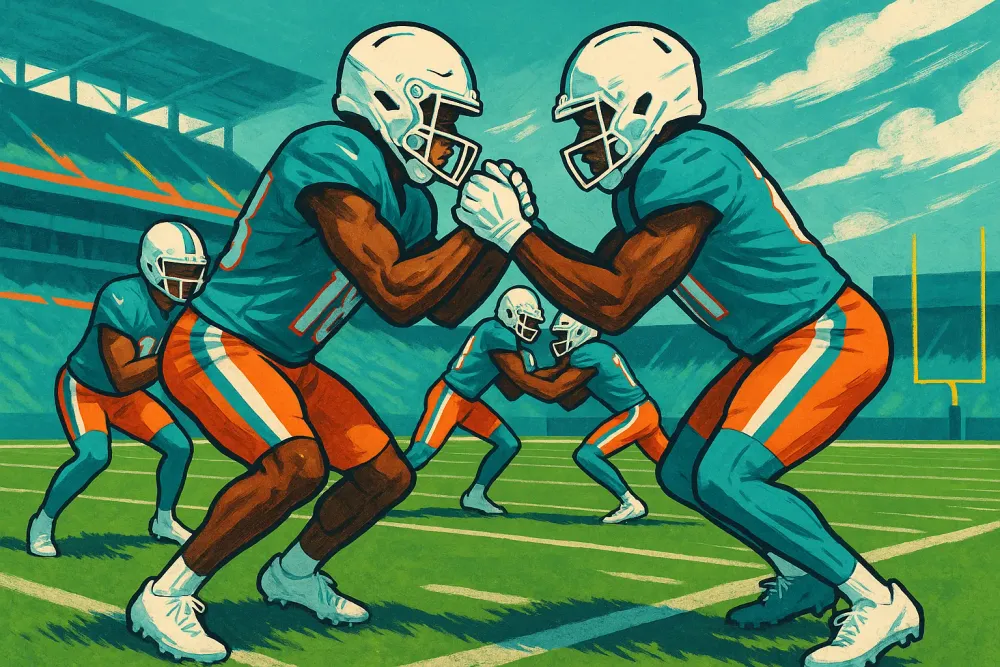
As the Miami Dolphins gear up for the upcoming 2026 season, head coach Jeff Hafley is placing significant emphasis on the role of wide receivers in the team's offensive scheme. During a recent press conference, Hafley expressed the critical importance of his receivers not only being proficient at catching passes but also willing to engage in blocking to facilitate the run game. He famously coined the phrase, "No block, no rock," which encapsulates the philosophy that those who wish to be involved in the receiving game must first contribute to the success of the running game.
A Changing Landscape for Dolphins Receivers
The Dolphins' wide receiver corps is currently populated with a mix of young and unproven talents eager to make a name for themselves. This situation presents both challenges and opportunities for players vying for significant playing time. With no established No. 1 receiver on the roster, the competition will likely be fierce. The coaching staff, led by Hafley and offensive coordinator Bobby Slowik, intends to cultivate a group that not only excels in routes and receptions but also understands the nuances of blocking. The system is designed not just to showcase individual talents but to create a cohesive unit capable of executing complex plays.
Blocking as a Team Philosophy
In the modern NFL, the emphasis on a dynamic passing game often overshadows the fundamental aspects of football, such as blocking. However, Hafley's directive highlights a serious commitment to team-oriented play among his receivers. The phrase "No block, no rock" serves as a reminder that each player is a vital cog in the machine. It signifies that receivers must take pride in their responsibilities within the offense, which extends beyond simply catching passes. By effectively blocking for running backs, receivers not only free them up for big gains but also establish themselves as reliable team players in the process.
Younger Players Rising to the Challenge
With a youthful roster, the Dolphins' wide receivers have a unique opportunity to earn their place in the lineup. The coaching staff is intent on assessing how well each player can integrate this new philosophy into their gameplay. The willingness to block can serve as a significant differentiator among players, as Hafley and Slowik look for those who can embody the team-first mentality they aspire to cultivate. As Miami prepares for the upcoming training camps and preseason games, youngsters will be assessed not just on their receiving skills but on their ability to contribute to the team's overall strategy.
Implications for the 2026 Season
The implications of Hafley's philosophy are clear. Players who are unwilling to contribute to the blocking game may find themselves sidelined as the team evaluates who deserves the most field time. This added layer of competition can serve as a catalyst for development among the receivers, encouraging them to broaden their skill sets and raise their performance levels. As the Dolphins work towards building a balanced offense, versatility and willingness to tackle both blocking and receiving roles will become critical in determining each player's fate.
Conclusion
The Miami Dolphins are heading into a pivotal season where the offensive strategy hinges not just on talented receivers, but on a collective commitment to doing the dirty work that enables overall success. Jeff Hafley's mantra, "No block, no rock," will serve as a guiding principle for the young squad. As they prepare for the 2026 season, it will be interesting to see how these dynamics unfold on the field and which players step up to embrace this all-important aspect of the game.