Darryn Peterson's journey to becoming a Utah Jazz player took center stage this past Saturday as the franchise unveiled his new jersey number, reaffirming the commitment to a legacy cherished by both the player and his family. Selected as the second overall pick in the 2026 NBA draft, Peterson faced the common rookie challenge of claiming a number that resonates with his identity and aspirations in the league.
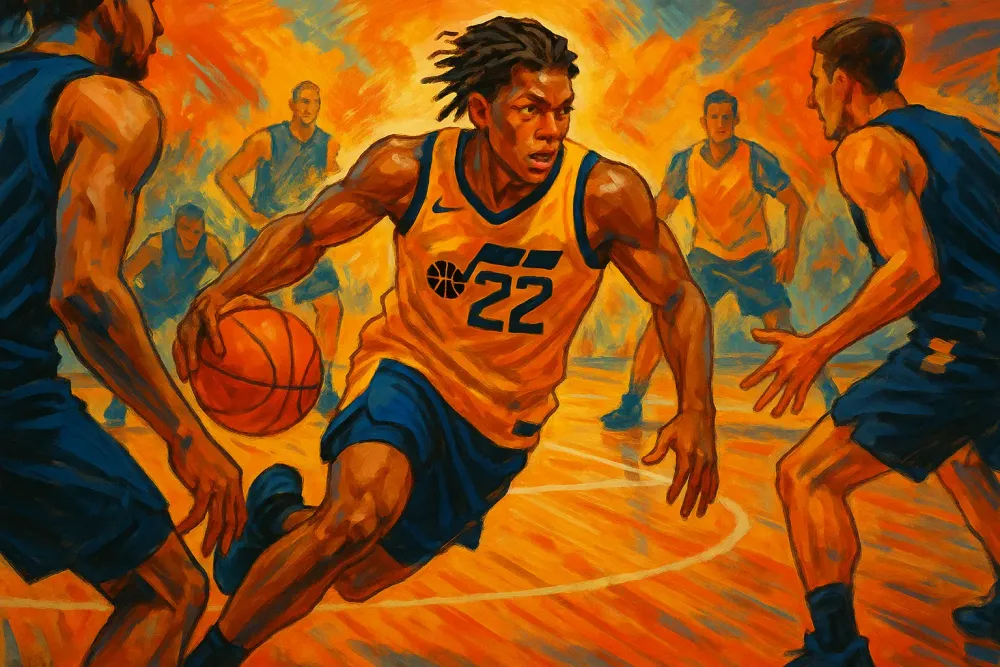
Upon entering the NBA, players often encounter dilemmas surrounding their jersey numbers, especially those who have defined their careers with specific digits. For Peterson, this decision was particularly personal as he aimed to wear the number 22, a number he has donned since his high school days, and one that also holds sentimental value: his father, Darryl Peterson II, played with the same number during his college career at Akron.
A Number in Demand
However, the path to wearing No. 22 wasn't straightforward. Kyle Filipowski, a fellow player and a notable acquisition for the Jazz in 2024, had been the current owner of that number since entering the league. Reports after the draft indicated uncertainty surrounding Peterson's choice of jersey, prompting him to express his intent to negotiate with Filipowski for the coveted digit. Such negotiations are not uncommon in sports; players often seek to honor personal milestones and family traditions through their jersey numbers.
Peterson's aspirations were almost diverted when he considered the alternative of wearing the No. 8 jersey as a tribute to basketball icon Kobe Bryant, a legend whose impact on the game has been immeasurable. Yet, that fallback plan was quickly dashed when it came to light that Isaiah Collier had already claimed that number for the Jazz. This situation further exemplifies the competitive nature of players vying for specific jersey numbers, often leading to personal stories interwoven into the fabric of team dynamics.
Keeping the Legacy Alive
Ultimately, acquired through negotiations, Peterson's resolve to wear No. 22 pays homage to both his family's basketball history and his own journey as he enters a critical phase of his career. The successful negotiation reflects positively on Peterson's character and ability to navigate the professional landscape—an early indication of the resilience he may bring to the Jazz as they look to improve their fortunes in the upcoming season.
A New Chapter for the Jazz
The Utah Jazz franchise is in an undeniably pivotal moment. Coming off a disappointingly low record of 22-60 in the previous season, the team is eager to shake off the shadow of four consecutive losing seasons. This streak matches the longest in the franchise's history since moving to Utah before the 1979-80 season. With ambitious aspirations, the Jazz look to revitalize their roster, with Peterson now being a centerpiece of that approach.
Joining a promising mix of talent, Peterson's addition to the roster stands alongside vital players like Lauri Markkanen, who has showcased significant growth, young prospect Keyonte George, and defensive powerhouse Jaren Jackson Jr. Adding to this lineup is the potential return of Walker Kessler, a restricted free agent whose decision will greatly influence the team's future dynamics.
Looking Forward
As the Jazz prepare for the upcoming season, all eyes will surely be on the blossoming talent of Darryn Peterson. Expectations run high not only for him individually but also for the contribution he will make towards a stronger team identity. His integration into a lineup filled with youthful energy and experience signifies a commitment from the franchise to not only rebuild but to foster a culture of excellence and competitiveness.
The narrative of Peterson's journey, paired with the historical context of the Jazz, paints an optimistic picture for die-hard fans who have shown unwavering support through the trials of recent seasons. With Peterson determined to prove his worth in the league, the Jazz might be on the verge of cultivating a fresh spirit that could reinvigorate both the organization and its loyal supporters. Only time will tell if the combination of prevailing talent, strategic guidance, and solid teamwork will lead the Jazz back to prominence in the NBA.