Crosby Weighs in as Hughes Challenges Hall of Fame Over Olympic
Introduction
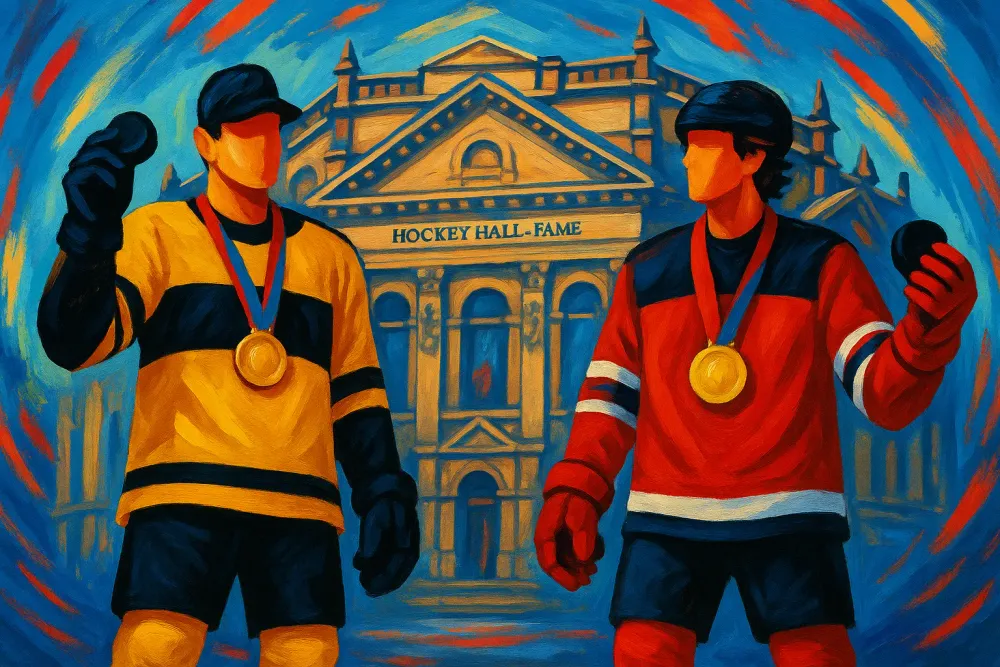
The world of hockey memorabilia recently saw an interesting twist with two stars—Sidney Crosby and Jack Hughes—on opposing sides of a heated dispute regarding a treasured Olympic puck. While Hughes pursues the return of the puck from the Hockey Hall of Fame (HHOF), Crosby, a Canadian Olympic hero, has expressed a different sentiment. This article will delve into the intriguing dynamics of this battle for hockey history and its implications for the players and fans.
The Background: Olympic Glory
On February 21, 2010, Sidney Crosby etched his name in the annals of Olympic history when he scored the overtime golden goal against the United States, leading Team Canada to victory in Vancouver. That iconic moment not only secured a gold medal for Canada but also resulted in the puck being celebrated as a vital piece of hockey lore. The puck, along with other significant artifacts, now resides at the Hockey Hall of Fame in Toronto.
Fast forward to 2026, and the stakes of Olympic hockey and collectible memorabilia surged as Jack Hughes scored the decisive goal in the men’s final at the 2026 Milan Cortina Olympics, capturing gold for Team USA. The puck that sealed that thrilling victory has also been taken to the HHOF for safeguarding, further intensifying the ongoing conversation about the rightful ownership of such pivotal pieces of sporting history.
Hughes’ Position on the Puck
In a recent interview with The Athletic, Jack Hughes expressed his frustration over the fact that the puck with which he scored his momentous goal is under the custody of the Hockey Hall of Fame. Describing it as “bulls--t,” Hughes argues that the puck should rightfully belong to him. “Like, that’s bulls--t that the Hockey Hall of Fame has it, in my opinion. Why would they have that puck?”
Hughes further revealed that he had initially lost track of the puck immediately after his historic goal. It was only later that he learned about the puck's archival preservation status following a compliance protocol established by the International Ice Hockey Federation after the game concluded. This has sparked discussions around the ethics of memorabilia ownership and player rights.
Crosby’s Reaction: A Different Perspective
In contrast to Hughes’ strong stance, Sidney Crosby has taken a more congenial view towards his own Olympic memorabilia. When asked about Hughes’ situation, Crosby downplayed the significance of the ownership debate, stating to The Athletic, “I didn't even think about it that way, to be honest with you. I was just happy that I scored the goal. I was happy that the puck was going to the Hall of Fame.” This highlights Crosby’s focus on the broader historical impact of the game rather than the individual ownership of artifacts.
Furthermore, Crosby made it clear that he was supportive of the Hockey Hall of Fame’s mission to preserve the legacies of Olympic moments, illustrating his respect for the institution and its role in hockey's rich history.
The Hall of Fame's Legal Claim
Philip Pritchard, curator at the Hockey Hall of Fame, has weighed in on the matter, asserting that the Hall legally owns the puck through a structured donation process. In a statement to ESPN, he remarked, “It’s been donated to us now. For every artifact that’s been donated, we have a paper trail and signed paperwork of where it’s come from.”
Pritchard explained that the puck's donation is a part of the Hall's commitment as a registered charity in Canada, aimed at ensuring the long-term safekeeping and historical recognition of the puck. This perspective places the debate squarely in the realm of legalities versus personal desires for ownership, making it a complex issue.
The Value of the Puck
Adding another layer to this dispute is the purported value of the puck in question. With estimates ranging from $20,000 to a staggering $500,000, it's no surprise that Hughes is keen on retrieving the item. He expressed a desire to acquire the puck not just for himself but for his father, who has amassed a collection covering the NHL careers of Jack and his brothers Quinn and Luke.
This high valuation reflects the significance of the moment it represents, as well as the broader economics of sports collectibles. The increasing interest in sports memorabilia, particularly from high-stakes events like the Olympics, has turned these items into valuable assets which further complicates the ownership discussion.
Conclusion
The ongoing tussle between Jack Hughes and the Hockey Hall of Fame over the ownership of his Olympic puck evokes broader questions about nostalgia, ownership rights, and the nature of sports memorabilia. In contrast, Sidney Crosby’s perspective underscores a collective appreciation for hockey’s history over individual gain. As the dialogue continues, fans and collectors alike will be invested in the outcome, watching as two Olympic champions navigate the complexities of their legacies.