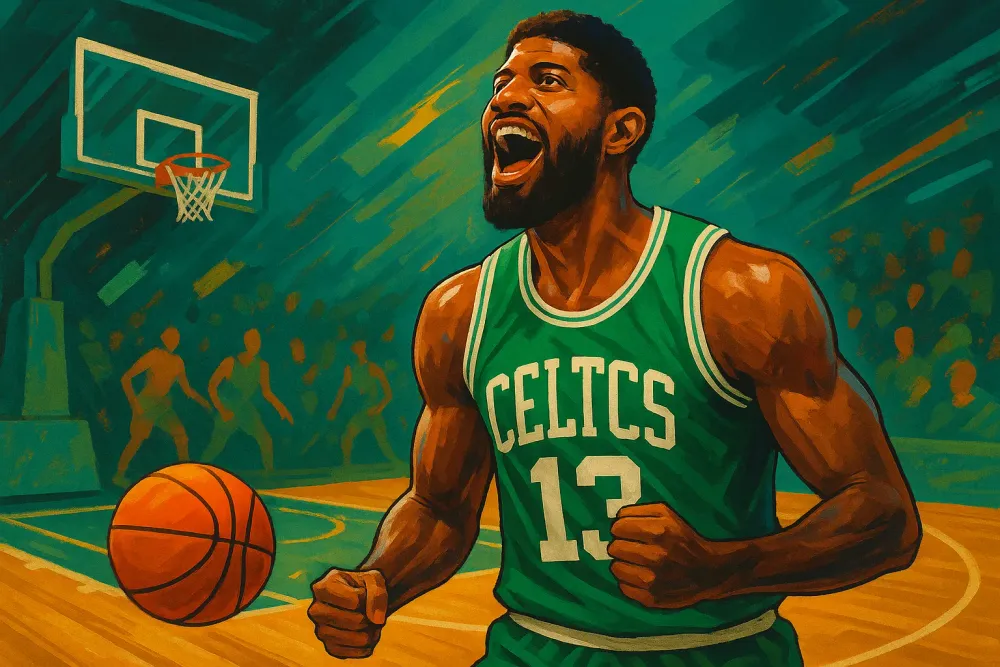
The Boston Celtics have made headlines with their recent trade for Paul George, sparking a range of reactions across the NBA community. While the general sentiment among fans and observers remains tepid, Celtics officials are brimming with optimism about the possibilities this deal presents for the team's future.
The Trade Details
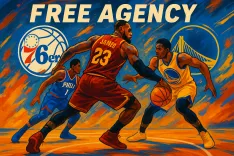
In this significant deal, the Celtics have sent their star player, Jaylen Brown, to the Philadelphia 76ers in exchange for Paul George along with two first-round picks and two second-round picks. The trade marks a strategic maneuver by Boston as they look to bolster their roster while maintaining a competitive edge in the Eastern Conference.
Celtics' Optimism Amidst Skepticism
Despite the mixed feelings from external observers, Celtics officials see the acquisition of George, who has two seasons left on his current contract, as a chance to reshape their roster's dynamics. Jay King and Sam Amick from The Athletic clarified that not only do the Celtics not have another trade lined up, but they also view George's influence as potentially pivotal for their upcoming campaign.
King and Amick pointed out that the trade wasn't largely motivated by financial considerations, indicating that the Celtics are not merely looking for a financial advantage but rather searching for a way to enhance their competitiveness. The report stated, "Though some NBA observers were left wondering if the Celtics had a subsequent move lined up, don't expect another shoe to drop." Instead, Boston appears focused on maximizing their current roster while preparing for future opportunities.
The Value of Draft Picks
A critical component of this trade is the four picks Boston has acquired from Philadelphia. According to a league source, these picks are considered valuable assets for the franchise, either to develop or to leverage in future trades. With one of the picks being a 2028 second-rounder with protections, and another being a 2031 unprotected first-rounder, the Celtics have positioned themselves strategically for upcoming drafts. The 2031 pick, in particular, could hold significant value based on the performance and longevity of the current 76ers' core.
Assessing Long-term Implications
Assuming the core of the Philadelphia roster remains intact, Jaylen Brown will be 34 by the time the 2031 draft occurs, while Tyrese Maxey will be 30. There are also questions surrounding Joel Embiid's future; he may not remain with the team past the 2028-29 season due to his massive $67.3 million player option. This sets the stage for Boston to potentially capitalize on a declining Philadelphia team in the years leading up to the draft.
Understanding the Risks
The Celtics' management is betting on several factors that could play to their advantage. Given the complexity of salary cap dynamics, the Celtics might also be calculating that the 76ers will struggle to retain key players beyond their current contracts. With V.J. Edgecombe on the cusp of max-contract status in two years, the situation could become even more complicated for Philadelphia, potentially allowing Boston to seize opportunities through the draft.
A Legacy of Success
Though the Celtics have made high-risk decisions in pursuing this trade, their historical track record lends them a degree of credibility. Remarkably, Boston has not undergone a prolonged period of poor performance this century. With the longest playoff drought spanning only two years between 2005 and 2007, the Celtics have consistently made postseason appearances over the past twelve seasons, including six Conference Finals and one championship.
Conclusion: A Calculated Gamble
The trade for Paul George may not excite every fan or analyst, but the Celtics see a horizon filled with potential. By blending experienced talent like George and reaping valuable draft assets, Boston aims to navigate the complexities of the evolving NBA landscape effectively. Only time will tell if this gamble pays off, but the Celtics' history of success offers a hopeful perspective as they embark on this new journey.