
Canada's Olympic Roster: Will Talent Overcome Goaltending Doubts?
Introduction
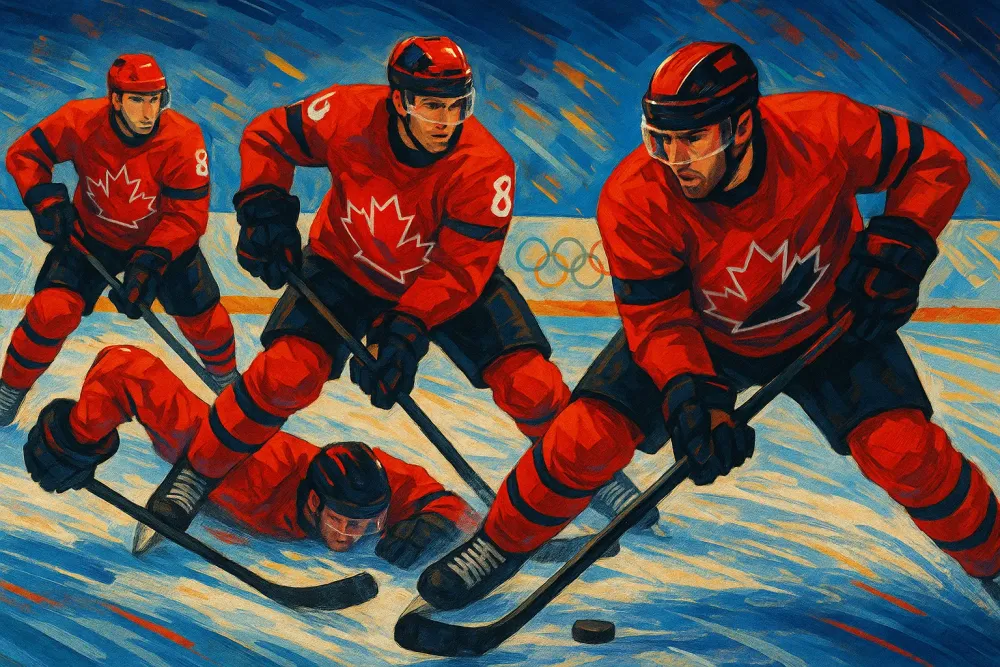
As the countdown to the 2026 Winter Olympics in Milan Cortina begins, Team Canada is set to field a formidable roster with the hopes of securing a gold medal, aiming for an impressive third win in a row. The stakes are high as they reintroduce NHL players for the first time since the 2014 Olympics, and expectations are sky-high for Canada to reclaim its reputation as the dominant force in international hockey.
Goaltending Concerns
The most pressing issue surrounding Team Canada is undoubtedly their goaltending. The performance of Jordan Binnington at the Four Nations tournament raised eyebrows, especially during the championship match, which highlighted vulnerabilities in his game. Although he remains on the Olympic roster, recent struggles have led to further scrutiny regarding his readiness to perform at the highest level.
Having brought in Logan Thompson and Darcy Kuemper, both of whom are enjoying successful seasons with the Capitals and Kings respectively, Canada has made strides to bolster their goaltending. However, Binnington’s status as the presumed starter remains a topic of debate. Despite his shaky regular season, his experience as a Cup winner brings a valuable perspective, particularly given the immense pressure of Olympic competition.
Thompson has impressed since moving to the Capitals, and Kuemper’s Stanley Cup triumph presents an intriguing dynamic to the goaltending situation. Yet, the question remains: if Binnington does not take the starters role, who will? The stakes at the Olympic level differ significantly from the NHL, and the coaching staff must weigh experience against recent form.
Offensive Power and Key Omissions
Canada's offense appears robust on paper, boasting elite talents like Nathan MacKinnon, Connor McDavid, Cale Makar, Sidney Crosby, and rookie star Macklin Celebrini. However, the conspicuous absence of Connor Bedard, the explosive young forward for the Chicago Blackhawks, has attracted its fair share of criticism. Although his omission paves the way for a more balanced roster featuring two-way players like Nick Suzuki and Bo Horvat, this decision raises eyebrows, especially considering Bedard's breakout season.
While it is clear that Canada will not struggle to accumulate goals with the plethora of offensive stars it has at its disposal, the inclusion of two-way specialists raises questions about the ideal balance between offensive prowess and defensive responsibilities. Critics argue that overlooking a talent like Bedard could come back to haunt Canada if they face scoring difficulties during critical matches.
Tom Wilson: The Double-Edged Sword
Another controversial selection for Team Canada is power forward Tom Wilson, whose reputation for aggressive, sometimes reckless play makes him a divisive figure. Known for his ability to inflict physical damage, Wilson's role is twofold: he must instill fear in opponents while contributing offensively. His inclusion can be seen as a strategic move to counter the physicality of teams that may present a serious challenge, notably from the United States, who boast aggressive players like Brady and Matthew Tkachuk.
However, Wilson's style poses risks in international play, where the officiating could be less forgiving than in the NHL. Canada will be hoping that Wilson can channel his energy positively, balancing physicality with discipline to avoid unnecessary penalties.
Defensive Strengths and Snubs
Canada's defense looks exceptionally strong, spearheaded by the dynamic Cale Makar, who brings unmatched skill and offensive ability from the blue line. Alongside Makar, the roster features capable defenders like Josh Morrissey, Thomas Harley, and Devon Toews, making for a well-rounded group. The stability in defensive selections that carried over from the successful Four Nations tournament fortifies team confidence.
Despite this, there are notable omissions that stir discussions among experts and fans alike. Young talents such as Edmonton’s Evan Bouchard and Jakob Chychrun from Washington have excelled in their respective roles yet did not make the final cut. Bouchard, in particular, stands out as one of the top Canadian defensemen in scoring, raising questions about the decision to lean toward experienced but possibly less dynamic players like Colton Parayko and Drew Doughty.
While the decision to retain a core group from the Four Nations could indicate a commitment to chemistry, it also opens Canada to criticism if results do not meet expectations. As always, small margins will define success or failure.
Conclusion
Canada's strategy heading into the 2026 Winter Olympics demonstrates a mix of veteran presence, talent, and a focus on two-way play. While they have a roster filled with high-caliber players capable of competing for gold, the questions surrounding goaltending, key omissions, and the utilization of aggressive players like Wilson may become critical determinants of their journey. With expectations running high, Canada must address these challenges head-on and validate their roster choices. The eyes of hockey fans worldwide will be on them as the puck drops in Milan Cortina, with the anticipation of hoping to add another Olympic medal to its illustrious history.