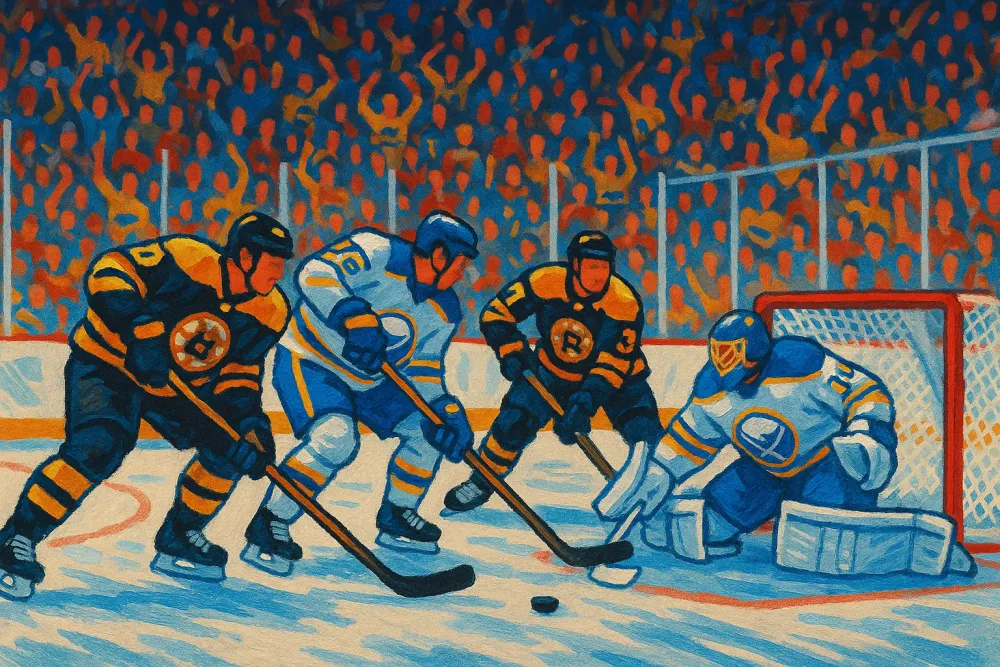
BOSTON — The atmosphere in TD Garden on Sunday was charged with anticipation, but instead of a thrilling display of playoff hockey, Bruins fans witnessed a disheartening performance from their team. The Boston Bruins faced the Buffalo Sabres in Game 4 of the postseason, and the match quickly became a narrative of missed opportunities and strategic blunders for the home team. After a lackluster first period, the Bruins left the ice to a chorus of boos, having been outscored 4-0 by a Sabres team that displayed all the confidence and skill they’ve cultivated throughout the season.
Throughout the opening 20 minutes, the Bruins struggled to find their rhythm. They managed only two shots on goal within the first 16 minutes, while the Sabres were relentless, peppering the Bruins' goaltender with shots and converting on their chances. By the end of the period, the Sabres had outshot the Bruins 19-5, making it clear that something was amiss for the home squad. The last time the Bruins allowed four goals in a postseason first period was back in 1991 against the Hartford Whalers, a grim statistic that underscored the significance of Sunday’s debacle.
“I am embarrassed, we all should be,” said head coach Marco Sturm in a postgame address filled with disappointment. The final score of 6-1 marked one of the most significant playoff losses in franchise history, raising questions about the team’s preparedness and resilience heading deeper into the postseason.
Sabres Capitalize on Bruins' Mistakes
While it’s easy to point fingers at the Bruins for their shortcomings, credit must be given to the Buffalo Sabres for their impressive performance. With this win, the Sabres now lead the series 3-1 and head back to Buffalo with a chance to clinch the matchup on home ice. Their momentum is palpable, and they have repeated their success from the regular season into the playoffs.
Head coach Lindy Ruff expressed pride in his team’s effort, stating, “That was the best first period we played all season.” The Sabres have transformed into a resilient squad that brushes off errors and remains focused on the task at hand. This newfound confidence is vital for a team that hasn’t participated in the playoffs for 15 years.
As newcomers in the postseason, the Sabres are rewriting the narrative of what typically happens to first-year playoff teams. Historically, such teams struggle to find their footing, often bowing out early before gaining the experience needed to compete at a high level consistently. Buffalo, however, claimed the top position in the Atlantic Division and has proven that they can perform when it matters most.
Development of Key Players
Several players in the Sabres’ roster are experiencing the Stanley Cup playoffs for the first time in their careers, yet they bring valuable experience from other competitive arenas, including international tournaments. Tage Thompson and Rasmus Dahlin, who have both had substantial exposure to high-stakes games, are stepping up to lead this version of the Buffalo Sabres.
Despite their potent offense—exemplified by a 9-0 scoring run across Game 3 and Game 4—the Sabres recognize areas needing improvement. Their power play efficiency has been dismal, currently sitting at 0-for-16 in the series, which poses a potential threat to their success in the upcoming rounds. “We came out ready to go today for sure… guys blocked shots tonight, we killed great, made smart puck decisions,” remarked goaltender Alex Lyon, who put forth a stellar performance with a .958 save percentage, stopping 23 of 24 shots.
Goaltending Questions Loom
As the series progresses, questions surrounding goaltending arise. Is Alex Lyon now the definitive starter for the Sabres? While he shone in Game 4, his place as the primary goaltender may be tested should he start to falter, leaving options such as Ukko-Pekka Luukkonen to potentially step in after not faring well in Game 2. The uncertainty of goaltending during the playoffs is a focal point for many teams, reinforcing that even as the Sabres flourish, they must remain vigilant.
Momentum Shifts and Lessons Learned
The increasing confidence of the Sabres is complemented by a willingness to learn from each encounter. They faced a pushback from the Bruins in the second period but successfully held the line before soaring to two more goals in the third, demonstrating their ability to maintain composure under pressure. Peyton Krebs underscored their strategy: “I think we’re at our best when we’re on our toes, making their d-men make mistakes.” The Sabres executed this plan flawlessly in Game 4, creating a story that appears far removed from the typical fate of playoff newcomers.
As the series shifts back to Buffalo for Game 5, it’s evident that the Sabres are not merely riding a wave of good fortune. They are a mature team, well-prepared to seize control of their playoff narrative, disproving expectations set for first-year contenders. With this remarkable momentum, the Sabres stand poised to make a significant impact in the postseason.