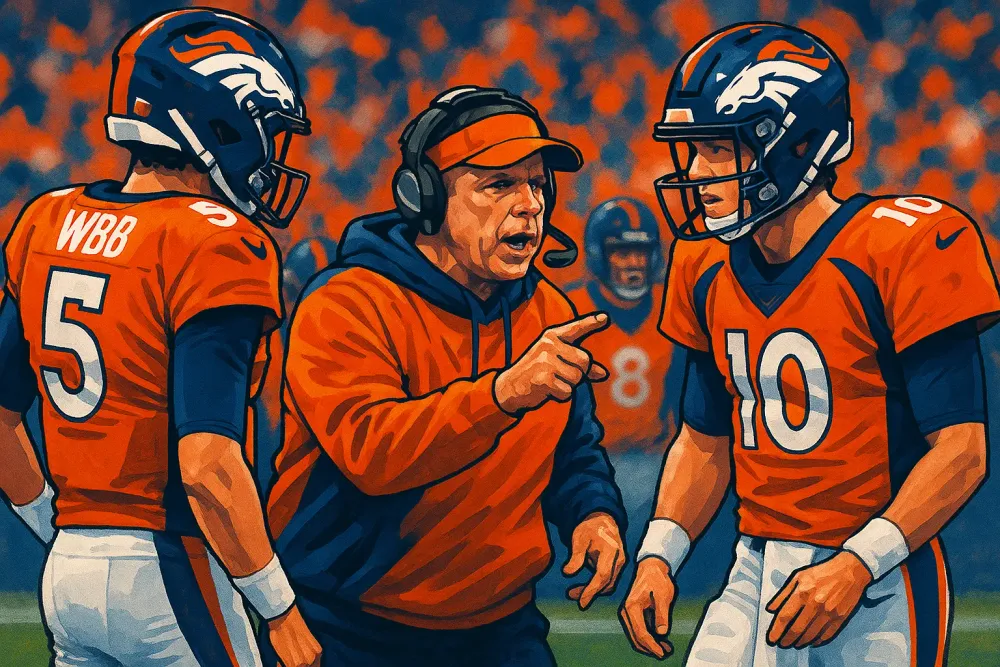
The Denver Broncos find themselves in a challenging position this season, raising eyebrows among NFL analysts and fans alike. The recent demotion of offensive coordinator Davis Webb has sparked discussions about the effectiveness of the team's leadership, particularly with head coach Sean Payton taking over play-calling duties ahead of their matchup against the Los Angeles Chargers.
Webb's Minor Demotion
According to The Athletic's Jonathan Jones, Webb's minor demotion could be viewed as a reflection of Payton’s confidence in him as an offensive coordinator. The shift comes at a critical juncture in the Broncos' season, where offensive performance has been underwhelming despite high expectations. Observers are left questioning whether Webb was truly capable of managing the offensive game plan against some of the league's toughest defenses.
Implications of Payton's Play-Calling
Since Payton assumed the play-calling responsibilities, his hands-on approach has been noted by many sources. A whistleblower within the organization pointed out the significant level of planning Payton engaged in throughout the week, raising concern about how much autonomy Webb had left to operate. This lack of freedom could have inevitably affected how the Broncos' offense has been executing plays on the field.
The Struggles of Bo Nix
Much of the scrutiny has fallen on quarterback Bo Nix, who has seen a decrease in his performance in his third season, even following the splashy addition of star wide receiver Jaylen Waddle to the roster. Thus far, Nix has compiled 819 passing yards, five touchdowns, and three interceptions through four games. With an average of only 5.8 adjusted yards per attempt, his ability to effectively lead the offense has come into question.
Nix's Passing Game Woes
Statistics from Pro Football Reference and NFL's Next Gen Stats reveal that Nix's performance is even more concerning when dissected further. He is currently averaging the third-fewest completed air yards at just 3.9 and the fourth-fewest intended air yards at 6.2. These metrics suggest that Nix is playing it safe, failing to stretch defenses or take risks that could unlock the potential of his receiving corps, including Waddle.
The Effect of Jaylen Waddle
Waddle's arrival was expected to open up the Broncos' passing attack. Fans and analysts hoped that his explosive capabilities would complement Nix's development, allowing for deeper throws and a more dynamic offense. However, it appears that instead of stretching the field, Nix has defaulted to a conservative approach, settling for shorter throws while missing opportunities to exploit Waddle's speed and skills.
Looking Ahead
The issue for the Broncos is more than just Webb's game-calling abilities; it points to a deeper problem rooted in execution and decision-making on the field. Should Nix fail to improve his performance under Payton’s guidance, the clamor for accountability will grow, directing more criticism towards Webb and the coaching staff. The ultimate test will be whether Nix can turn his production around, and if so, it may validate Webb’s previous methods and play calling.
As the season progresses, Denver's coaching decisions and quarterback performance will undoubtedly be connected. If Payton’s strategies bear fruit and Nix begins to hit his targets downfield, it will bolster the idea that Webb was merely on a learning curve. However, if results continue to stagnate, the narrative of a struggling Broncos offense will intensify, prompting a re-evaluation of the entire offensive setup.
In the high-stakes environment of the NFL, where performance is constantly scrutinized, the next few games might prove to be pivotal for both Davis Webb and Bo Nix. The Broncos’ ability to rally could either restore faith in their coaching decisions or lead to significant changes down the line.