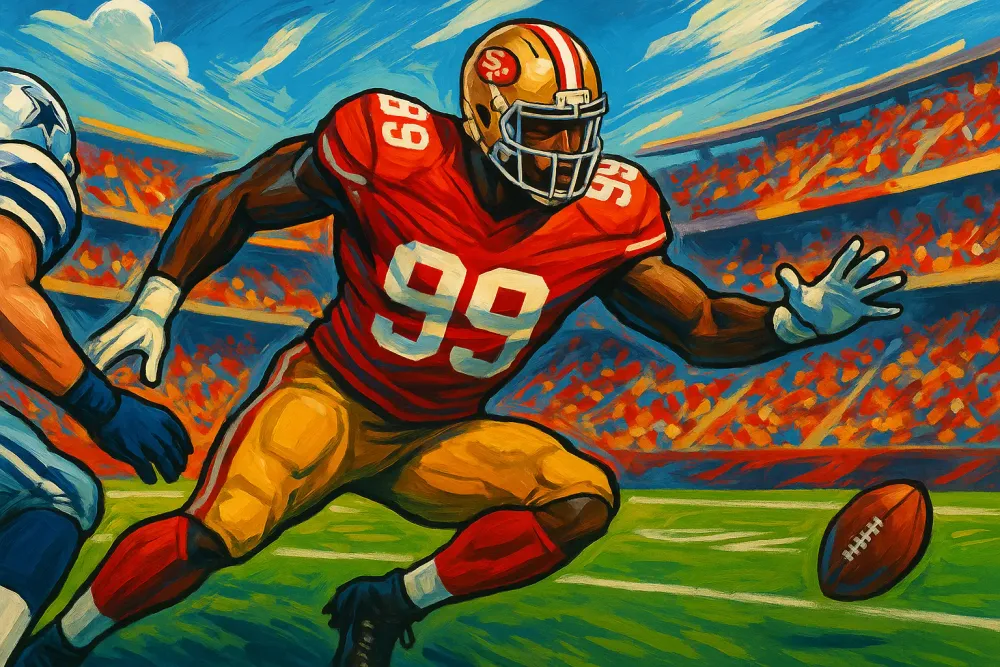
The sports world is mourning the unexpected passing of former NFL defensive lineman Aldon Smith, who died at the age of 36. The news broke on Saturday, and while the cause of death remains undisclosed, it has prompted his family to seek answers, looking into the potential connection between his death and chronic traumatic encephalopathy (CTE).
Smith's Legacy in the NFL
Aldon Smith was a formidable presence on the field, playing six seasons in the NFL with the San Francisco 49ers, Oakland Raiders, and Dallas Cowboys. Known for his prowess as a defensive lineman, Smith quickly made a name for himself as one of the league's emerging stars, showcasing incredible skill and athleticism. His early career with the 49ers, particularly during their Super Bowl run, highlighted his potential to be one of the game's greats.
The Investigation into His Death
In a statement released by the family, it has been revealed that they have hired attorneys to investigate the circumstances surrounding Smith's untimely death. The family's legal team includes Harry Daniels, Bakari Sellers, and Wayne Kendall, all emphasizing the need for thorough examination following the shocking loss. They stated, "As with anyone who dies so suddenly at such a young age, we understand that there is a great deal of interest in and speculation about Aldon Smith's passing and we intend to get to the bottom of it."
A key aspect of this investigation involves sending Smith's brain to medical experts in Boston. The aim is to determine whether CTE, a degenerative brain disease that has increasingly gained attention in relation to former athletes, played a role in his passing. CTE is associated with repetitive head trauma and can manifest in a range of symptoms, including mood swings, impulsive behavior, and depression. The disease is notoriously difficult to diagnose until after death, leaving many families seeking closure after losing loved ones who exhibited concerning behaviors.
The Impact of CTE in Sports
The discussion surrounding CTE has shifted the narrative concerning player safety and health in contact sports. It has raised awareness about the long-term effects of concussions and the necessity for protective protocols. Smith's family has claimed that he suffered numerous concussions throughout his football career. Such allegations highlight the pressing need for players to be educated on the risks associated with head injuries and the importance of monitoring their health long after they step off the field.
Public Reaction and Support
The suddenness of Smith’s death has drawn an outpouring of grief and support from fans, former teammates, and the broader sports community. Many have taken to social media to express their condolences and share memories of Smith’s time on the gridiron. Smith’s family has requested that the public respect their privacy as they navigate this difficult time and work to comprehend the implications of their loss.
The Road Ahead for Smith’s Family
The investigation into Smith's death marks a crucial journey for his family as they seek answers and closure. The pursuit of understanding CTE's potential involvement is not just about Aldon Smith, but also about the broader conversation regarding player safety in the NFL and contact sports in general. With growing awareness, his family's efforts may contribute to vital discussions about how the league addresses mental health and the long-term impacts of physical confrontations in football.
As the investigation continues, fans and supporters are reminded of Aldon Smith's contributions to the sport, the challenges many athletes face, and the consequences of a career spent in such a physically demanding field. His legacy will not only be defined by his statistics but also by the ongoing conversation surrounding player health and safety.