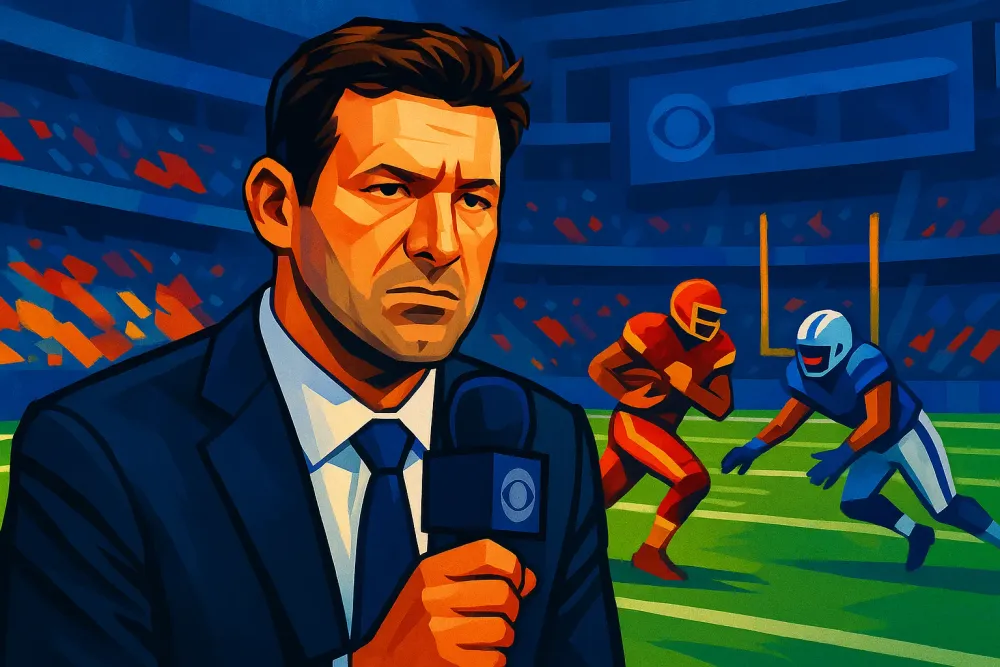
MILWAUKEE (AP) — In a shocking turn of events, Tony Romo, the former Dallas Cowboys quarterback and current CBS NFL analyst, was arrested on suspicion of operating a vehicle while under the influence. This incident occurred on Thursday when Romo was pulled over while driving south on Interstate 43, according to the Milwaukee County Sheriff’s Office.
Law enforcement officials indicated that Romo performed poorly on field sobriety tests, leading to his arrest. The sheriff’s report noted that the 46-year-old was subsequently booked and later released. He is scheduled for a court appearance on September 21 to address the charges against him.
Romo’s Journey from Player to Analyst
Tony Romo’s career is a tale of talent and perseverance. Born in San Diego, California, he grew up in Burlington, Wisconsin, about 35 miles from Milwaukee—a fact that adds a layer of irony to his recent arrest. Romo became a household name as the quarterback for the Dallas Cowboys, where he distinguished himself with remarkable performances over his 14-year career from 2004 to 2016.
During his tenure, Romo earned four Pro Bowl selections and solidified his spot in Cowboys history, leading the franchise in several statistical categories. Currently, he stands as the all-time leader in career touchdown passes for the Cowboys with 248. Until recently, he also held the record for career passing yards (34,183) until Dak Prescott surpassed him last season.
Impact on Romo's Career and Legacy
Romo transitioned smoothly into a career as a sports analyst after retiring, earning accolades for his insightful commentary and predictive analysis during games. Since 2017, he has served as the lead analyst for CBS’s NFL coverage. His style has garnered him praise from fans and critics alike, creating a significant presence on game day broadcasts.
However, his recent legal troubles could pose challenges for his broadcasting career. CBS has not commented on the arrest, leaving fans and pundits wondering whether this incident will affect his role as an analyst moving forward.
The Stakes Involved
The arrest raises questions about the ramifications Romo might face, both legally and professionally. Operating a vehicle while under the influence is a serious charge, generally resulting in penalties that can include fines, license suspension, and mandatory education programs. The public nature of this incident could also tarnish Romo's reputation, which he built over years both as a player and an analyst.
As an influential figure in sports, Romo serves as a role model for aspiring athletes and young fans. Legal troubles often spark conversations about responsibility and the impact of athletes' behaviors outside of their professional lives. One crucial aspect to consider is how Romo and CBS will navigate the fallout from this situation, particularly when it involves public perception of his character.
Community and Fan Reactions
The news of Romo’s arrest is likely to evoke a mixed reaction from fans and the community. Many supporters of the Cowboys and NFL might feel disappointment or anger regarding his behavior, especially at a time when sports figures are increasingly scrutinized for their actions off the field. Maintaining a positive image has always been significant for sports stars, and this incident may challenge Romo’s standing among fans.
Conversely, some may express understanding, acknowledging that everyone makes mistakes. The discourse surrounding his arrest may reflect broader societal attitudes towards DUI offenses, particularly involving public figures.
What’s Next for Romo?
Looking ahead, the coming weeks will be crucial for Tony Romo. He has a court date set for September 21, which could lead to an influx of scrutiny and media attention. Depending on the outcome of the hearing, Romo may have to navigate legal consequences while also addressing the public’s perception of him.
As this story develops, fans will keenly follow the events surrounding Romo’s case. Many will also be interested in how CBS responds to the situation and whether any changes will take place regarding his broadcasting role. The intersection of sports and personal conduct continues to be a focal point in discussions about athletes, and Tony Romo’s situation is a poignant example of this dynamic.