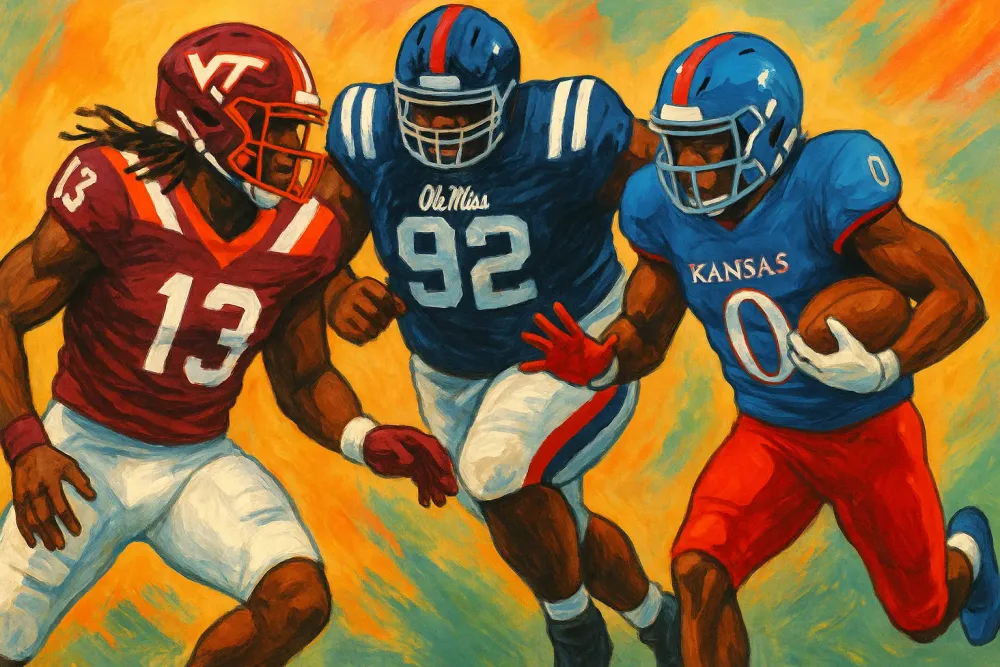
In an unprecedented move, several NFL players are poised to become the first group to navigate the offseason and return to college football. This decision comes after a Louisiana state court granted a temporary restraining order allowing these athletes to compete at the collegiate level for an additional year. Among them are former Ole Miss players Dae'Quan Wright, Zxavian Harris, and Wydett Williams Jr., who are challenging the NCAA's restrictions on returning to college football after playing in the NFL.
The state court's ruling is a significant development for these athletes, especially in light of the growing trend where NCAA conferences enforce sanctions against NFL players attempting to rejoin college football. Wright, who had contracts with the Philadelphia Eagles and Cleveland Browns, was waived by both teams this offseason. Harris was waived by the New Orleans Saints, while Williams remains on the Arizona Cardinals roster.
This scenario mirrors a shifting landscape in college sports, as more players explore legal avenues to reclaim their eligibility. The NCAA has become increasingly stringent about enforcing its rules regarding player eligibility, making this legal battle critical for Wright, Harris, and Williams as they seek to continue their careers in football.
Implications of the Ruling
According to reports from ESPN’s Dan Murphy and Pete Thamel, there is speculation that some NFL players may actively seek to be released from their contracts to expedite their return to college football. This raises questions about the NCAA's governance and the future of player eligibility rules. The former NFL executive Andrew Brandt noted players might prefer to be cut earlier than the standard August 30 deadline to facilitate their transition back into college play.
Additionally, the NFL has clarified that once players are cut and have cleared waivers, they become free agents and cannot participate in the scouting combine or re-enter the draft. This emphasizes the need for players to carefully evaluate their options, especially those who may not secure a spot on an NFL roster.
Potential Players Eager for a Return
Several players are poised to capitalize on this ruling and should consider returning to college football for an extra year. For instance, tight end Dallen Bentley, who was recently signed by the Denver Broncos, faces significant competition in a crowded position group. Despite a standout 2025 collegiate year with impressive stats, Bentley still has much to refine in terms of route running and overall skills. Returning to college could allow him to hone his abilities and increase his chances of making an NFL roster in the future.
Similarly, the Green Bay Packers are dealing with a need in their cornerback room, particularly with the recent release of Nate Hobbs. Rookies like Brandon Cisse have a chance to shine, but fellow rookie Domani Jackson might struggle to secure a position due to injuries. Jackson’s pedigree from powerhouse college programs gives him promise, but he has room for growth. If he were to return to college, he could boost his game and position himself better for professional opportunities.
Backfield Competition and Player Development
For players like Jam Miller, the decision to return to college could also be pivotal. As a promising running back for the Tennessee Titans, Miller has shown flashes of potential during preseason games. His performance has earned him praise from head coach Mike Vrabel, but with experienced veterans ahead of him, a return to college might allow Miller to showcase his abilities and secure a better spot during the next NFL recruitment cycle.
Further compounding Miller’s situation is the Kansas City Chiefs’ revamped backfield. Emmett Johnson, Kenneth Walker, and Emari Demercado provide stiff competition. Given the team's crowded running back roster, players like Jaydn Ott, who had limited opportunities last season, might also consider heading back to college for another chance to prove themselves as viable NFL prospects.
Player Movements in Uncertain Times
The volatility in NFL rosters creates a challenging environment for players like Kobe Prentice, who has been signed and waived by multiple teams. The New England Patriots and New York Giants both took a chance on him, but with a crowded receiver corps and an emphasis on familiarity, returning to college would provide Prentice with a chance to regain traction and value for next year’s NFL Draft.
Toriano Pride Jr., a seventh-round draft pick of the Buffalo Bills, faces a similar conundrum in establishing himself on a competitive defense. With other established players on the roster, it might be beneficial for him to return to college to develop further and strengthen his resume as a versatile playmaker.
The Future of College Football and Player Rights
This remarkable situation highlights the evolving landscape of college football and player rights within the NCAA framework. As these athletes navigate the complexities of transitioning between professional and collegiate levels, their decisions could set precedents for future generations of student-athletes. The legal battles surrounding eligibility will likely continue to draw attention, particularly as more players look to assert their rights in pursuit of their careers.
Ultimately, the outcomes for Dae'Quan Wright, Zxavian Harris, Wydett Williams Jr., and the potential class of players looking to return to college football will unfold, possibly reshaping the rules governing players in the NCAA forever.